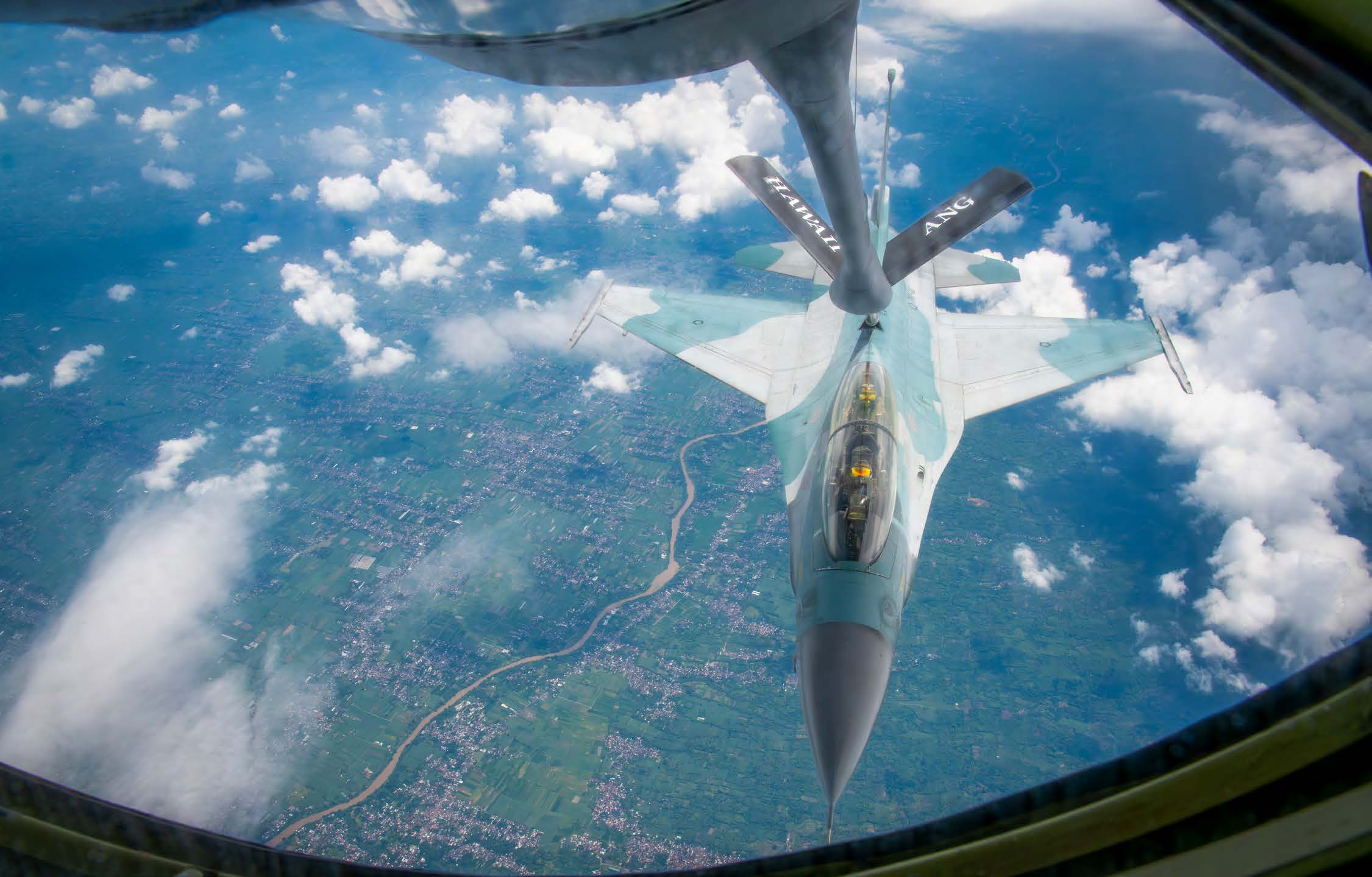
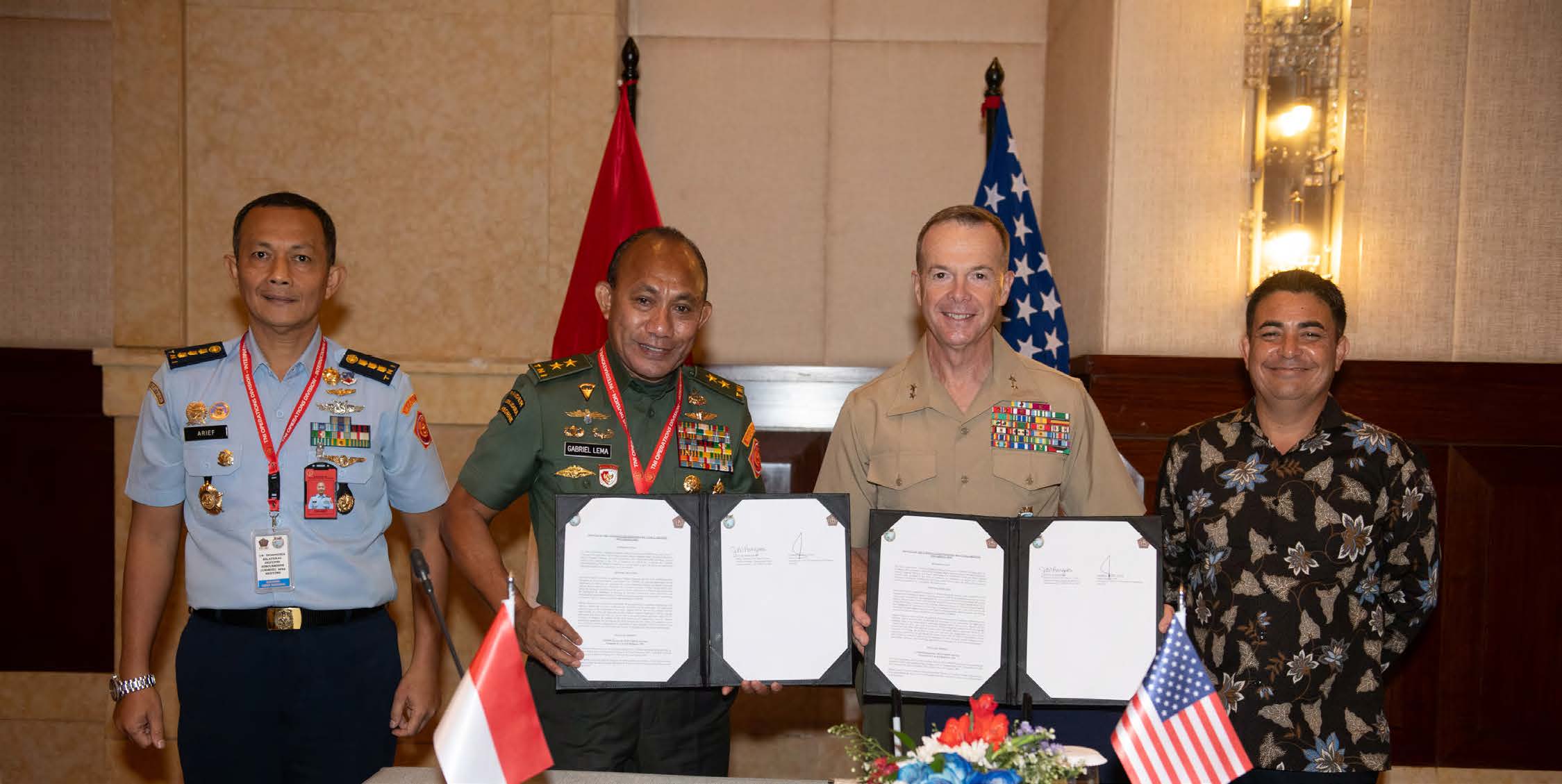
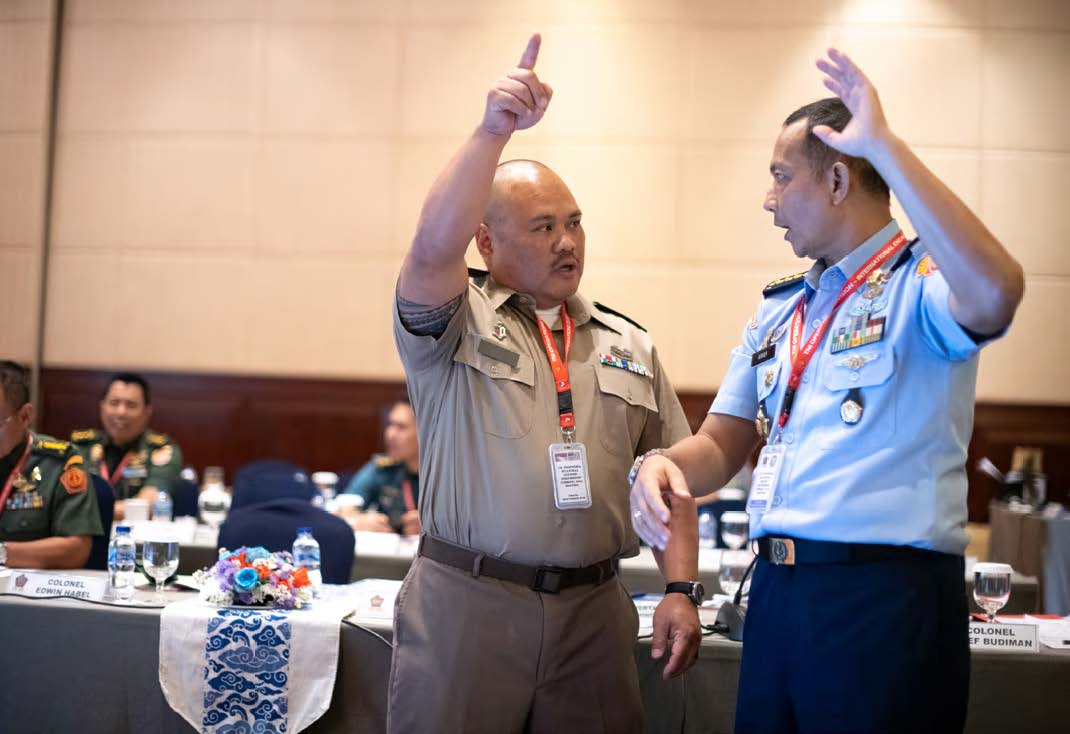
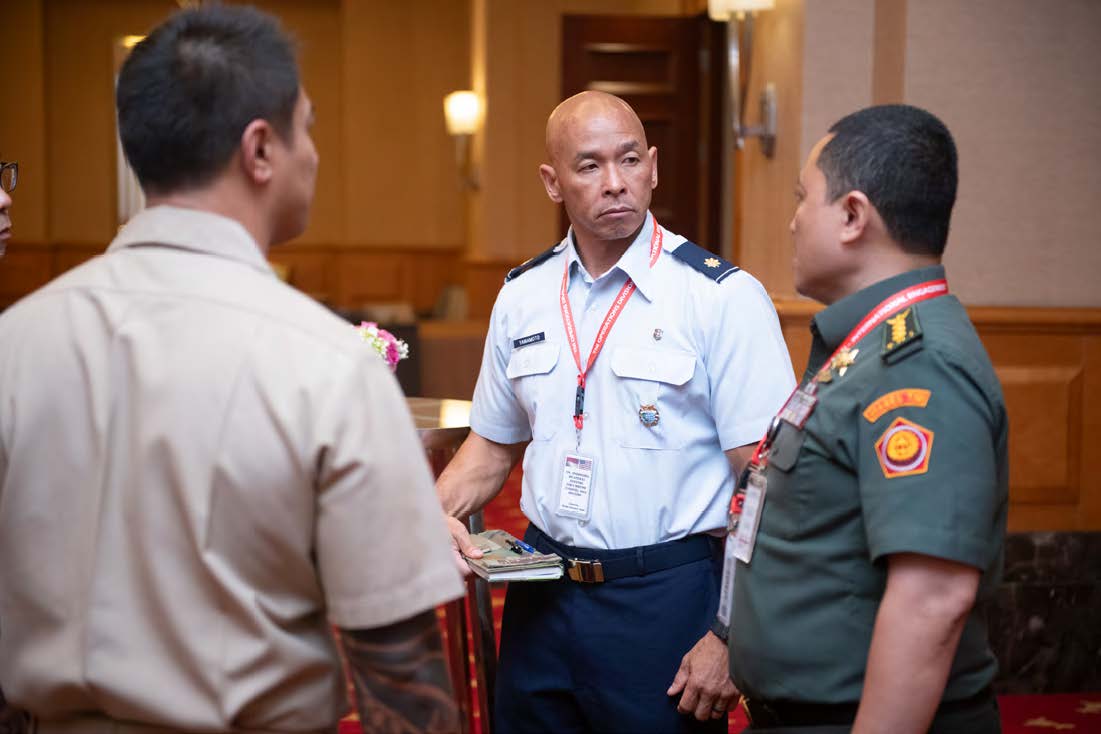
What will be groundbreaking in the future will be our new state partnership programs with more countries in Asia. We’ve had a state partnership program with the Philippines for years now. The Guam National Guard will continue with most of the heavy lifting with that relationship as the Hawaii National Guard begins a state partnership program with Indonesia. That state partnership program will become a vital part of U.S. Pacific Command’s efforts to maintain stability throughout the Asia-Pacific region. Indonesia, with a population of 250 million, is the largest Islamic country in the world. It is also strategically located along the major shipping routes of Asia. The Hawaii National Guard has the opportunity to help keep Indonesia’s economy and worldview on the progressive track. The aim of Osama bin Laden and other Islamic radicals is to turn back the clock in all Islamic countries by isolating them from western culture and philosophies. That in turn, would be very disrupting to our increasingly interconnected global economy.
Just over the horizon, the Hawaii National Guard will be starting a State Partnership Program (SPP) with Indonesia. This is a major initiative to help foster better relations between the world’s most populous nation and the U.S. and to help contain the growing threat of terrorism that has been emerging in Southeast Asia. Almost all states have some sort of SPP with a developing democracy and Hawaii, of course, has been in a partnership with the Philippines for several years. What makes the burgeoning SPP with Indonesia so important though is the high-stakes nature of the relationship. As I mentioned, terrorism is on the rise there: and it is the world’s largest Muslim nation. How we conduct ourselves and how we help foster modernity and moderation in Indonesia could have very far reaching consequences for our nation. It is an honor that Hawaii has been selected to enter into this SPP, and it is a reflection of the confidence the Department of Defense has in the Hawaii National Guard.
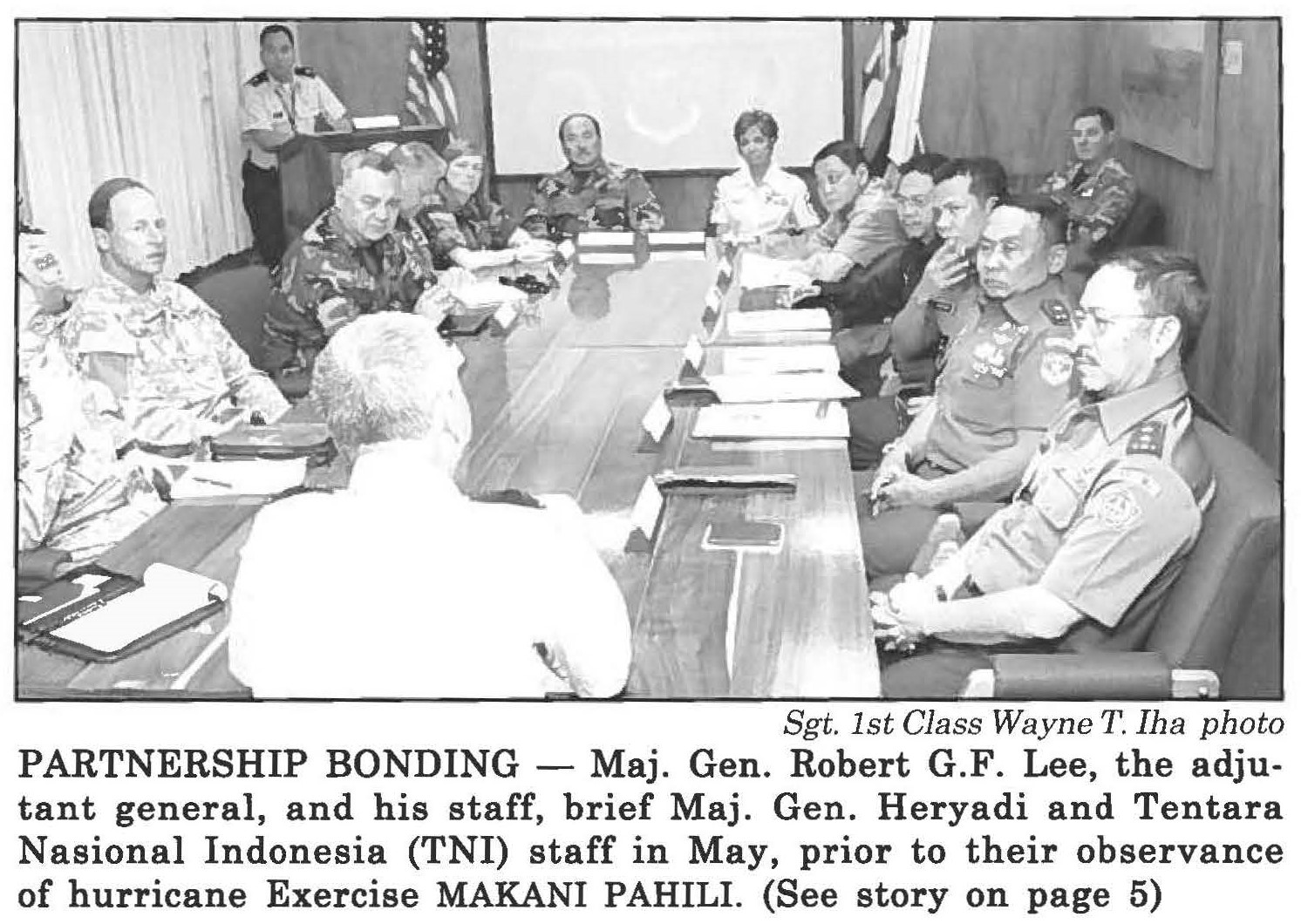
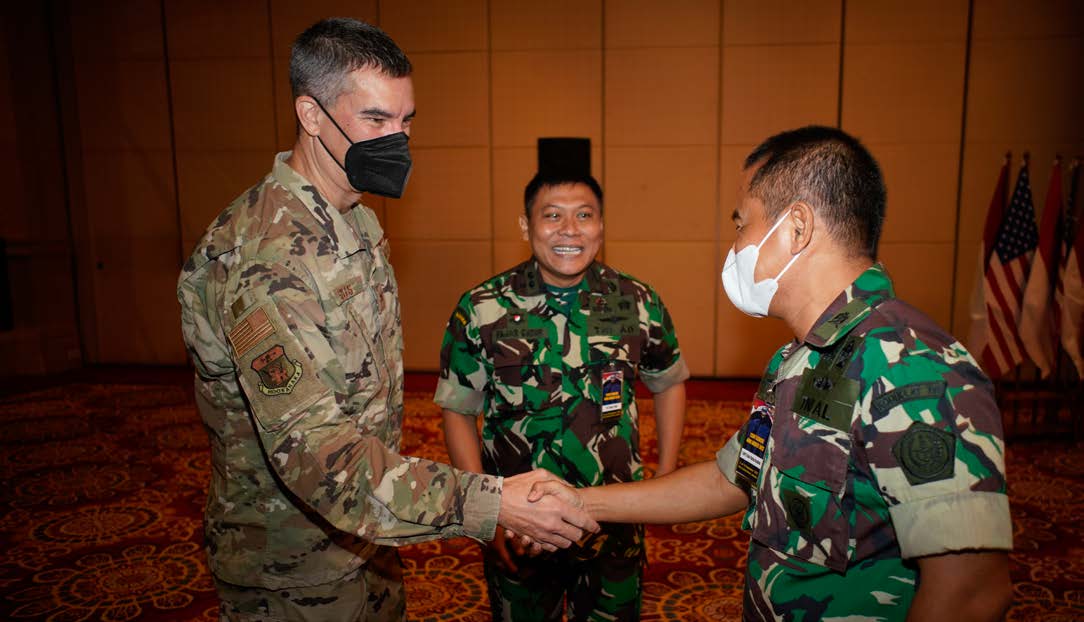
PARTNERSHIP BONDING – Maj. Gen. Robert G.F. Lee, the adjutant general, and his staff, brief Maj. Gen. Heryadi and Tentara Nasional Indonesia (TNI) staff in May, prior to their observance of hurricane Exercise MAKANI PAHILI. (See story on page 5) (Picture from the 2007 April – June Pūpūkahi)
Indonesian Partnership in full swing In the last two issues, I talked in length about the importance of the State Partnership Program we’re working with Indonesia, as Guam assumes the lead for our continuing Philippines partnership. The program is in full swing and the Indonesians are clearly very interested in our disaster preparedness measures (see page 5). Even though we’re only in the beginning stages of this partnership, I can already tell you that the relationships we’re developing with the Indonesians are honest and open. I expect great things to come out of this program.
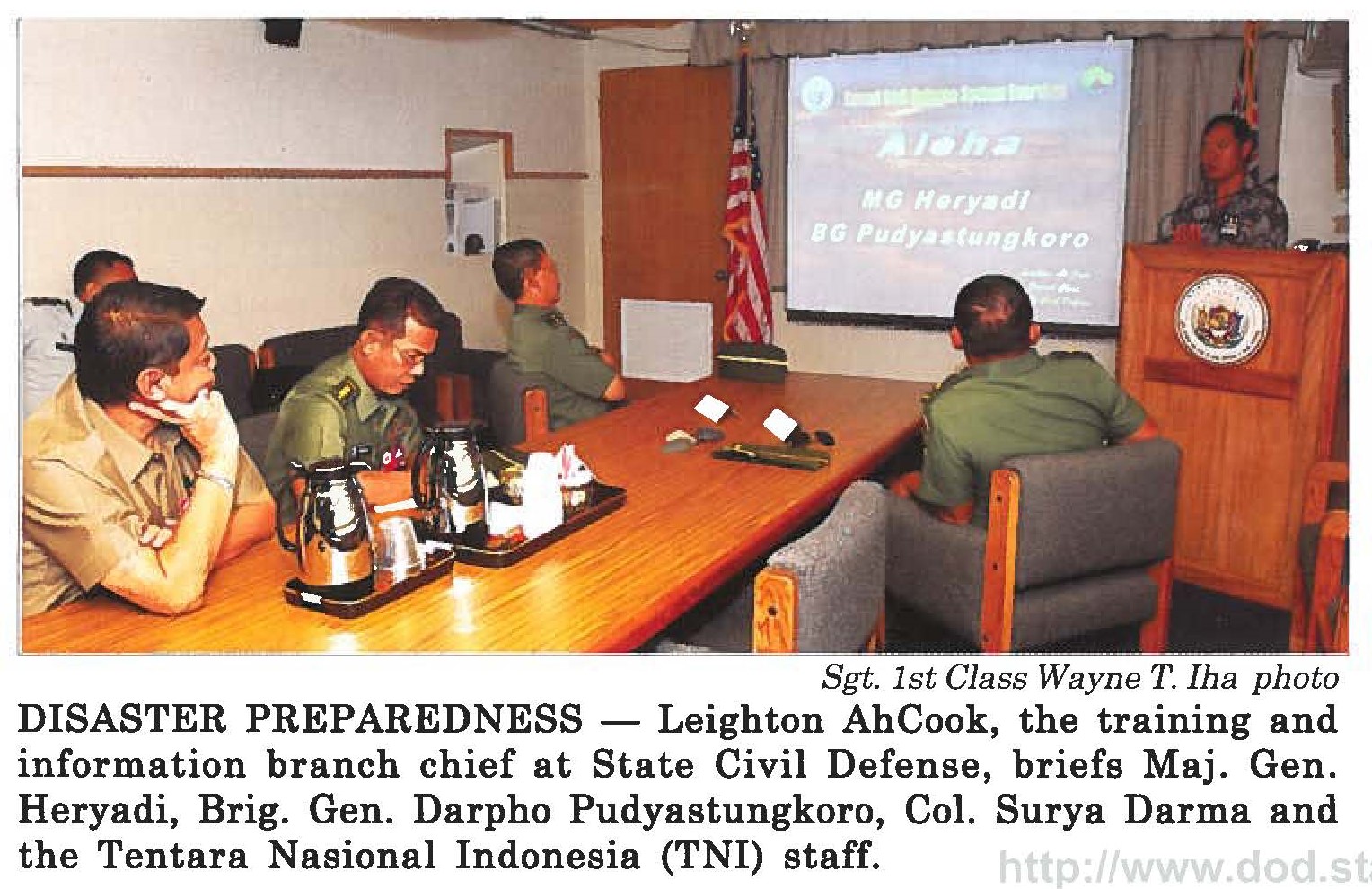
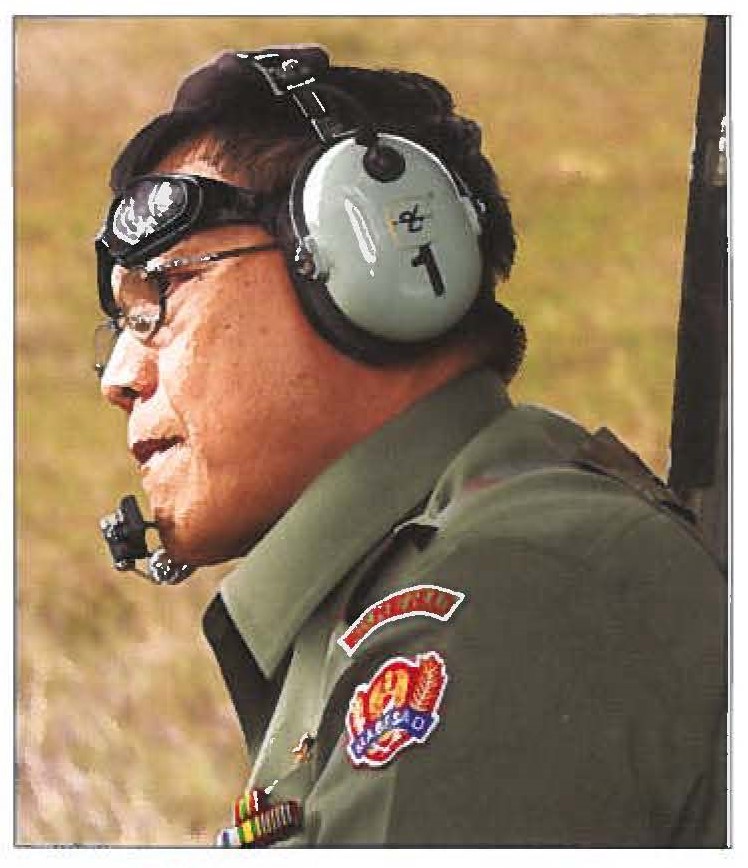
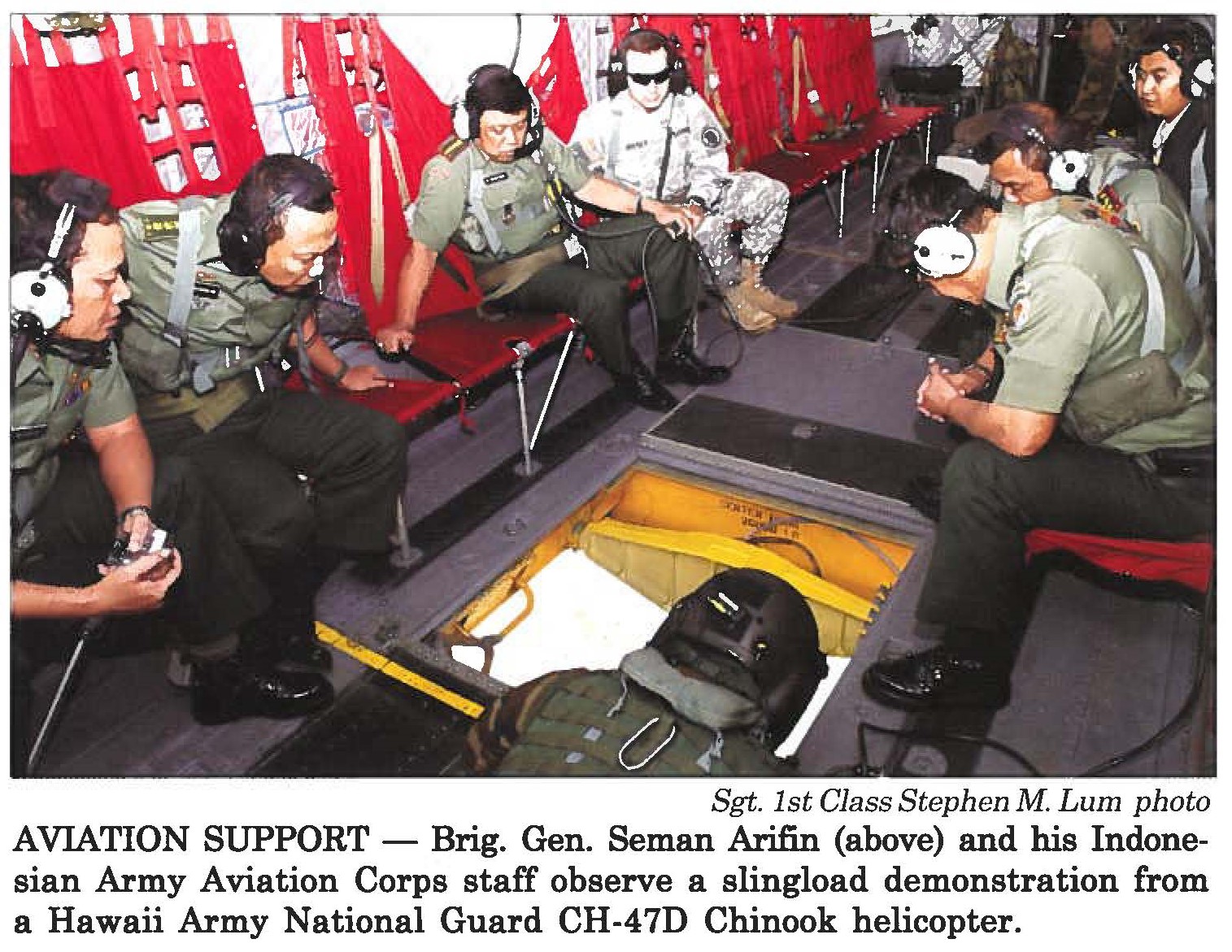
DISASTER PREPAREDNESS – Leighton AhCook, the training and information branch chief at State Civil Defense, briefs Maj. Gen. Heryadi, Brig. Gen. Darpho Pudyastungkoro, Col. Surya Darma and the Tentara Nasional Indonesia (TNI) staff. Indonesian state partnership establishedAVIATION SUPPORT – Brig. Gen. Seman Arifin (above) and his Indonesian Army Aviation Corps staff observe a slingload demonstration from a Hawaii Army National Guard CH-47D Chinook helicopter. (Pictures from the 2007 April – June Pūpūkahi)
By Maj. Charles J. Anthony and Sgt 1st Class Stephen M. Lum
JAKARTA, INDONESIA – Gov. Linda Lingle announced a partnership with the Republic of Indonesia’s Minister of Defense, Dr. Juwono Sudarsono, formally inaugurating the National Guard State Partnership between Indonesia and the Hawaii National Guard in June.
The State Partnership Program (SPP) is a unique, mutually beneficial security cooperation program that is conducted in close coordination with the U.S. Pacific Command in Hawaii. It encompasses three focus areas – military-to-military, military-to-civilian and civilian-to-civilian relationships. The military-to-military initiatives emphasize professional development for the officer and non-commissioned corps and offer a wide scope for mutual exchanges and learning opportunities between the partners’ respective armed forces. Military-to-civilian activities include preparation for defense support to civilian authorities during times of natural disasters. The civilian-to-civilian relationships may consist of exchanges in areas such as domestic emergency readiness, search and rescue operations, scientific, educational, medical and legal visits and the enhancement of democratic institutions.
Hawaii and Indonesia are archipelagos entities in the Pacific that face common challenges such as the threat of natural disasters. The State of Hawaii, Department of Defense, which includes the Hawaii National Guard and State Civil Defense, hosted a delegation of Indonesian military officials last month. During their trip, the Indonesian delegation had the opportunity to witness Exercise MAKANI PAHILI and to exchange ideas regarding defense support to civil authorities. The Tentara Nasional Indonesia (TNI) officers got to tour the emergency operating center in Diamond Head. A second group, from the TNI Army Aviation Corps came in the last week of June to tour the Wheeler Army Aviation Facility and take an orientation flight, which included a sling load demonstration in Kahuku.
“I am confident that the National Guard SPP will not only enhance collaborative efforts in emergency disaster preparedness and response, but will also serve the broader purpose of expanding and deepening the friendship between the peoples of Indonesia and Hawaii,” said Lingle.
The State Partnership Program, started by the National Guard Bureau in January 1993, was a way of fostering positive relationships with former Soviet republics and satellite states. It has since been expanded to the Asia-Pacific region to develop strategic links, bridging distance and cultural differences.
“Indonesia is the world’s most populous Muslim nation, and it is in everyone’s best interest to maintain stability and trade, both materially and the trade of ideas,” said Maj. Gen. Robert G.F. Lee, the adjutant general. “How we build our partnership with Indonesia could have a huge strategic impact on the region.”
Hawaii and Guam began a joint State Partnership Program with the Philippines in the mid-1990s. Guam now takes the lead as Hawaii builds the Indonesian partnership. Two other State Partnership Programs in U.S. Pacific Command are Alaska – Mongolia and Washington – Thailand.
Also of note is Hawaii’s JFHQ involvement in the on-going support to Indonesia and the Philippines through our State Partnership Program (SPP) These program continue to solidify the excellent partnership the Hawaii Guard enjoys with these two important Pacific Nations. It is through there Pacific partnerships that the JFHQs stand ready to engage where and when needed to support world class exercise events or bilateral exchanges. As we grow the programs we set the conditions for future engagements that continue to shape the strategic environment of the Pacific. Our contributions in the PACOM-AOR have established the Joint Force Headquarters as the cornerstone for superb and professional support rendered by both our soldiers, airmen and officers that make up Hawaii’s own Joint-Team!
Also of note is Hawaii’s JFHQ involvement in the on-going support to Indonesia and the Philippines through our State Partnership Program (SPP). These programs continue to solidify the excellent partnership the Hawaii Guard enjoys with these two important Pacific Nations. It is through these Pacific partnerships that the JFHQs stand ready to engage where and when needed to support world-class exercise events or bilateral exchanges. As we grow the programs we set the conditions for future engagements that continue to shape the strategic environment of the Pacific. Our contributions in the PACOM-AOR have established the Joint Force Headquarters as the cornerstone for superb and professional support rendered by both our soldiers, airmen and officers that make up Hawaii’s own Joint-Team.
Also of note is Hawaii’s JFHQ involvement in the on-going support to Indonesia and the Philippines through our State Partnership Program (SPP). These programs continue to solidify the excellent partnership the Hawaii Guard enjoys with these two important Pacific Nations. It is through these Pacific partnerships that the JFHQs stand ready to engage where and when needed to support world-class exercise events or bilateral exchanges. As we grow the programs we set the conditions for future engagements that continue to shape the strategic environment of the Pacific.
Hawaii National Guard State Partnership Program (HING SPP) has been busy this year with variety of engagements with partner nations, Philippines and Indonesia, with subject matter experts exchanges (SMEE) on Homeland Defense/ Disaster Response (HA/DR), Search and Rescue training, Non-Commission Officer Development, and Senior Leader Engagement Visit. HING SPP also hosts numerous events with familiarizations and demonstrations of certain capabilities of the Hawaii Army and Air National Guard. In addition, Hawaii National Guard conducted HA/DR CPX and Disaster Exchange with Taiwan Army.
The Hawaii National Guard played its part in hosting delegations from our State Partnership Programs with Indonesia and the Philippines as well as several other key nations in the region.
State Partnership Program showcases emergency response operations
There have been numerous foreign delegation visit that have given Hawaii JDOMS an opportunity to share operational experience and ideas on disaster related matters. This year alone JDOMS hosted military delegations State Partnership Program (SPP) from Indonesia and the Philippines, as well as Japan, and Taiwan. This year Hawaii JDOMS conducted several Subject Mater Expert Exchanges with numerous Pacific partners.
The HING also continued building partner capacity with Indonesia by attending the US Indonesia BDD in February 2014. The purpose of the USIBDD was to reaffirm US-IDN strategic partnership and finalize the CY14 activities event list and propose CY15 activities. The HIARNG SPP CY2014 activity events consisted of 13 events and discussions of 18 events for CY15. These events consist of but not limited to air defense SMEE, aviation SMEE, urban search and rescue SMEE, HADR senior leader exchange, and SPP TAG counterpart visits.
The HING also continued building partner capacity with Indonesia by attending the US Indonesia BDD in February 2014. The purpose of the USIBDD was to reaffirm US-IDN strategic partnership and finalize the CY14 activities event list and propose CY15 activities. The HIARNG SPP CY2014 activity events consisted of 13 events and discussions of 18 events for CY15. These events consist of but not limited to air defense SMEE, aviation SMEE, urban search and rescue SMEE, HADR senior leader exchange, and SPP TAG counterpart visits.
Additionally, 109th AOG sent SMEEs to support the HING’s State Partnership Program in Indonesia and Philippines. Their real-world contributions received accolades for supporting U.S. Presidential airlift missions, planning and executing priority tanker missions in support of 613th AOC Intelligence Surveillance and Reconnaissance operations and continuing to develop the theater’s warfighting capabilities. . . Support was provided for an Indonesian general officer delegation visit in June 2015.
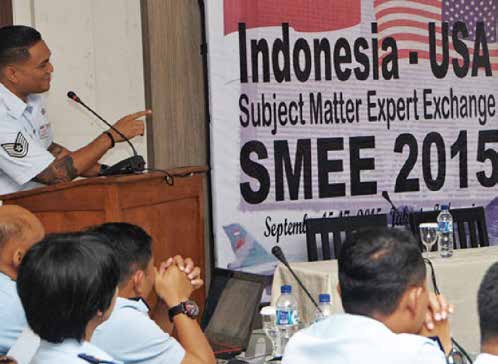
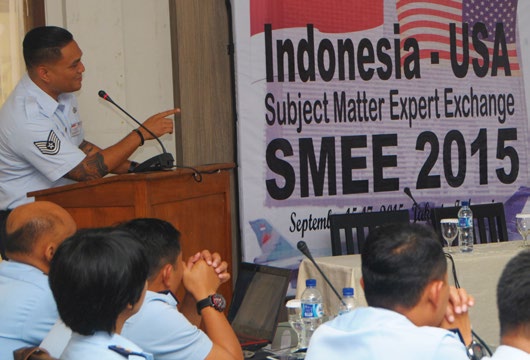
PARTNER EXCHANGE – Hawaii Air National Guard Tech. Sgt. Jacy Lau, an air surveillance technician with the 169th Air Defense Squadron briefs track detection and initiation to members of Kohanudnas, the component of the Indonesian Armed Forces responsible for air defense, Jakarta, Indonesia. The Subject Matter Expert Exchange with the HIANG shared air defense information with their Indonesian counterparts. Senior Airman Orlando Corpuz photo(Picture from the 2015 Annual Report)
Indonesian and Hawaii Army Guard NCOs Learn From Each Other
Story and Photos By SFC Theresa Gualdarama
117th MPAD
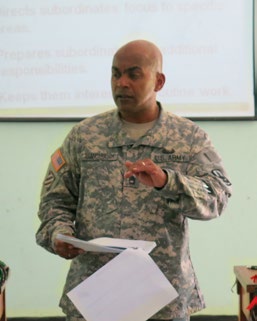
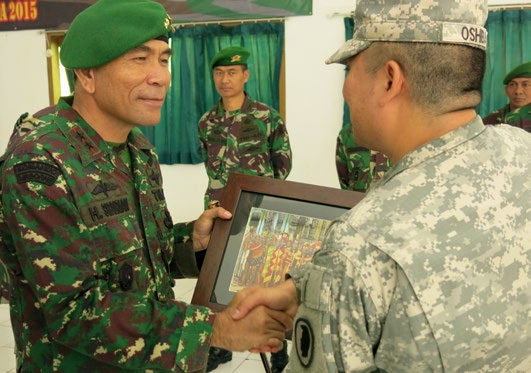
Hawaii Army National Guard State Partnership Program Non-Commissioned Officer Subject Matter Expert Exchange team instructor, Sgt. 1st Class Balendran Anandarajah, explains the SMEE program to Indonesian army Soldiers. (U.S. Army National Guard photos By Sgt. 1st Class Theresa Gualdarama)During the Hawaii Army National Guard Non Commissioned Officer Professional Development Subject Matter Expert Exchange training closing ceremony, Sgt. Maj. Ronald Oshiba presents a plaque to the commander.Indonesian and Hawaii Army Guard NCOs Learn From Each Other(Pictures from the 2015 August Pūpūkahi)
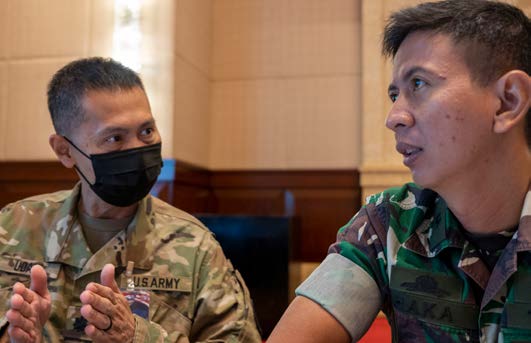
BANDUNG, Indonesia – Throughout the world, it is well known that Non-Commissioned Officers are the driving force behind the success of military organizations. In an effort to continually develop Indonesia’s NCO corps and build personal relationships, Soldiers of the Hawaii Army National Guard journeyed to Indonesia to share their military knowledge and experience with the Indonesian Soldiers.
Recently the Hawaii State Partnership Program the NonCommissioned Officer Professional Development (NCOPD) Subject Matter Expert Exchange (SMEE) team of mentors and 31 NCOs of the Indonesian Army kicked off its sixth annual exchange.
“Building relationships and cultural awareness enhances our Soldiering skills to a higher level allowing us to share our knowledge and experience to other Soldiers,” said Master Sgt. Edy Gallegos, SMEE instructor. “This is one of the many valuable attributes that we, as leaders, instill in our Soldiers.”
To encourage small group discussion and maximum participation, NCOs were split into squad-sized elements during the program. Instructors and students alike shared from their experiences and diverse backgrounds creating a friendly environment for training.
“Personally, I feel happy and proud to be able to follow the activities of this program,” said Sgt. Maj. Muhamad Udin, Tentara Nasional Indonesia Angkatan Darat (TNI-AD) Indonesian Army NCO.
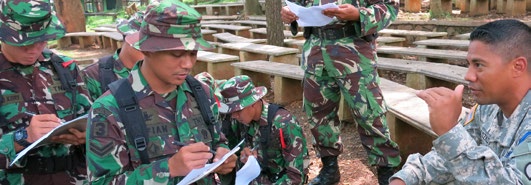
Training was tailored around basic NCO curriculum to include rank structure, Army leadership/subordinate development, buddy aid, army values and troop leading procedures. Mentors also covered risk management, basic land navigation techniques, pre-combat checks and pre-combat inspections.
“We have seen the TNI-AD NCO’s professionalism increase as they gain knowledge and experiences. Approximately 250 Soldiers have attended the NCO SMEE and in every iteration we witness the increased responsibility,” said Sgt. Maj. Ronald Oshiba, SMEE instructor and former HARNG Command Sergeant Major.
During each visit, the Indonesian NCOs are tasked to teach us some of their practices. They also create a motivational motto that is performed daily throughout instruction. Their mottos differ with each class and the instructors participate with the Indonesian NCOs and gain a sense of camaraderie.
“I gained new experiences about military leadership by strengthening the friendly relations between Indonesia and America,” said Udin.
Although instruction was based in a classroom, field environment practical exercises were also incorporated into the training to ensure Soldiers gain experience through hands on training.
“It gives opportunities for HIARNG Soldiers to sharpen their leadership skills as well as increase their experiences by working side by side with our State sponsored country,” said Oshiba.
Instructors demonstrated various technical procedures in those areas that allowed the class to perform each lesson with precision.
“These Soldiers are more than willing to learn and train with us so they can apply our developmental skills to their fellow team members and their organization,” said Gallegos.
The Hawaii Army National Guard’s State Partnership Program with Indonesia continues to be an engagement that instructs, mentors, and shares military experiences, knowledge and cultures to further enhance this partnership.
“This program continues to allow us to enhance the Indonesian NCO education system for their NCO’s. It has significantly increased knowledge and experiences for the Soldiers of the Hawaii Army National Guard,” said Oshiba.
Hawaii Air National Guard completes first ever Indonesia air defense subject matter expert exchange
154th Wing Public Affairs – Story and photos by Senior Airman Orlando Corpuz
Thursday, September 24, 2015
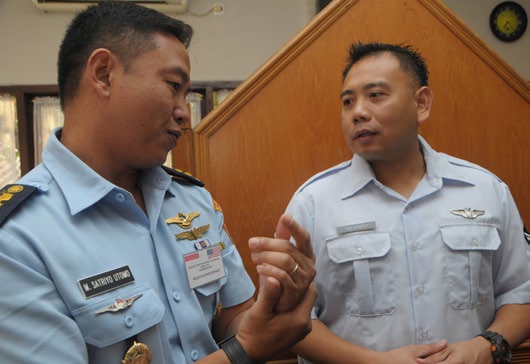
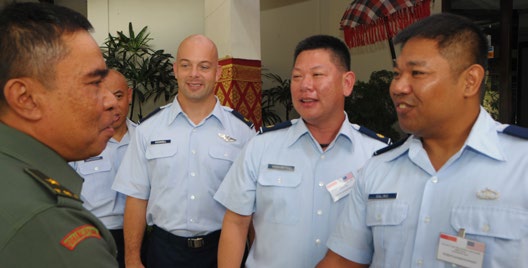
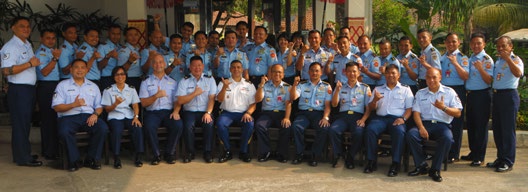
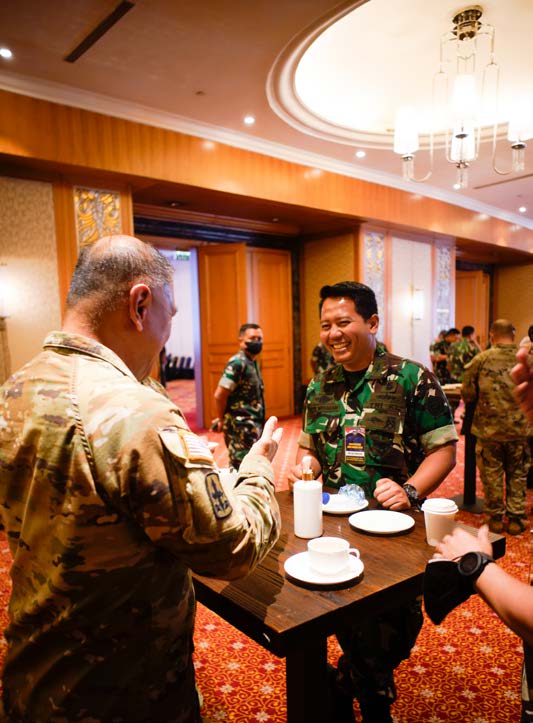
Tech. Sgt. Jacy Lau, an Air Surveillance Technician with the 169th Air Defense Squadron briefs track detection and initiation to members of Kohanudnas, the component of the Indonesian Armed Forces responsible for air defense, Jakarta, Indonesia. Master Sgt. Joseph Salvador, Hawaii Air National Guard State Partnership Program, speaks with Lt. Col. Satriyo Utomo from Kohanudnas. Kohanudnas is the air defense component of the Indonesian armed forces. Brig. Gen Raharyono, Senior Staff Officer 7/TNI Staff of Operations, stops by to meet members of the Hawaii Air National Guard during a subject matter expert exchange with Kohanudnas, the Indonesian armed forces component responsible for air defense, Jakarta, Indonesia. Hawaii Air and Army National Guard members flash the traditional “shaka” sign from Hawaii with members of Kohanudnas. (Pictures from the 2015 September Pūpūkahi)
JAKARTA, Indonesia – Air defense experts from the Hawaii Air National Guard completed a Subject Matter Expert Exchange with counterparts from Indonesia, Sept. 15-17.
The three day exchange took place near Halim International Airport in Indonesia’s capital of Jakarta. This was the first time a SMEE involving air defense had been conducted between the HIANG and Kohanudnas, the component of the Indonesian armed forces responsible for air defense.
“The team’s immediate goal was to lay the foundation for a productive relationship between the Hawaii Air National Guard and the Kohanudnas.” said Maj. Michael O’Donnell, Mission Crew Commander, 169th Air Defense Squadron.
“Long term, we would like to have an enduring partnership with the Kohanudnas that promotes stability in the region.”
The exchanges were part of the National Guard’s State Partnership Program. The program matches a state’s National Guard with a partner country in order to build capacity and reinforce security cooperation. Program partners engage in a wide range of security cooperation activities such as homeland defense, disaster response, and interagency cooperation.
“The State Partnership Program is a Department of Defense joint security cooperation program administered by the National Guard.” said Maj. Robert Galino, Theater Command and Control Officer with the 109th Air Operations Group.
“It supports the combatant commander’s security cooperation objectives and Ambassador’s intergrated country strategies.”
A team of seven HIANG personnel from the 169th ADS and 109th AOG engaged with Kohanudnas on topics ranging from air battle management, target identification, target tracking, and data transmission.
“It’s very important to share experiences with air defense and to learn and collaborate with each other as we share in the common goal of peace and security.” said Galino.
“We hope to continue our relationship with Indonesia… to not just include the tactical level, but operational and maybe strategic.”
The partnership with Indonesia was just one example of the HIANG’s execution of the SPP mission and reflects the National Guard’s growing international affairs mission. In August, the HIANG hosted air defense officials from the Philippine Air Force for bi-lateral learning and discussions. The HIANG teams up with the Guam National Guard to execute the SPP mission with the Philippines.
Currently, the National Guard maintains SPP relations with 76 nations around the world.
“The purpose of the State Partnership Program is to build mutually beneficial military relationships with foreign nations. This is accomplished by face to face interactions that foster professional and personal contacts.” said O’Donnell.
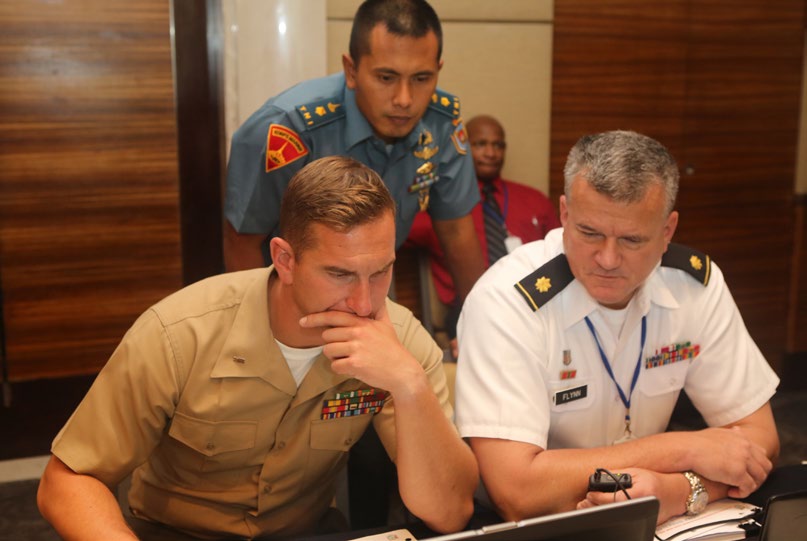
U.S. Marine Corps 1st Lt. Nicholas J. Boire, left, reviews the execution plan during a simulated search and rescue mission as part of Exercise Gema Bhakti in Jakarta, Indonesia, Sept. 17, 2015, as instructors U.S. Army Major Bill Flynn, right, and Indonesian Marine Corps Major Nyoman provide feedback. The urban search and rescue training is one of four lanes that increases service members’ humanitarian assistance and disaster response capabilities in the Pacific area of operations which is prone to various natural disasters. Gema Bhakti, Indonesian for ‘Echo of Good Deeds,’ is a joint, bilateral ten-day exercise designed to promote positive military relations, increase cultural awareness and enhance training and understanding of each other’s capabilities. Boire, a native of New York, New York, is the combined anti-armor platoon commander with weapons company, 1st Battalion, 4th Marine Regiment and currently deployed to Darwin, Australia, as part of Marine Rotational Forces-Darwin. Flynn, a native of Orlando, Florida, is the acting commander for chemical, biological, radiological and nuclear enhanced response force package (CERFP) with the Hawaii National Guard. Nyoman, a native of Jakarta, Indonesia, is an operations officer with 2nd Engineer Battalion and a past participant of Operation Cobra Gold, a Pacific Command directed multinational and multiservice exercise. (U.S. Marine Corps photo by 2nd Lt. Michael Maggitti/Released)(Picture from the 2015 October Pūpūkahi)
More than 25 members of the Hawaii Army National Guard participated in exercise Gema Bhakti from Sept. 14-23 in Jarkarta, Indonesia. It was the third year that the humanitarian assistance/disaster relief exercise was conducted with the Tentara Nasional Indonesia or Indonesian National Armed Forces.
GB15 presented four lanes for the TNI and U.S. Armed Forces members to navigate at an operational-level within a notional humanitarian assistance/disaster relief scenario which included a 7.3-level earthquake that occurred in the fictional country of Oceania. The four lanes were Urban Search and Rescue, Humanitarian Civil-Military Coordination, Multinational Coordination Center and Coalition Task Force Rules of Engagement.
“The exercise went really well,” said Lionel Payes, Joint Multinational Exercise Manager for U.S. Army Pacific, G7 Directorate and former 1st Battalion, 487th Field Artillery commander. “Both U.S. and TNI were on the same playing field coming into this exercise. The curriculum and the information shared in all four lanes, was information that neither military gives at their basic courses.”
By learning and experiencing this specific scenario with the emphasis on multinational civilian military coordination, it can make things easier when you are trying to integrate and set up with multiple nations in a foreign country.
“This information tends to be learned on the spot,” said Payes. “We are not schooled in this, however after every natural disaster, those affected and in leadership positions, would say that this is the type of information that would have been helpful before we got to a disaster area… and when the day comes, you can reach in your tool bag and reference the lessons learned from Gema Bhakti, it will definitely make things easier and a lot smoother during a natural disaster.”
The Hawaii National Guard made up the majority of the U.S Armed Forces present at the exercise. Active duty service members from the Navy, Air Force and Marines and some from the U.S. Army Reserves rounded out the group.
“I believe the Hawaii Army National Guard participants received a wealth of knowledge here at Gema Bhakti 2015,” said Payes. “They have been here from the inaugural event, and continuity has been built with their TNI counterparts. The HIARNG has been and will be a prominent fixture in GB.”
Indonesia and Hawaii are State Partnership Program partners, a National Guard Bureau program where both participants conduct military to military engagements in support of defense security goals and also broader government, economic and social objectives. Exercise Gema Bhakti 2015 is a perfect vehicle for both countries.
“Gema Bhakti is very important to us,” said Capt. Octoberiandi Yusuf, TNI Air Force. “The training with U.S. PACOM, the Hawaii National Guard and TNI specifically, allows everyone to practice what we will do during times of emergency. I have new friends and I learned so many lessons from the U.S. armed forces here at GB15. I appreciate the opportunity to develop our relationships and we can make the Pacific region stronger.”
Gema Bhakti is Indonesian for “echo of good deeds.” Many deeds were accomplished and those deeds have the potential to protect the precious time that military responders need during a disaster. Where the main effort can be out saving lives, whether it be providing medical assistance, supplying fresh water or shelter to those in need.
“It was a fantastic opportunity to work with the Hawaii National Guard,” said Jesse Wolf, Disaster Management and Humanitarian Assistance Advisor with the Center for Excellence in Hawaii. “And see the Guard really build their partnership with the TNI and strengthen the ability to work together on critical real world situations.”
Joint Planning Exercise Gema Bhakti helps U.S. and Indonesian Military increase their capabilities
Story by Tech. Sgt. Andrew Jackson
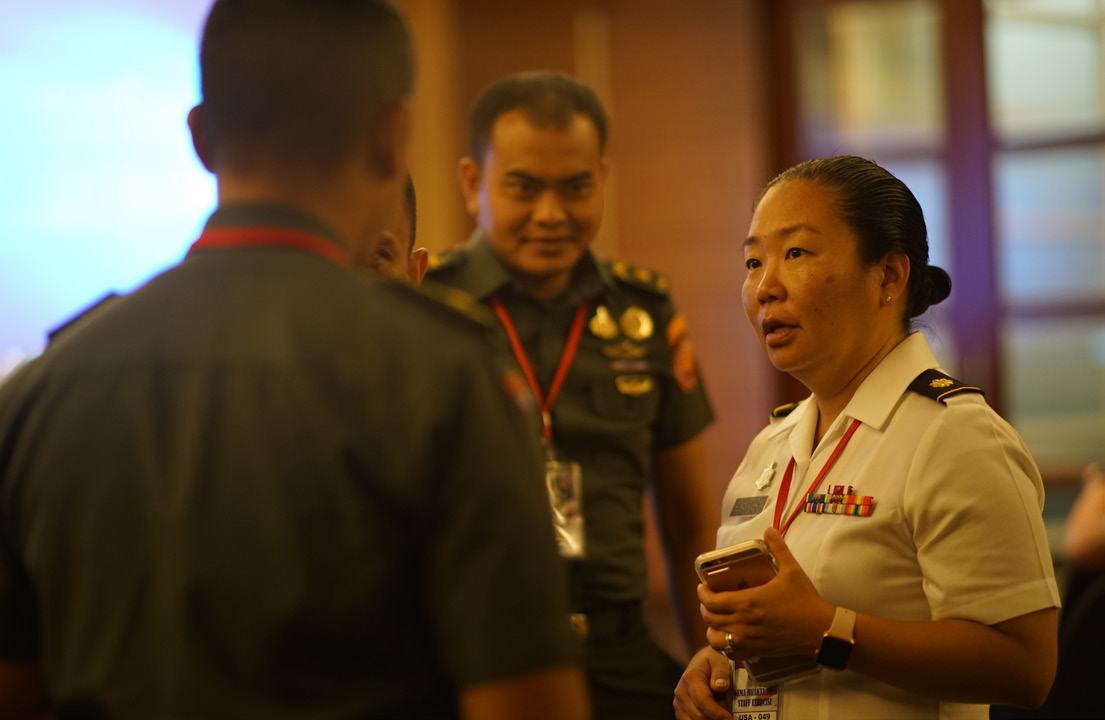
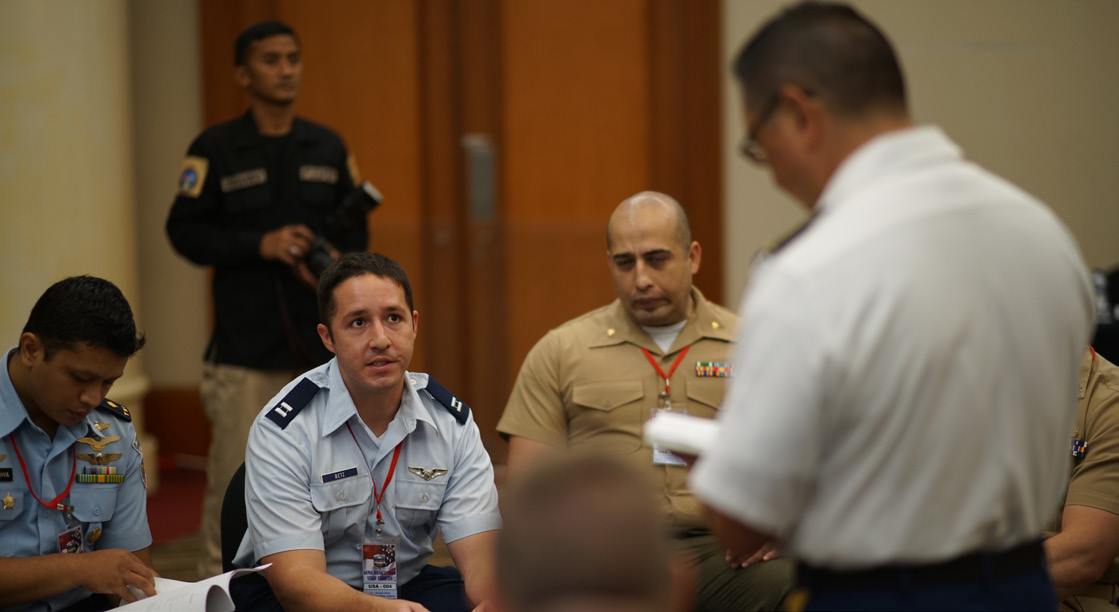
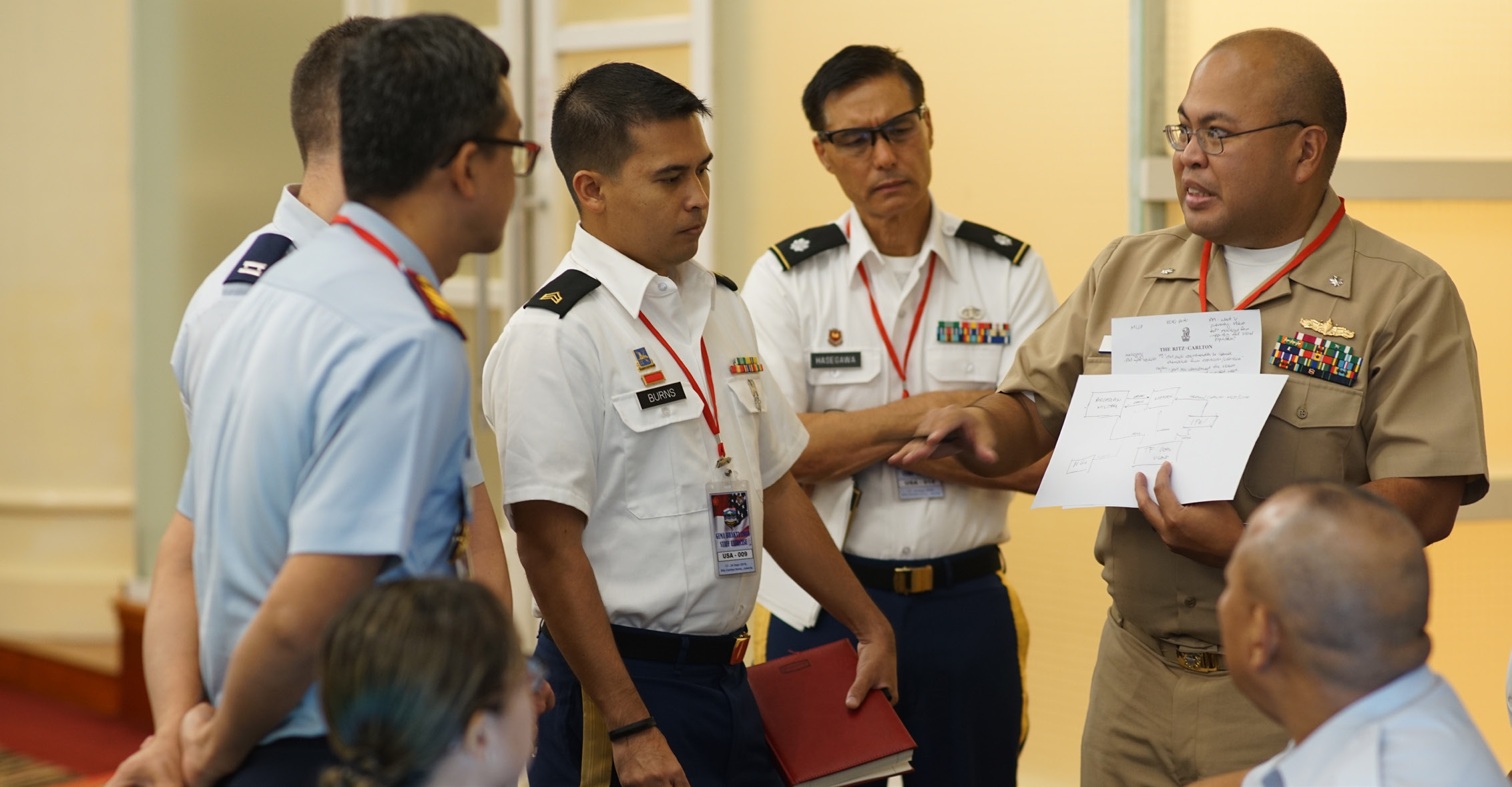
Hawaii Army National Guard, Maj. Lauren Sodetani-Yoshida, talks strategy with her counterparts from the Tentara Nasional Indonesia on the second day of Gema Bhakti as the focus of the staff planing exercise shifted from academic to execution, Sept. 18, 2018, Jakarta Indonesia. (U.S. Air National Guard Photo by Tech. Sgt. Andrew Jackson)Missouri Air National Guard, Capt. Derek Betz, enumerates the available airlift resources for the Gema Bhakti military planning exercise with a working group of military planners from Tentara Nasional Indonesia and U.S. Military, Sept. 19, 2018, Jakarta Indonesia. (U.S. Air National Guard Photo by Tech. Sgt. Andrew Jackson)U.S. Navy Commander, Theodore Quidem discusses information operations with a working group of military staff planners first full day of planning at Gema Bhakti, Sept. 19, 2018, Jakarta Indonesia. Gema Bhakti is a joint force multi-national staff exercise where military staff from the U.S. Indo-Pacific Command and Indonesia work through a process known as the military decision making process. This process is a crucial step that involves the commander’s staff working with with all the higher and lower commands to define the mission, its variables, and the situation involved and how to measure mission effectiveness before a plan or order is produced. (U.S. Air National Guard Photo by Tech. Sgt. Andrew Jackson)(Pictures from the 2018 Summer Pupukahi)
Jarkarta, Indonesia – The Hawaii National Guard and the Tentara Nasional Indonesia (TNI)(Indonesian Armed Forces) recently hosted a joint staff planning exercise known as Gema Bhakti. Gema Bhakti is derived from an Indonesian phrase “Gerakan Bersama Bhakti” meaning move jointly together. An appreciate name for the joint multinational staff exercise where military staff from the U.S. Indo-Pacific Command and Indonesia work through a process known as the Military Decision Making Process (MDMP). MDMP is a crucial step that involves the commander’s staff working with higher and lower commands to define the mission, its variables, the situation involved and how to measure mission effectiveness before a plan or order is produced.
This is the sixth iteration of Gema Bhakti which is also a culminating event for three State Partnership Program (SPP) Subject Matter Expert Exchanges (SMEEs) held between the Hawaii National Guard and the TNI throughout 2018. The theme of this year’s exercise was interoperability, and every action taken had interoperability at its core. For example, each staff team was comprised of a mix of TNI and U.S. personnel.
During the nine-day staff exercise in Jakarta, Indonesia, U.S. Active Duty Soldiers, Sailors, Marines and Airmen from units throughout the U.S. IndoPacific Area of Command along with Airmen from the Missouri Air National Guard and Hawaii National Guard Soldiers and Airmen, worked with their counterparts in the TNI. This mix of service members formed a combined joint military staff which populated all the staff functions from C-1 (manpower) to C-9 (civil affairs).
MDMP is a frame work that is housed in the Multi National Forces – Standard Operating Procedure (MNF-SOP). The process ensures that the phases of planning from Mission Analysis (MA), Course Of Action (COA) development to drafting and executing an operational order are accomplished in an orderly manner that is logical and analytical. Priorities are set, limitations recognized and acknowledged, rules of engagement are established all through the efforts of each staff section working with their partnered military counterpart.
“MDMP is a process that supports all military decisions in taking assessments and actions from deliberate to abbreviated planning,” said Lt. Col. Gita Muharam, TNI Naval Officer.
Gema Bhakti is a key feature of the U.S. National Guard’s SPP. The Hawaii National Guard and Indonesia have a long-standing relationship in the partnership program. The goal of the SPP is to link a State’s National Guard with the armed forces or equivalent of a partner country in a cooperative, mutually beneficial relationship. Through the SPP, the HING and the TNI have had three SMEEs and three planning conferences in 2018, all culminating in Gema Bhakti.
This year’s Gema Bhakti took the form of a joint staff planning exercise and had four distinct phases: academic lecture, mission analysis, and COA development finishing with scenario role play. Each of the planned initiatives against a fictional enemy in a fictional country are played out to their conclusion. During the lecture portion, all the participants from each force and nation received information on the MDMP, MNF-SOP, and other topics like Information Operations and COA development. The lectures were directly followed by MA phase where the participants were paired with a military member from the partner nation to form a staff section. Once the all the staff sections and special operational staffs where formed, these partnerships remained throughout the exercise. Each staff section was responsible to then perform a detailed MA on the Gema Bhakti scenario and present it to the command staff. The COA phase followed a similar format to the MA. A large premium was placed on gathering information about the fictional scenario then presenting key points to higher leadership.
“Identifying the problem we are trying to solve is the first stage,” said U.S. Navy Lt. Allan Thorson. “At one of the lectures yesterday, we discussed Albert Einstein and his quote about how if he had an hour to solve a problem he would spend 55 minutes gathering information and the last five solving the problem. A majority of the exercise we were dedicated to defining the problem then exploring the COA’s to solve it.”
Gema Bhakti is a joint multinational exercise and with service members from each of the U.S. and Indonesian military branches participating, there was a predictable pattern of storming, forming and performing once the staff sections were established. As the environment went from a chaotic den of questions, to detailed and well thought-out analysis, relationships were formed and allies established.
“I am learning a little of the language due to a little language barrier,” stated Lt. Col. Brandon Torres, Hawaii National Guard. “We are both meeting in somewhere in-between, it is teaching me a lot and it is going both ways. I believe that if we come in cold to a conflict we will not be as successful than if we practice more.”
Due to the complex nature of the scenario and exposure to different ways of operating, each Gema Bhakti participant was pushed out of their comfort zone and provided with an opportunity to grow
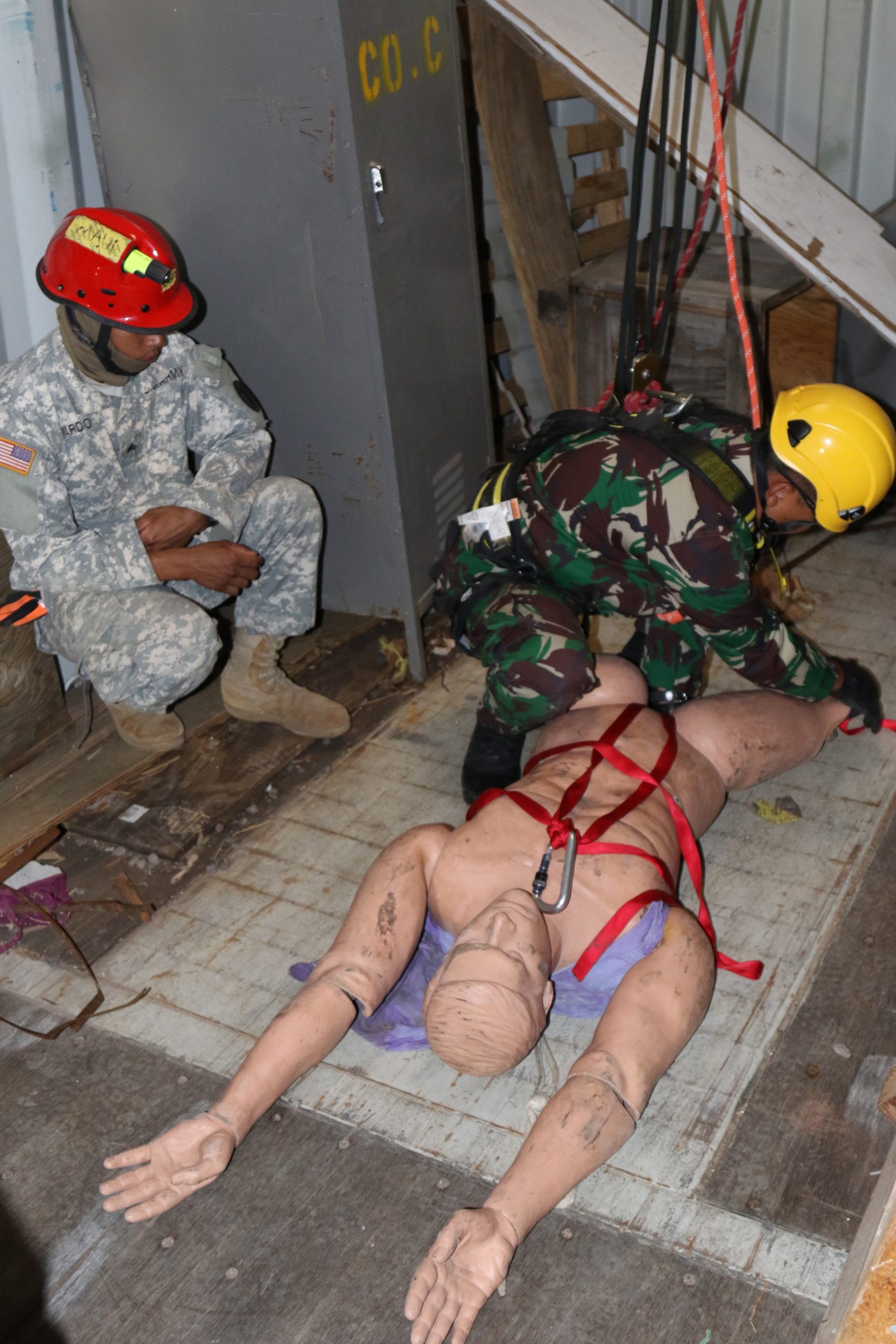
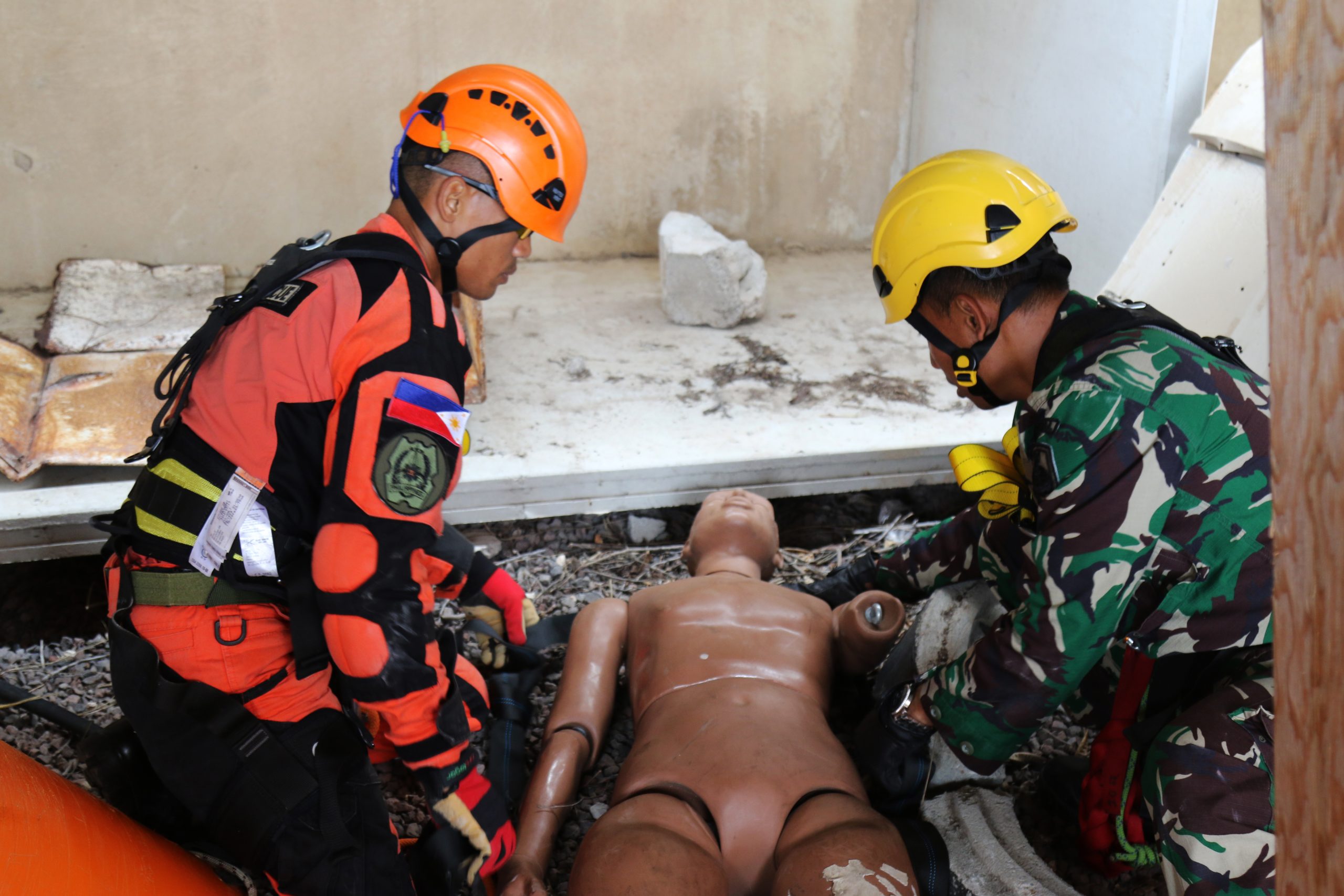
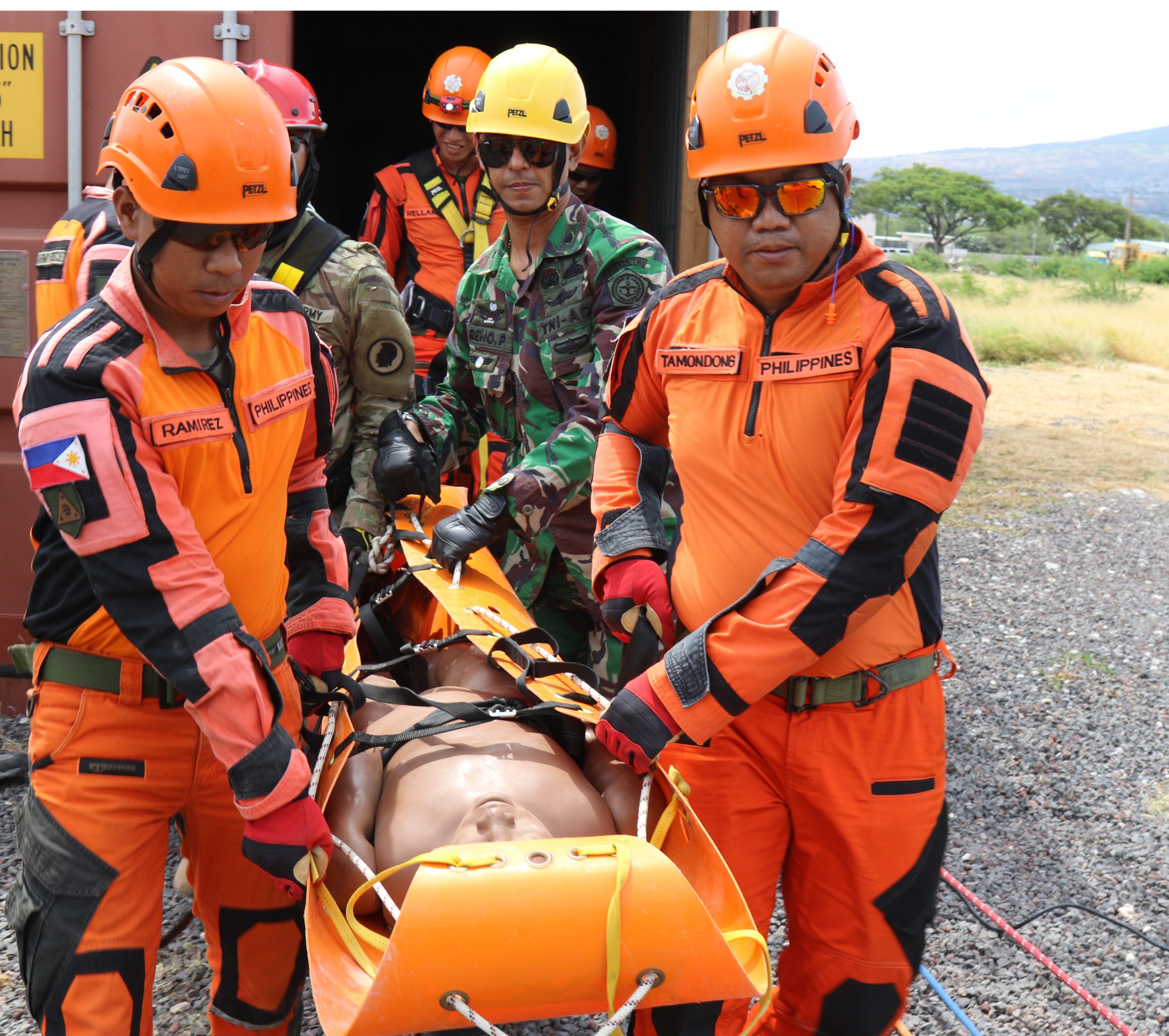
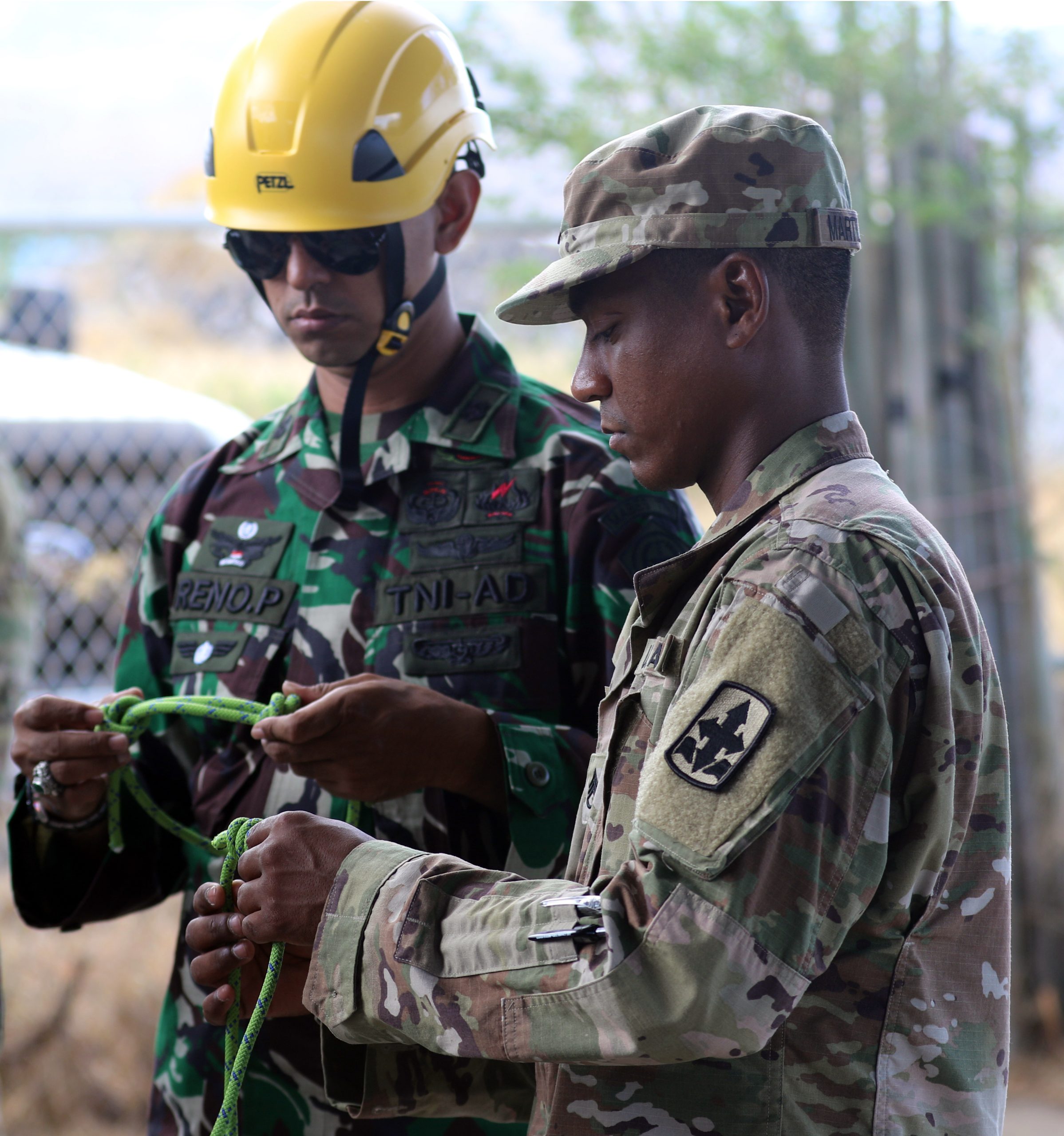
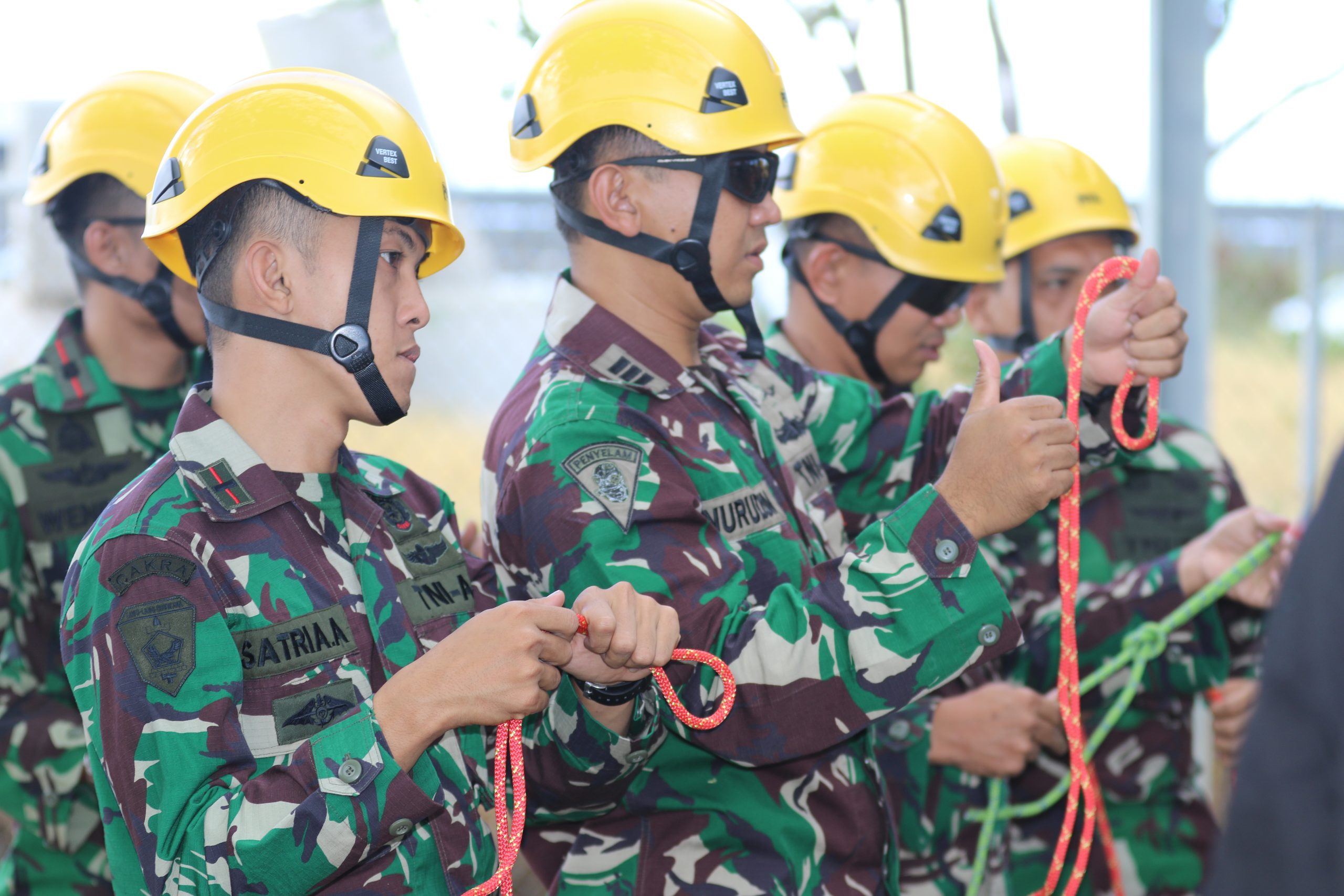
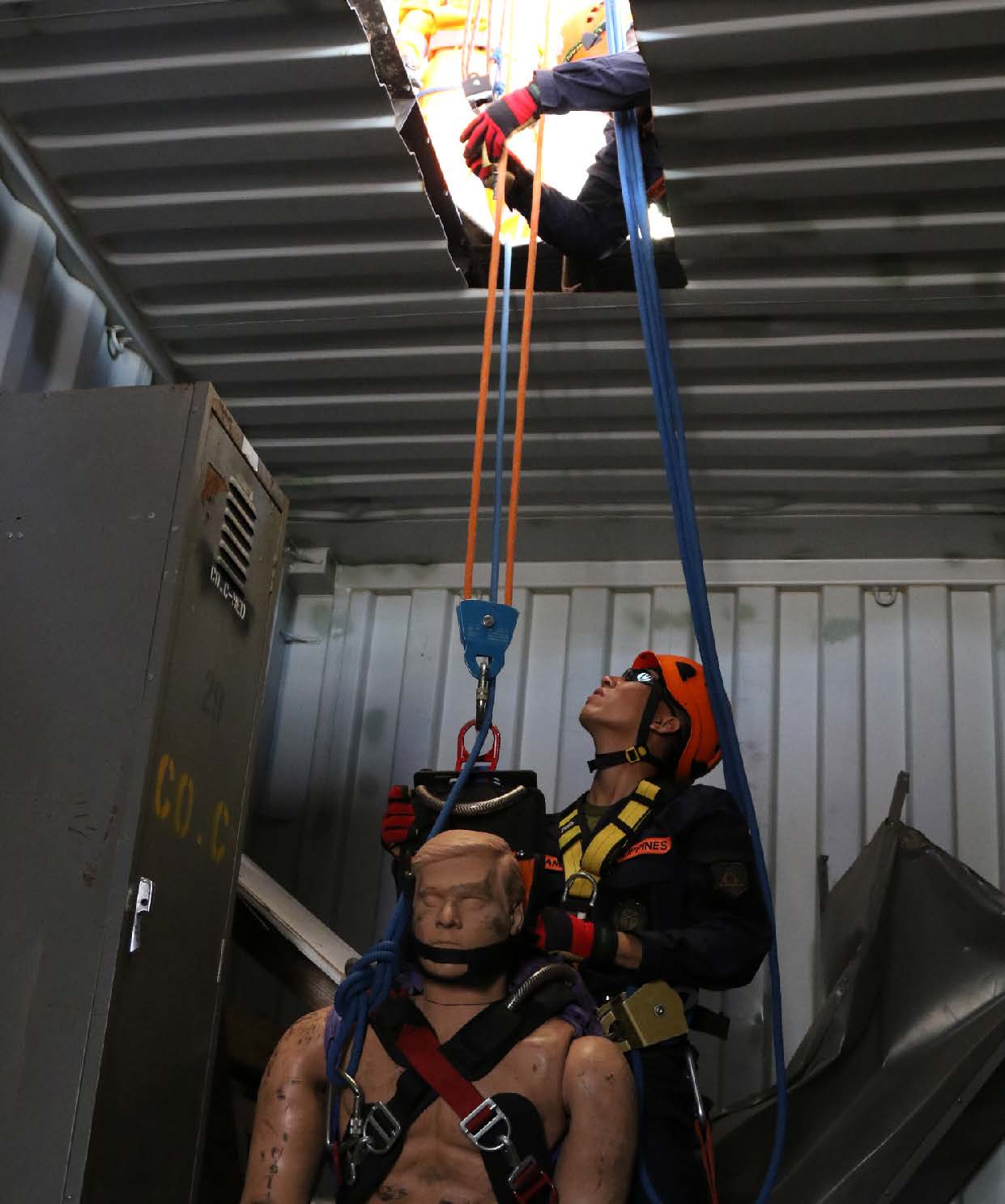
Sgt. Jaypee Pardo, a carpentry and masonry specialist with the 230th Engineer Company and a Search and Extraction team member of the Hawaii Army National Guard’s Chemical, Biological, Radiological, Nuclear and High-Yield Explosive, Enhanced Response Force Package (CERFP) team along with a Soldier of the Indonesian National Military – Quick Response Disaster Management Unit secure a casualty in preparation for extraction techniques during a confined space rescue exercise in Kapolei, Hawaii, July 11, 2018. This marks the first joint training exercise between the HIARNG, Philippine and Indonesian CERFP teams. (U.S. Army National Guard Photo by Sgt. Tinisha Mellein-Fortson/Released)Soldiers of the Philippines Army 525th Engineer Combat Battalion and the Indonesian National Military – Quick Response Disaster Management Unit combine forces to assess a casualty during a confined space rescue exercise in Kapolei, Hawaii, July 10, 2018.This marks the first joint training exercise between the HIARNG, Philippine, and Indonesian, Chemical, Biological, Radiological, Nuclear and High-Yield Explosive, Enhanced Response Force Package teams. (U.S. Army National Guard Photo by Sgt. Tinisha Mellein-Fortson/Released)Soldiers of the Hawaii Army National Guard, Indonesian National Military – Quick Response Disaster Management Unit, and Philippines Army 525th Engineer Combat Battalion teams work together to simulate extraction of a casualty during a confined space rescue exercise in Kapolei, Hawaii, July 10, 2018. This marks the first joint training exercise between the HIARNG, Philippine, and Indonesian, Chemical, Biological, Radiological, Nuclear and High-Yield Explosive, Enhanced Response Force Package teams. (U.S. Army National Guard Photo by Sgt. Tinisha Mellein-Fortson/Released)Soldiers of the Hawaii Army National Guard and Indonesian National Military – Quick Response Disaster Management Unit take part in a rope tying exercises during a confined space rescue class in Kapolei, Hawaii, July 9,2018. This marks the first joint training exercise between the HIARNG, Philippine, and Indonesian, Chemical, Biological, Radiological, Nuclear and High-Yield Explosive, Enhanced Response Force Package teams. (U.S. Army National Guard Photo by Sgt. Tinisha Mellein-Fortson/Released)Soldiers of the Indonesian National Military – Quick Response Disaster Management Unit take part in rope tying exercises during a confined space rescue class in Kapolei, Hawaii, July 9, 2018. This marks the first joint training exercise between the HIARNG, Philippine, and Indonesian, Chemical, Biological, Radiological, Nuclear and High-Yield Explosive, Enhanced Response Force Package teams. (U.S. Army National Guard Photo by Sgt. Tinisha Mellein-Fortson/Released)(Pictures from the 2018 Summer Pupukahi)
The SPP provides U.S. Indo-Pacific Command (USINDOPACOM) a unique security cooperation (SC) tool that improves international security, builds partner capability/capacity, and provides the U.S. access and influence with the Government of Indonesia (GOI) & the Republic of the Philippines (RP). The HING SPP Program has two country teams and 14 functional teams for a combined total of 40 service members supporting the plans, resources, and execution of SPP Engagements.
The HING SPP continues to strengthen and reassure their partnership with the Indonesian National Military (TNI) to progress mutually beneficial goals, build partnership capacity, and establish interoperability. In FY19, 22 events were completed with the participation of 154 HING Service members and 228 TNI service members. Top engagements in FY19 included:
Information Systems Technology Exchange (ISTX) Cyber Range Exercise.
University of Hawai‘i-ROTC, HIARNG OCS, and TNI executed cadet field training exercises at Bellows Air Force Base Training Area.
Multi-national Urban Search & Rescue Field Training Exercise (CTF-501) was conducted with military partners from Indonesia, Vietnam, Bangladesh, and the Philippines.
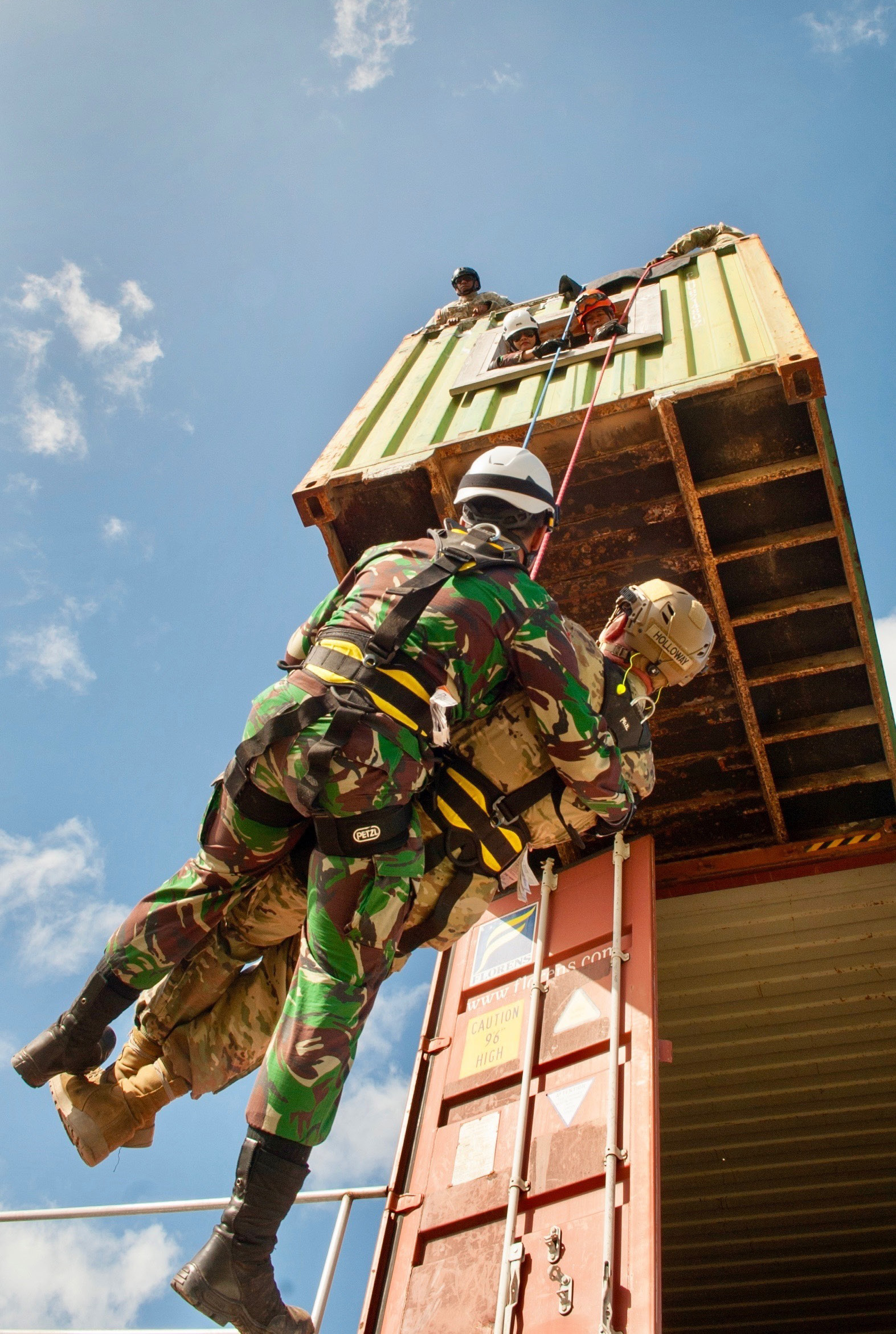
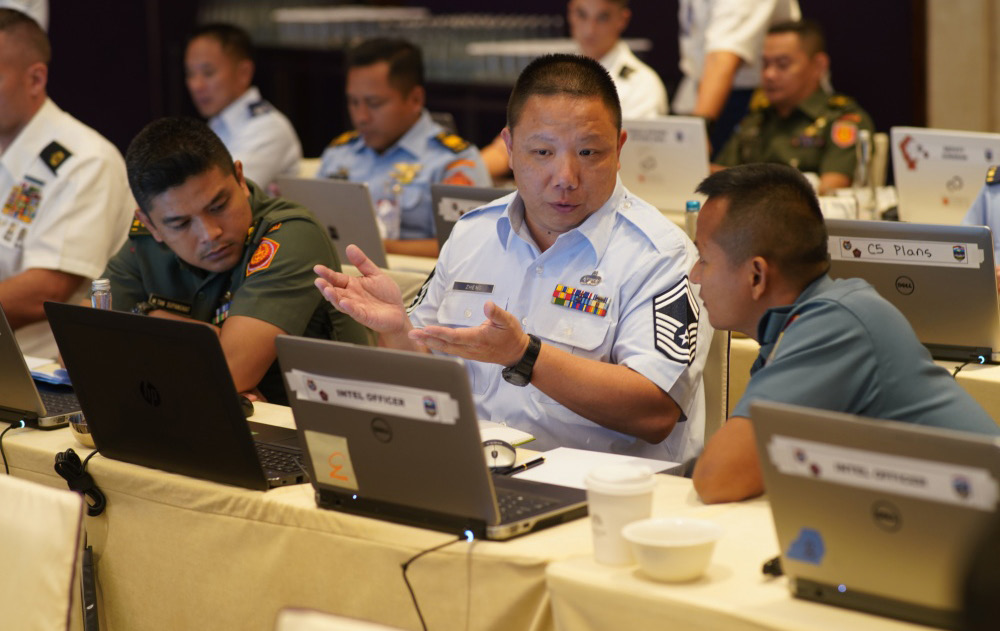
Soldier assists simulated wounded Guardsman, Kalaeloa, HI. An Indonesian Soldier assisted a simulated wounded Hawai‘i Army National Guardsman as he repeled from a building during the Combined Task Force 501 exercise, which is designed to increase response capabilities. (Photo by: Master Sgt. Misty Bicoy) Hawai‘i Army National Guard CERFP training, Kapolei, HI. Soldiers from the HIARNG Philippines, and Indonesia CERFP teams conduct first joint training exercise together. (Photo by: Pfc. Chavaughn Washington) Joint Exercise Gema Bhakti, Indonesia. Senior Master Sgt. Zheng and his Indonesian counterparts discuss military intelligence requirements at Gema Bakhti, 2019. (Photo by: Tech Sgt. Andrew Jackson)Hawai‘i Air National Guard conducts SPP SMEE, Mount Ka’ala, HI. Hawai’i Air National Guard members from the 169th Air Defense Squadron, now under the 298th Air Defense Group, visited the highest point of Oahu, Mount Ka’ala Air Force Station, while participating in a State Partnership Program (SPP) subject matter expert exchange with their Indonesian counterparts. (Photo by: Tech Sgt. Alison Bruce-Maldonado)(Picture from the 2019 Annual Report)
State Partnership Program The SPP provides U.S. Indo-Pacific Command (USINDOPACOM) a unique security cooperation (SC) tool that improves international security, builds partner capability/capacity, and provides the U.S. access and influence with the Government of Indonesia (GOI) and the Republic of the Philippines (RP). The HING SPP Program has two country teams and 14 functional teams for a combined total of 40 service members supporting the plans, resources, and execution of SPP Engagements.
The HING SPP continues to strengthen and reassure their partnership with the Indonesian National Military (TNI) to progress mutually beneficial goals, build partnership capacity, and establish interoperability.
Top engagements in FY20 included:
Multinational Peacekeeping Exercise (MPE) planning conferences in Sentul, Indonesia at the Peacekeeping Operations (PKO) Center.
Indonesia Bilateral Defense Dialogue (USIBDD), the channel of communication and coordination for all professional military-to-military activities and defenserelated between the U.S. Armed Forces and the Armed Forces of Indonesia (TNI)
Aviation (Rotary) Maintenance and Safety Subject Matter Expert Exchange (SMEE) to increase interoperability in rotary wing operations/programs.
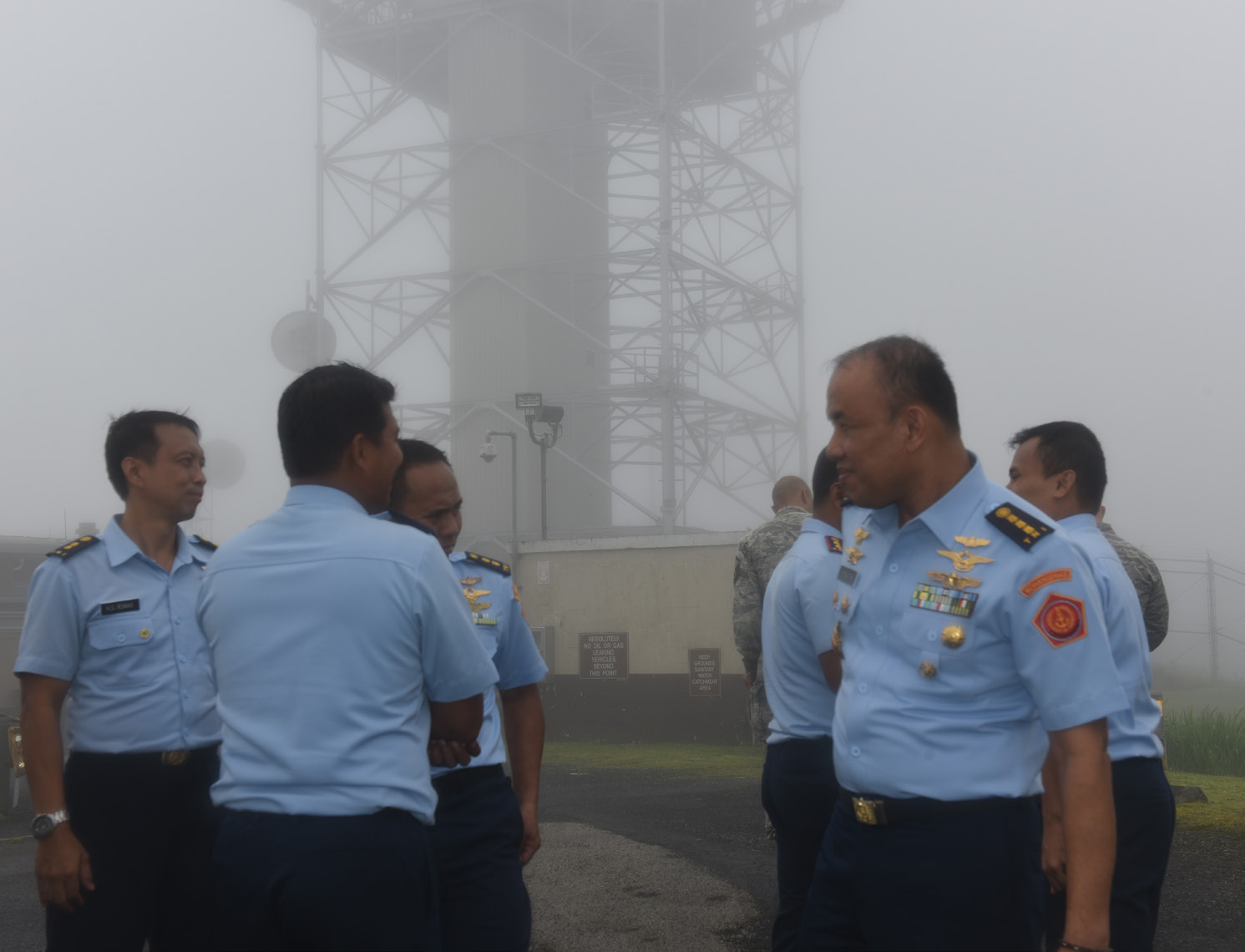
Six HIANG Guardsmen participated in a State Partnership Program (SPP) Air Defense subject matter expert exchange (SMEE) July 10, 2019, in Yogyakarta, Indonesia. The SPP SMEE began in late June on the island of O‘ahu, when members of the HIANG’s 169th Air Defense Squadron hosted their Indonesian Air Force (TNI) counterparts. The SMEE in Yogyakarta included tabletop discussions and question-and-answer sessions on the challenges with drones and GCI procedures, as well as the HING and TNI organizational structures. There was also a visit to the TNI Air training Wing and the 215th Wing radar tower
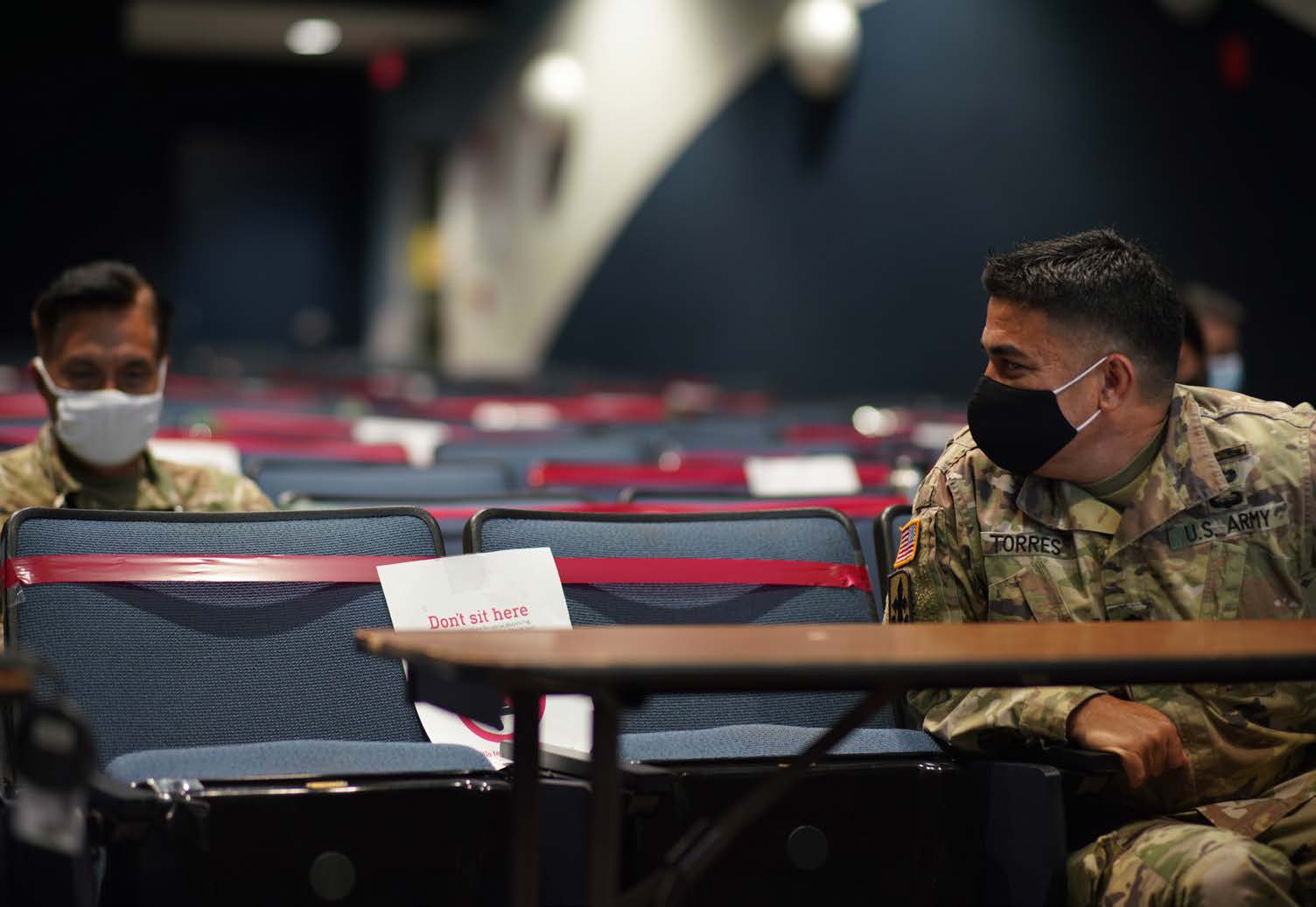
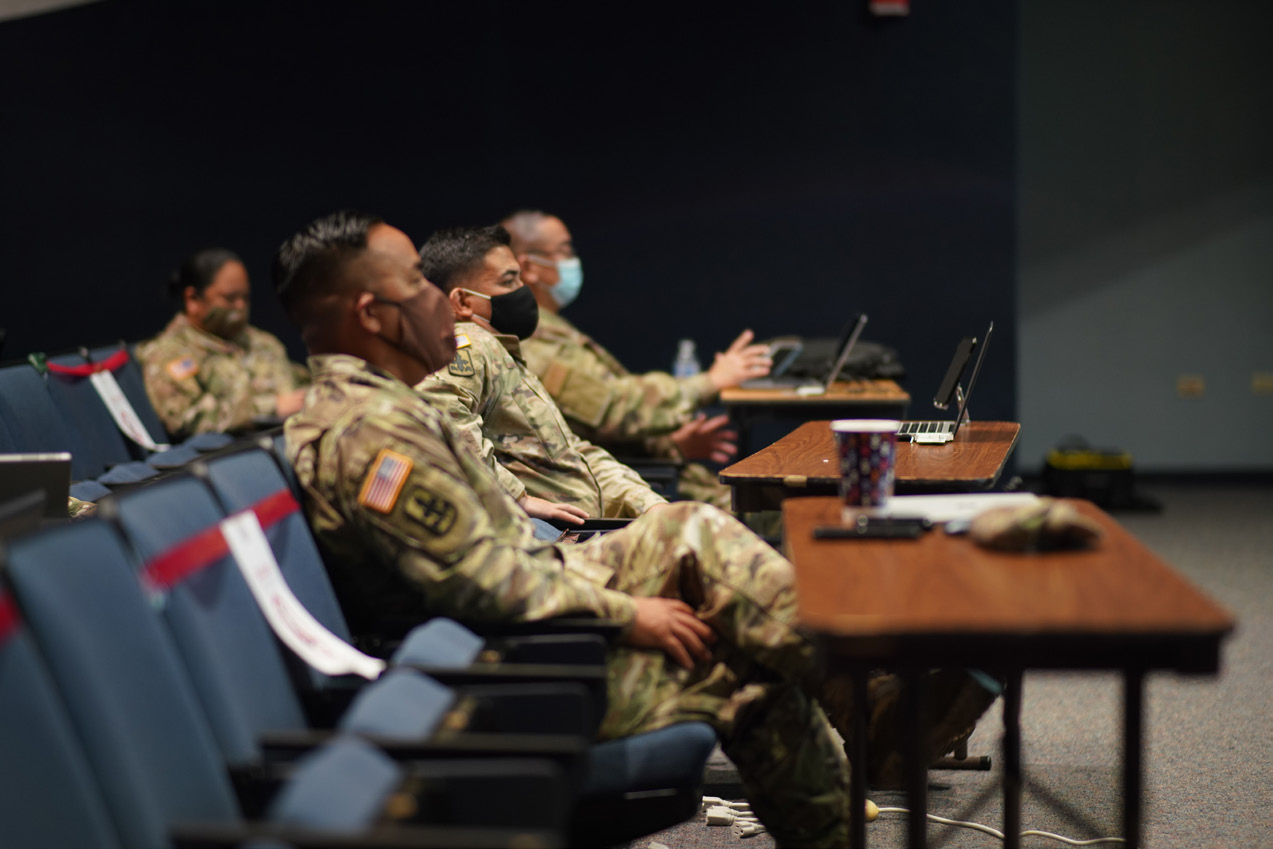
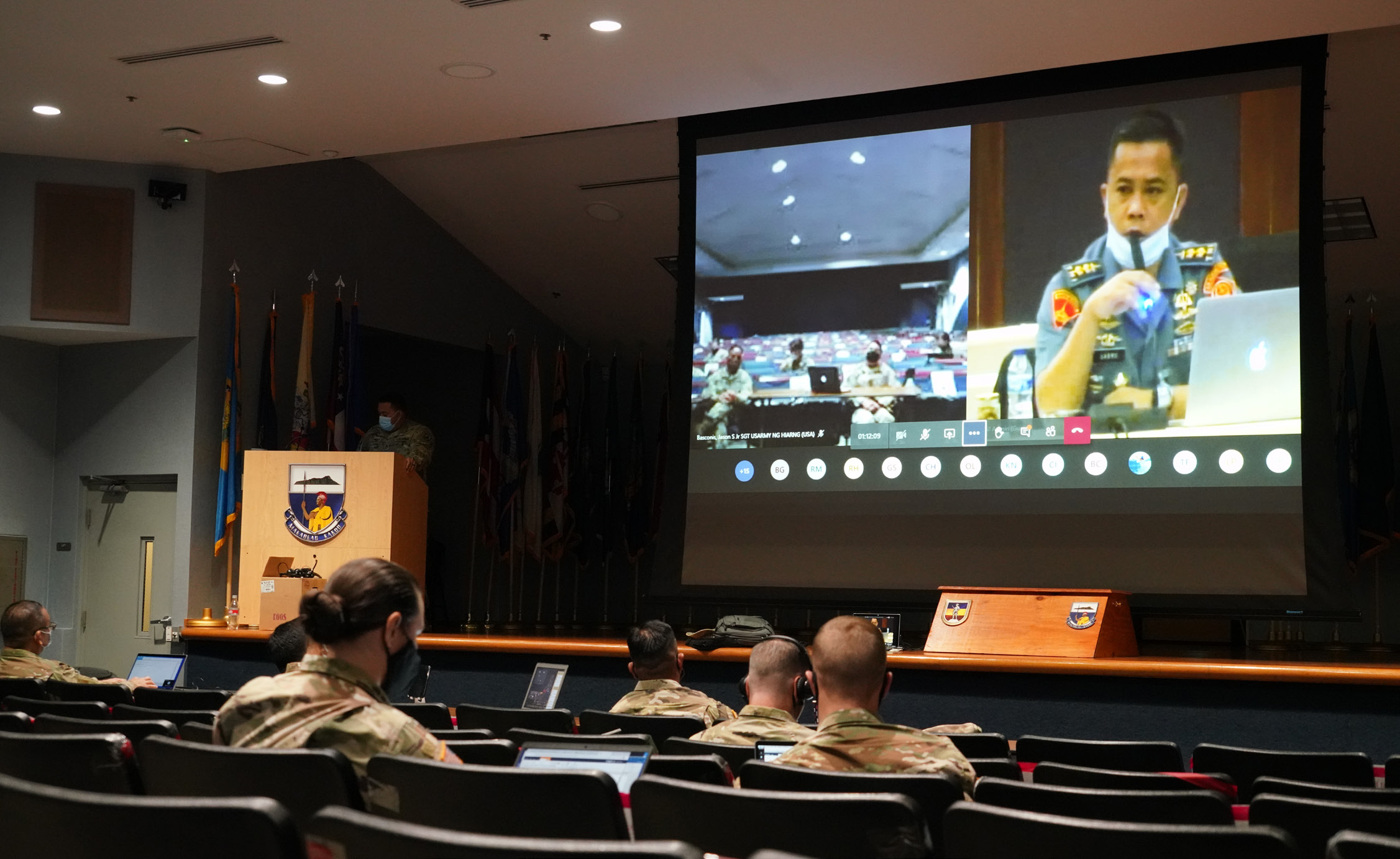
Military Planning Exercise Gema Bhakti 2020 Held in a Distinctly Different Configuration During COVID-19 Pandemic. Hawaii National Guard Soldiers and Airmen participate in a joint military operation planning exercise Gema Bhakti via a virtual meeting space, Honolulu, Hawaii, Aug. 26, 2020. Gema Bhakti is an annual military planning exercise with the Hawaii National Guard State Partnership Program, INDO-PACOM and the Indonesian Armed Forces. This years exercise was held in several location scattered across the world in the last week in August 2020. (U.S. Air National Guard photo by Tech. Sgt. Andrew Jackson)Military Planning Exercise Gema Bhakti 2020 Held in a Distinctly Different Configuration During COVID-19 Pandemic. Hawaii National Guard Soldiers and Airmen participate in a joint military operation planning exercise Gema Bhakti via a virtual meeting space, Honolulu, Hawaii, Aug. 26, 2020. Gema Bhakti is an annual military planning exercise with the Hawaii National Guard State Partnership Program, INDO-PACOM and the Indonesian Armed Forces. This years exercise was held in several location scattered across the world in the last week in August 2020. (U.S. Air National Guard photo by Tech. Sgt. Andrew Jackson)Military Planning Exercise Gema Bhakti 2020 Held in a Distinctly Different Configuration During COVID-19 Pandemic. Hawaii National Guard Soldiers and Airmen participate in a joint military operation planning exercise Gema Bhakti via a virtual meeting space, Honolulu, Hawaii, Aug. 26, 2020. Gema Bhakti is an annual military planning exercise with the Hawaii National Guard State Partnership Program, INDO-PACOM and the Indonesian Armed Forces. This years exercise was held in several location scattered across the world in the last week in August 2020. (U.S. Air National Guard photo by Tech. Sgt. Andrew Jackson)Military Planning Exercise Gema Bhakti 2020 Held in a Distinctly Different Configuration During COVID-19 Pandemic. Hawaii National Guard Soldiers and Airmen participate in a joint military operation planning exercise Gema Bhakti via a virtual meeting space, Honolulu, Hawaii, Aug. 26, 2020. Gema Bhakti is an annual military planning exercise with the Hawaii National Guard State Partnership Program, INDO-PACOM and the Indonesian Armed Forces. This years exercise was held in several location scattered across the world in the last week in August 2020. (U.S. Air National Guard photo by Tech. Sgt. Andrew Jackson)(Pictures from the 2020 Fall Pupukahi)
Harmoniously Working Together
State of Hawaii, Department of Defense, Public Affairs Office | Story by Bernhard Lashleyleidner
Harmoniously Working TogetherThe Office of Defense Cooperation hosted an International COVID-19 lessons learned Webinar May 2021, with Indonesian Army’s Central Hospital Jakarta, Indonesia. The Webinar focused on sharing best practices in response to the global COVID-19 pandemic and efforts to reinforce health security and accelerate COVID-19 response.(Courtesy Photo)(Pictures from the 2021 Spring Pupukahi)
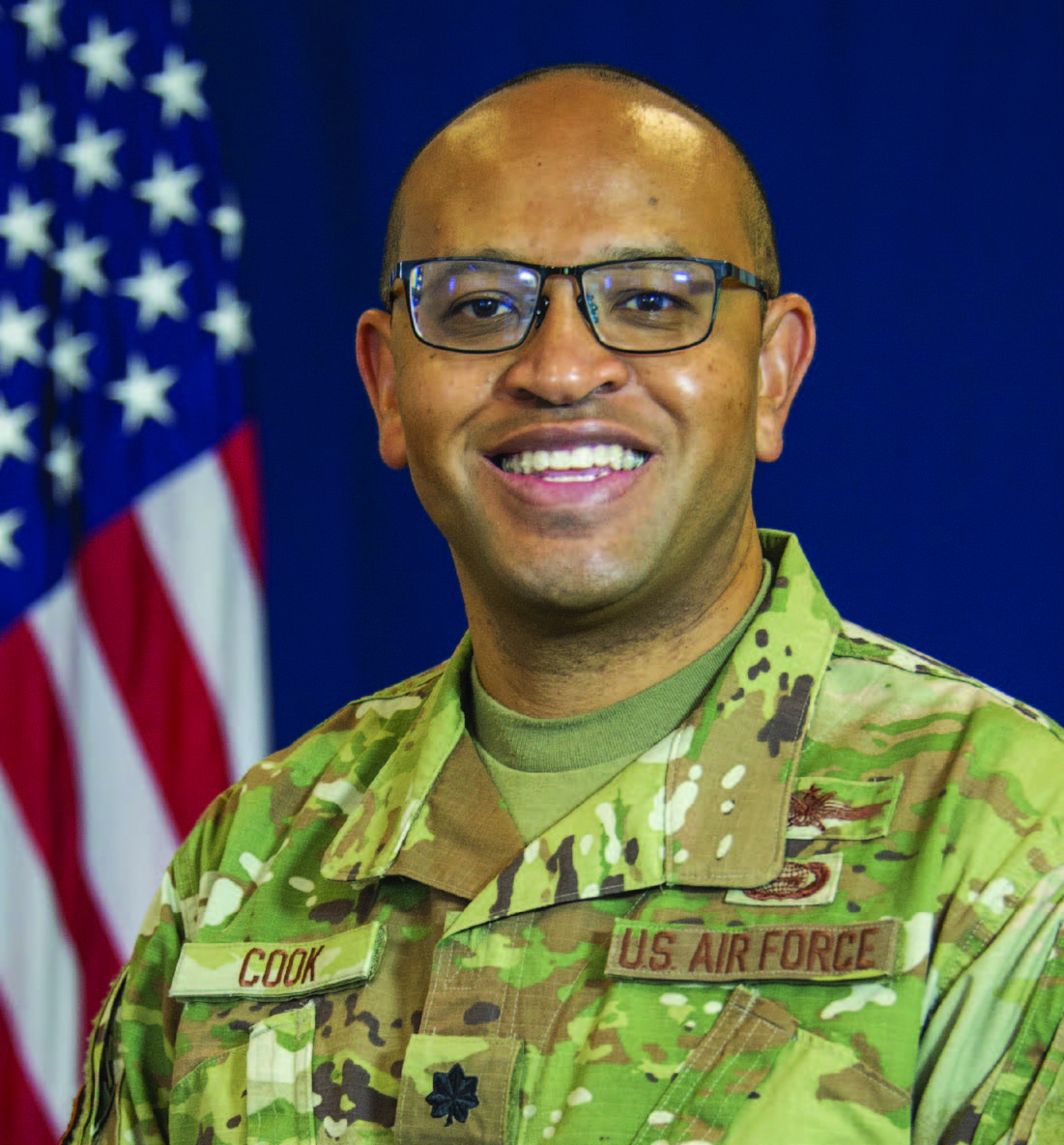
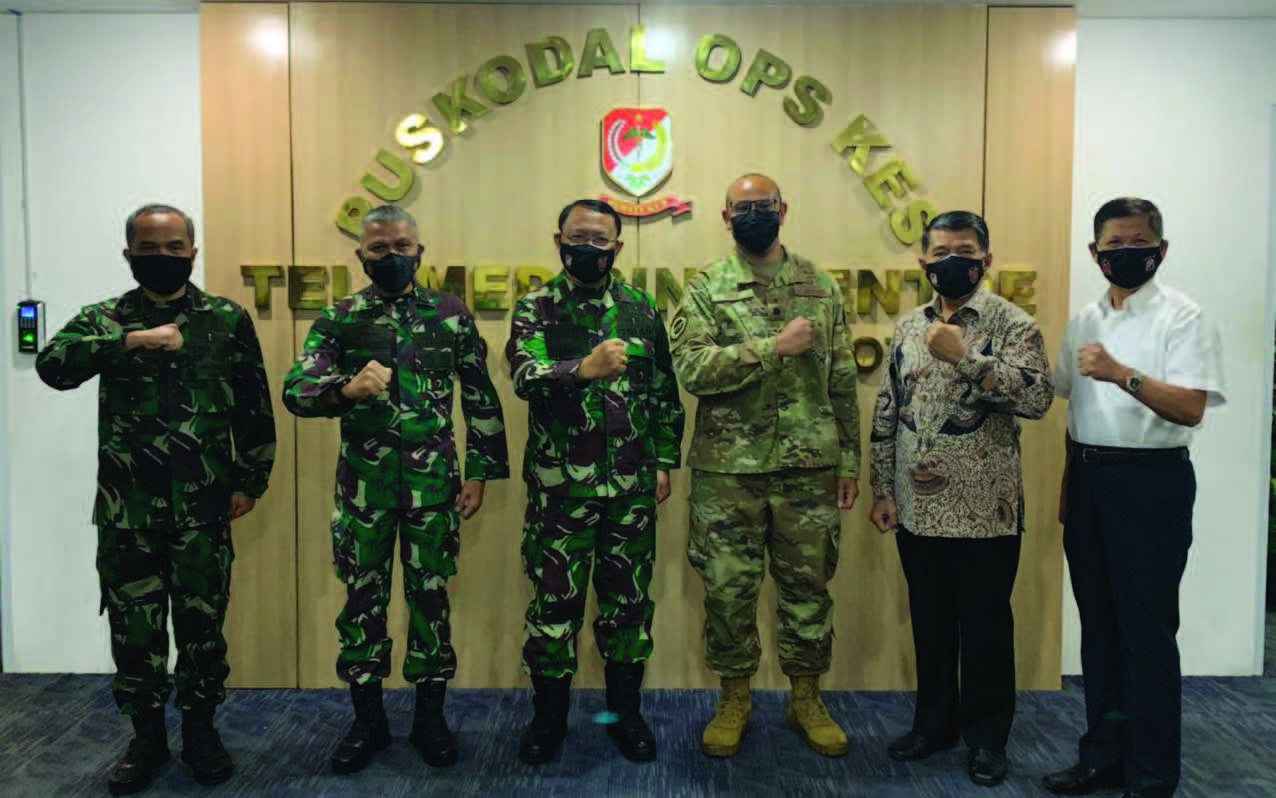
Jakarta, Indonesia – The Hawaii National Guard’s State Partnership Program (SPP) is in full effect with Lt. Col. Roderick Cook, Bilateral Affairs Officer (BAO) hard at work planning, coordinating and synchronizing formal and informal military-to-military and military-to-civilian, virtual and in-person engagements.
BAOs facilitate regular contact with their assigned Partner Nation (PN), which is a key component for building and enduring relationship.
The BAO program is administered by the National Guard Bureau, guided by State Department foreign policy goals, and executed by the state adjutants general in support of the security cooperation objectives of the regional combatant commander and the U.S. Chief of Mission of the partnered country.
Bilateral Affairs Officers are members of the Army or Air National Guard on Title 10 (active duty) orders assigned to an embassy to assist the state in managing and executing requirements associated with the State Partnership Program (SPP.)
Cook has nearly 20 years of service within the Air Force, Air Force Reserve and Air National Guard in Cyber Operations and as an Intelligence officer volunteered to work as a BAO.
“I saw the BAO program as a unique opportunity to serve overseas at a U.S. Embassy, where I would be able to work to project our state’s U.S. policy and interest directly with our PN,” said Cook. “I wanted to be a part of that.”
He would like to see more majors and lieutenant colonels applying for SPP BAO positions.
“This is an opportunity of a lifetime both professionally and personally,” said Cook. Being able to assist, shape and expand our bilateral security relationship it this very important part of the world.”
Cook said he facilitates regular contact with Indonesian military partners, the Government of Indonesia, U.S. Embassy Country Team, Hawaiian National Guard, United States Indo-Pacific Command, Department of Defense and other U.S. government interagency organizations.
“Prior to COVID-19, our state participated in more than 22 formal engagements with the Indonesian military,” said Cook. “This is a very high number when you compare it to the number of annual engagements other states perform with their PN.”
Hawaii, one of only two states to partner with more than one country and maintains partnership ties with Indonesia and Philippines in their State Partnership Program.
“Our state’s efforts, when combined with the rest of the DoD partners at the embassy, have had a great impact on the Indonesian military’s preparedness to respond to humanitarian disasters,” said Cook
Cook mentioned that the SPP has also increased Indonesia’s capacity in both maritime security and cybersecurity.
“My duties ensure that we’re able to build and maintain long-term mutual trust, and facility a long-term professional and personal relationship with our PN,” said Cook.
Cook said the Hawaii National Guard’s SPP is a force multiplier, which has supported the building and strengthening of Indonesia’s military capabilities.
The National Guard State Partnership program began in 1993 with a few Baltic States and currently supports partnerships in more than 70 countries all over the world.
“Since 2006, when the HING became partners with Indonesia, we have enhanced our PN military capabilities and strengthen our partnership,” said Cook. “We were able to provide subject matter experts
Cook said the U.S.-Indonesia defense cooperation has never been stronger or more comprehensive than it is today.
“Our partnership with the Indonesian military has grown, because of the continuity of our personnel,” said Cook. “Unlike the active duty service members, who rotate every two -three years, our personnel stay around a lot longer and participate in the exercises alongside their PN counterparts.”
Cook said the HING officers and enlisted participated in numerous exercises over the years and have worked alongside their PN military, which creates a familiarity and trust.
He mentioned being conscious of some of the cultural differences in order to avoid conflict when working with your PN.
“Each day present a new set of challenges, opportunities and lessons in regard to working together and understanding our PN’s cultural concerns and sensitives,” said Cook.
Cook said he couldn’t talk about Indonesia without mentioning the amazing food, cultural and linguistic diversity as well as the awesome geographical locations.
“The people are some of the friendliness I’ve ever met,” said Cook. “They welcomed me and my family with open arms.”
The HING has trained hundreds of Indonesian military personnel and provided world-class defense technology to them.
“We are proud to be Indonesia’s largest military engagement partner, conducting more than 240 joint exercises exchanges and other military-to-military engagements,” said Cook.
Hawaii National Guard Renews Relationship with Indonesia with GEMA BHAKTI Workshop
State of Hawaii, Department of Defense, Public Affairs Office | Story by Master Sgt. Andrew Jackson | Monday, September 20, 2021
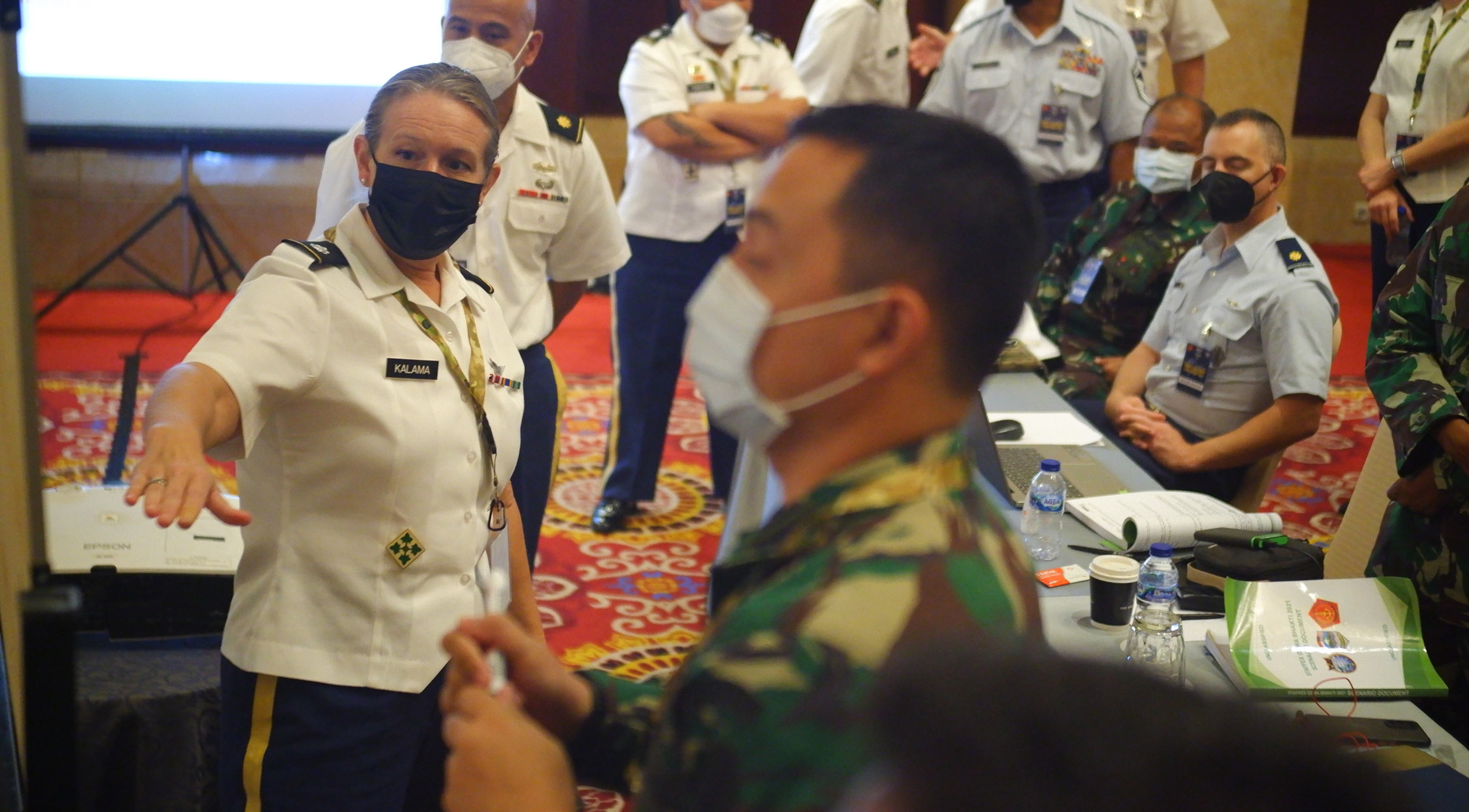
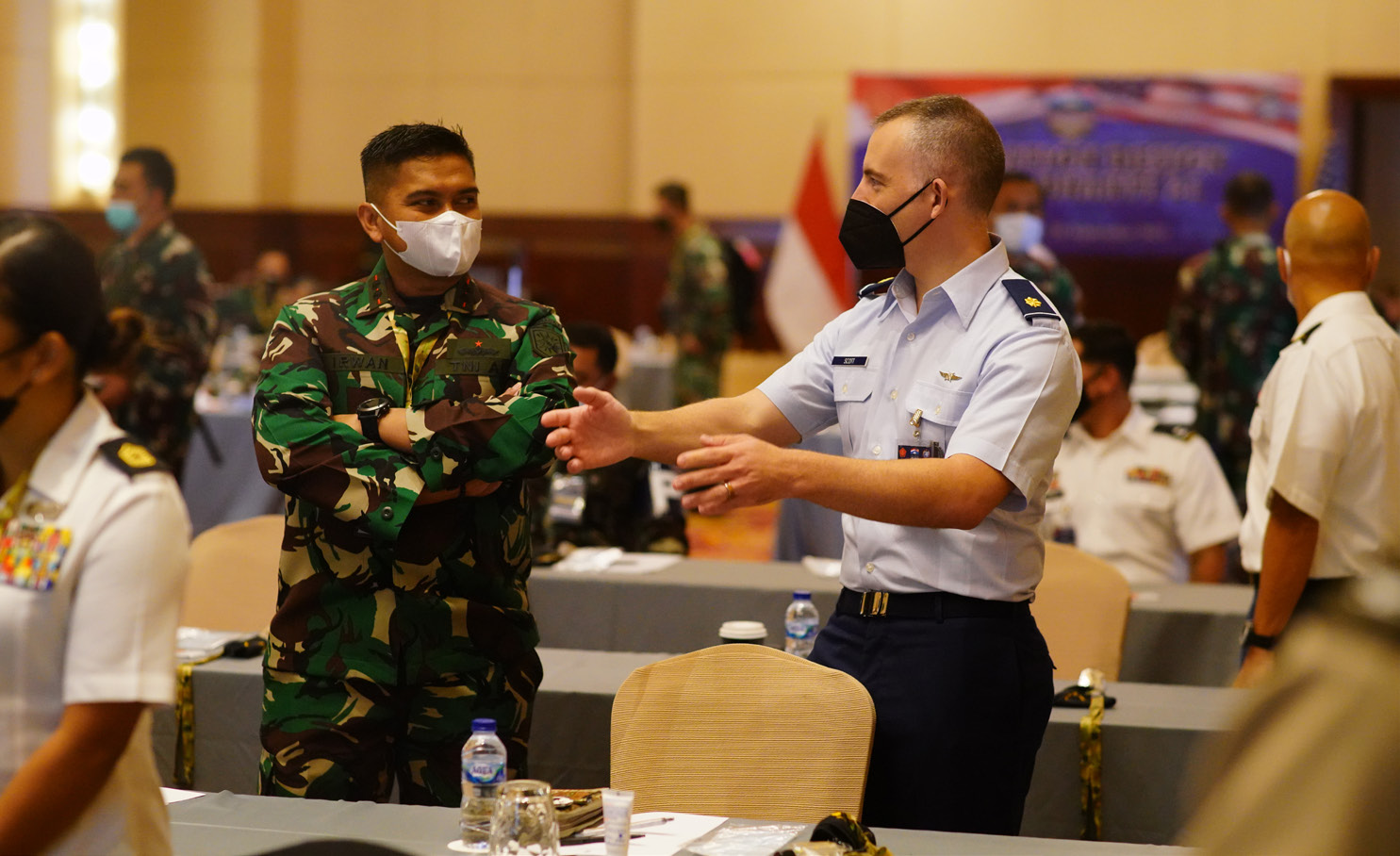
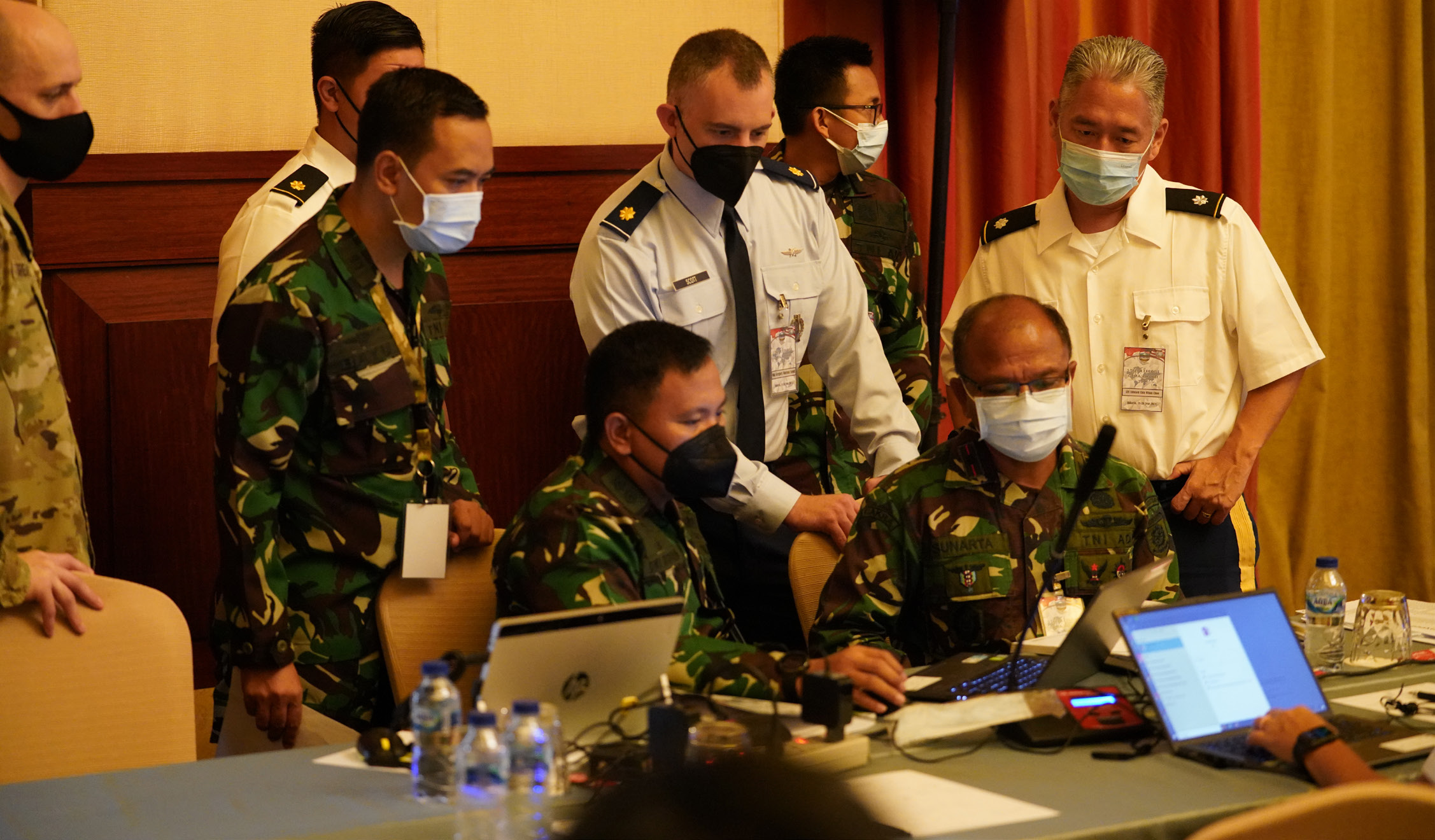
Lt. Col. Katherine Kalama, Hawaii Army National Guard, and a team of military planners from the Tentara Nasional Indonesia (TNI) and the Hawaii National Guard discuss the center of gravity assessments for the exercise scenario during the operational design workshop of Exercise GEMA BHAKTI, Sept 18, 2021, Jakarta Indonesia. The operational design workshop in the precursor exercise for Exercise GEMA BHAKTI and is facilitated by the Hawaii National Guard with the Tentara Nasional Indonesia (TNI) as a part of the State Partnership Program. (U.S. Air National Guard photo by Master Sgt. Andrew Jackson)Col. Pamela Ellison, Hawaii Army National Guard, interacts with her Tentara Nasional Indonesia (TNI) counterpart for the operational design workshop portion of Exercise GEMA BHAKTI, Sept. 16, 2021, Jakarta Indonesia. The operational design workshop in the precursor exercise for Exercise GEMA BHAKTI and is facilitated by the Hawaii National Guard with the Tentara Nasional Indonesia (TNI) as a part of the State Partnership Program. (U.S. Air National Guard photo by Master Sgt. Andrew Jackson)Maj. Gregory Scott, Hawaii Air National Guard, interacts with his counterpart for the operational design workshop portion of Exercise GEMA BHAKTI, Sept. 16, 2021, Jakarta Indonesia. The operational design workshop in the precursor exercise for Exercise GEMA BHAKTI and is facilitated by the Hawaii National Guard with the Tentara Nasional Indonesia (TNI) as a part of the State Partnership Program. (U.S. Air National Guard photo by Master Sgt. Andrew Jackson)(Pictures from the 2021 Fall Pupukahi)
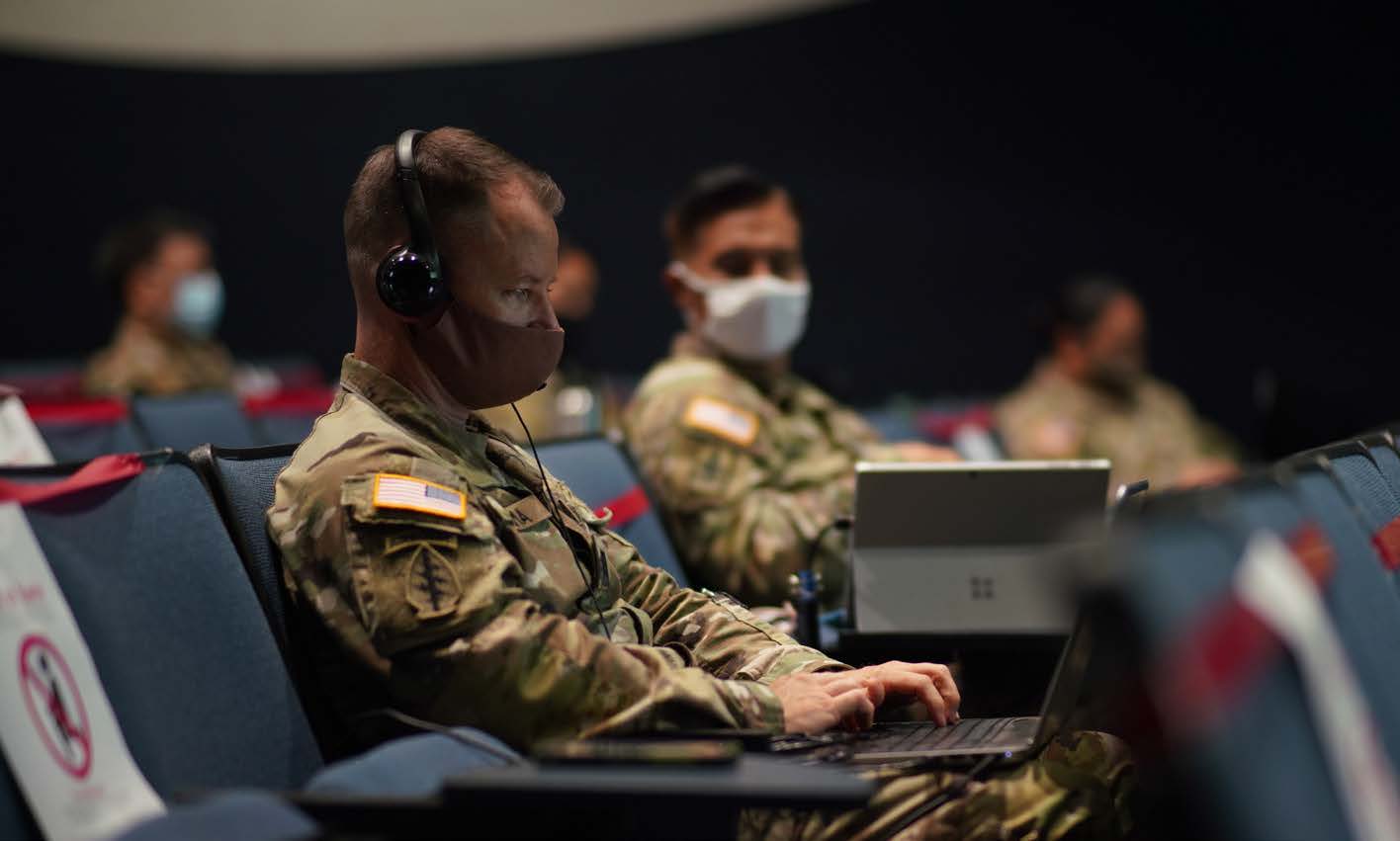
A team of military planners from the Hawaii National Guard (HING) kicked off an operational design workshop with the Tentara Nasional Indonesia (TNI) in Jakarta, Indonesia on September 16, 2021. The workshop is the precursor for Exercise GEMA BHAKTI, a peace operation and humanitarian assistance exercise, which will commence on September 21, 2021. The HING facilitates the workshop as a part of the State Partnership Program (SPP). This is the first face-to-face SPP exchange between the TNI and HING since late 2019 due to the COVID Pandemic. USINDOPACOM service components are also participating in this year’s workshop.
“The HING has ongoing relationship with the TNI,” said Lt. Col. David Hosea, HING Military planner. “Building this relationship, sharing experiences, and training alongside our partners, helps maintain security and stability in the Pacific.”
The HING is state a partner with Indonesia and regularly held combined exercises and events to increase the depth of that relationship before the pandemic. This is the fourth year Hawaii and Indonesia have participated in an operational design seminar. The 2020 edition was executed virtually.
Operational design is a process where a committee of military members, and sometimes members of government, examine very complex problems to help define variables, goals, tension points, and a desired end-state to aid in the planning and execution of military or governmental action. The process is a key first step in military planning that requires committees of personnel from diverse backgrounds that want to understand complex socio-political problems and make recommendations on a desired end-state or develop an operational approach. Once the scenario is framed, analyzed, and debated then lines of effort are proposed. The lines of effort define the actions needed to move a situation from the current state to the desired state, and once agreed upon this will trigger Exercise
GEMA BHAKTI.
“Operational design takes complex situations and breaks them down in easy, manageable steps in the military planning process,” said Lt. Col. Brandon Torres, Hawaii Army National Guard military intelligence officer. “This is important because in our current operation environment, things are not as simple as they used to be. It is imperative that this step is done right. We need to be able to think through the wicked problems and get to a solution for those problems. This process helps us to define what the true nature of the problem is so we can plan a response.”
A secondary goal of the operational design workshop is the establishing of relationships between the Hawaii National Guardsmen and their Indonesian counterparts. During the four day exercise the full spectrum of team building are experienced, from storming to conforming. The added COVID-19 protocols had little diminishing effect on the overall exercise. The Hawaii National Guard brought a diverse team for this year’s workshop to help foster a deeper level of discussions and exposure for the staff. A hallmark of this type of military engagement is professionally spirited conversations as each member shares from their knowledge, experience and opinions on the different aspects of the scenario and they work as a team to come to a common understanding.
As the teams worked through the operational design process to frame the problem, their relationships began to mesh, and new facets of the scenario came to light. Throughout each day the entire group would pause, and each team would present their products – further shedding light on different variables and possible ways forward.
“I have learned a lot during this staff exercise,” said Maj. Raja Sitanggang, Tentara Nasional Indonesia staff officer. “As a peace keeping officer, I help guide the planning process as we transition from peace enforcement to peace keeping inside this year’s exercise scenario. This exercise requires us to think critically and creatively because there is no easy established answer. The Hawaii National Guard is very professional and selected diverse officers to represent them in this program. It is impressive.”
While the COVID protocols; mandatory mask wear, temperature checks, and periodic room sanitation, had little effect on the actual execution of the workshop, getting the military staffs in one room for the first time in 18 months required many more steps than usual. Every member of the U.S. delegation was required to be fully vaccinated and were tested multiple times before leaving for Indonesia. They adhered to the required 7-day quarantine and were tested an additional 2 times before the workshop could be started. The TNI members were also quarantined before the start of the exercise.
Hawaii National Guard State Partnership Program partner Indonesia join in Exercise GEMA BHAKTI
– State of Hawaii, Department of Defense, Public Affairs Office | Story by Master Sgt. Andrew Jackson | Monday, September 20, 2021
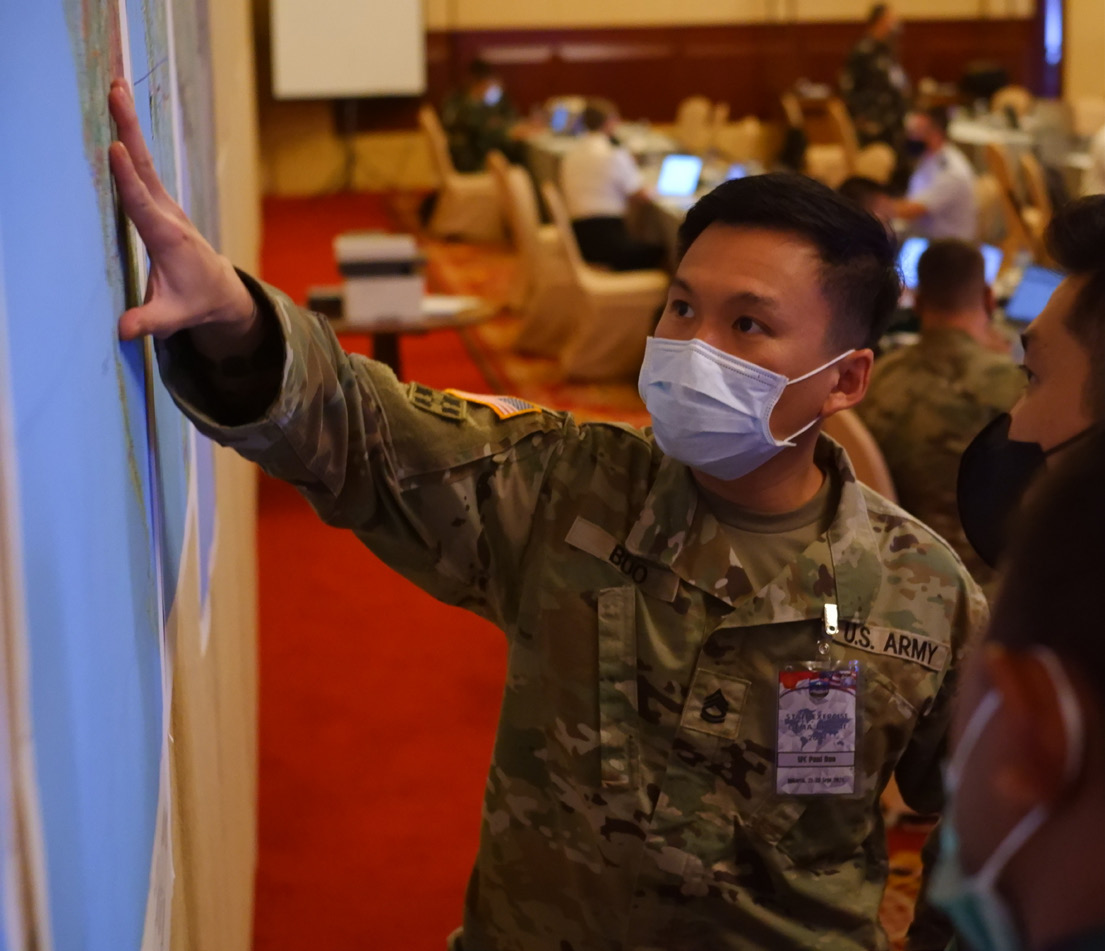
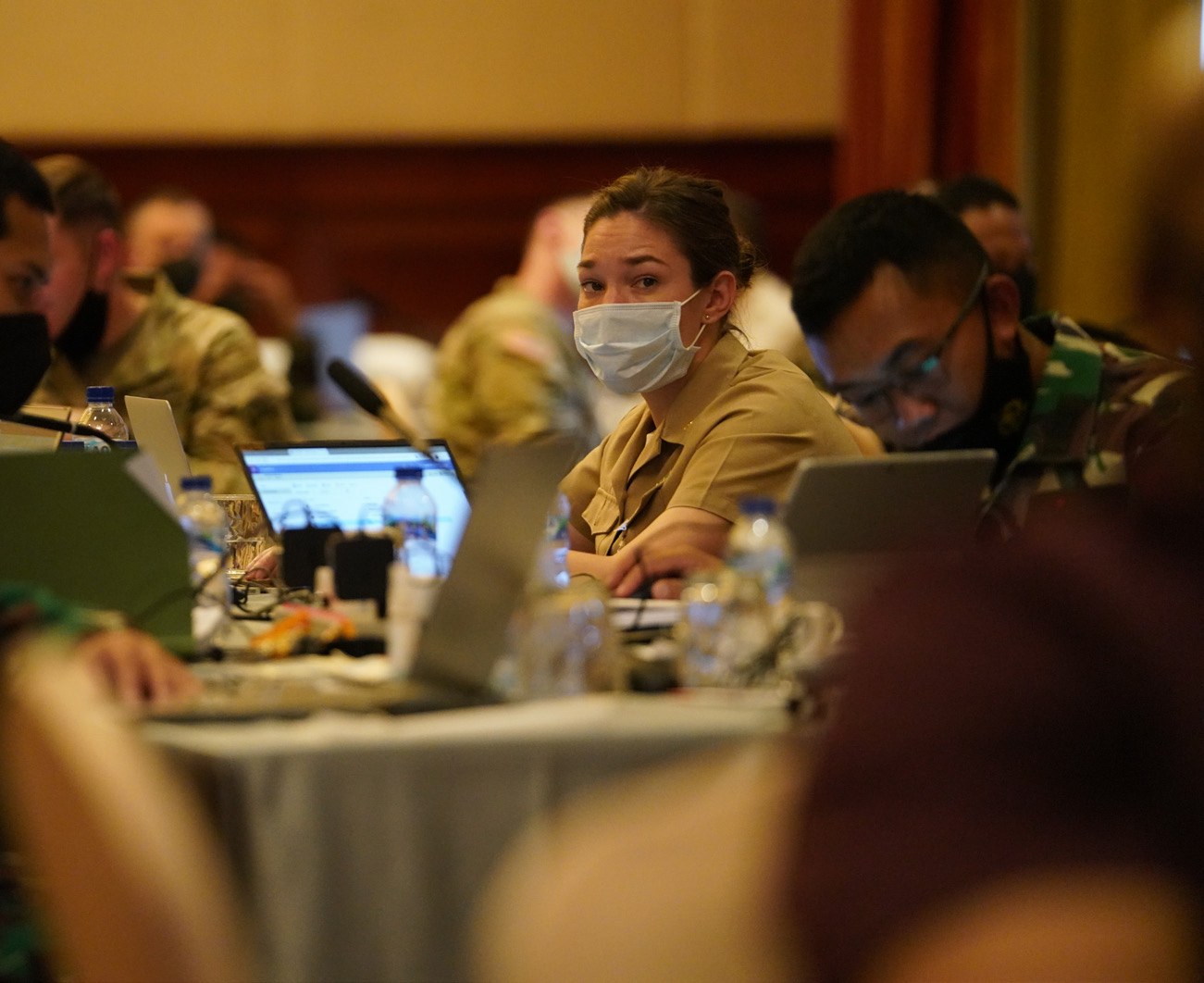
Sgt. First Class Paul Buo, US Army, 5th Security Force Assistance Brigade, reviews the exercise map with his Tentara Nasional Indonesia (TNI) counterparts during the mission analysis portion of Joint Exercise GEMA BHAKTI (GB21) September 21, 2021, Jakarta Indonesia. GB21 is a Chairman, Joint Chiefs of Staff (CJCS) staff exercise (STAFFEX) between USINDOPACOM (and components) and TNI (and components), and is designed to improve joint, operational-level staff planning and processes. It also promotes positive military relations, assuring security and stability in the region, increases cultural awareness, and enhances command and control proficiency. (U.S. Air National Guard photo by Master Sgt. Andrew Jackson)Lt. Cmdr. Myrian Smith, US Navy, listens to the initial mission brief on the third day of Joint Exercise GEMA BHAKTI, September 23, 2021, Jakarta Indonesia. GB21 is a Chairman, Joint Chiefs of Staff (CJCS) staff exercise (STAFFEX) between USINDOPACOM (and components) and TNI (and components), and is designed to improve joint, operational-level staff planning and processes. It also promotes positive military relations, assuring security and stability in the region, increases cultural awareness, and enhances command and control proficiency. (U.S. Air National Guard photo by Master Sgt. Andrew Jackson)The G6 Cyber team composed of service members from the Tentara Nasional Indonesia (TNI), Hawaii Army National Guard, Hawaii Air National Guard and the US. Army conduct mission analysis for the Joint Exercise GEMA BHAKTI scenario, September 22, 2021, Jakarta Indonesia. GB21 is a Chairman, Joint Chiefs of Staff (CJCS) staff exercise (STAFFEX) between USINDOPACOM (and components) and TNI (and components), and is designed to improve joint, operational-level staff planning and processes. It also promotes positive military relations, assuring security and stability in the region, increases cultural awareness, and enhances command and control proficiency. (U.S. Air National Guard photo by Master Sgt. Andrew Jackson)(Pictures from the 2021 Fall Pupukahi)
The armed forces of Indonesia and the United States held Joint Exercise GEMA BHAKTI 21 (GB21) a Chairman, Joint Chiefs of Staff (CJCS) staff exercise, between U.S. Indo Pacific Command (USINDOPACOM) and the Tentara Nasional Indonesia (TNI) in Jakarta, Indonesia from 21-28 September 2021. The eight-day exercise was designed to improve joint operational-level staff planning and processes during crisis response. It also promoted positive military relations, increased cultural awareness, and enhanced command and control proficiency while assuring security and stability in the region.
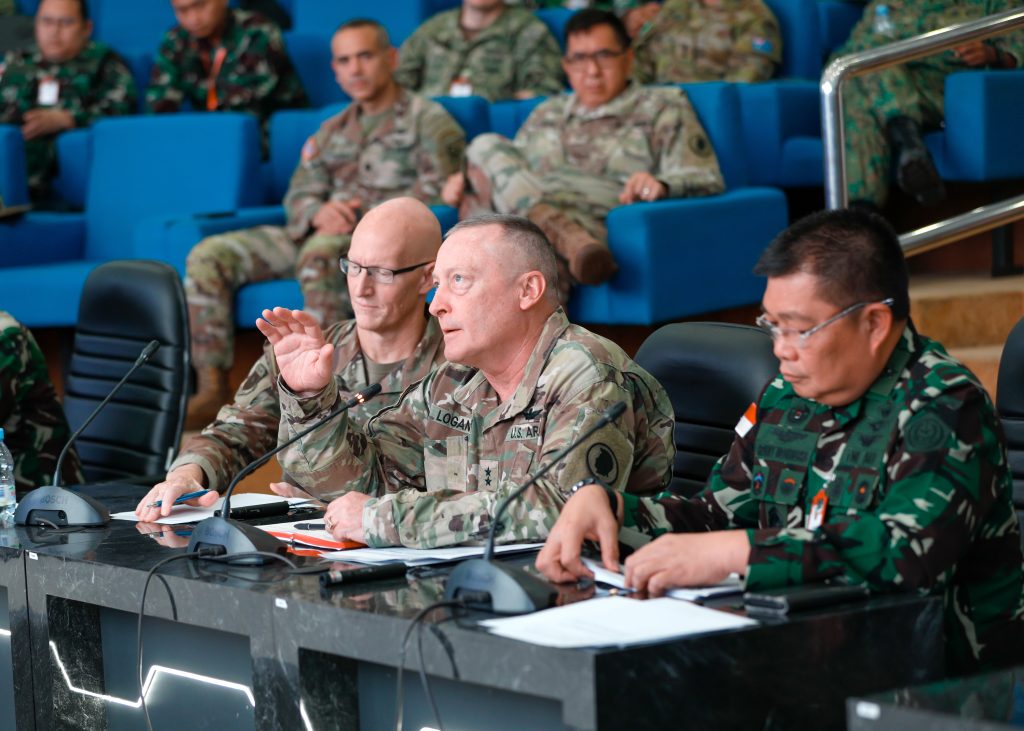
“In the past nine years, Exercise GEMA BHAKTI has evolved and increased in complexity. The first year involved just a tabletop discussion focused mostly on future exercise design,” said Brig. Gen. Stephen F. Logan, Hawaii National Guard Deputy Adjutant General. “GEMA BHAKTI now incorporates a staff exercise with multiple scenarios.” This was the ninth iteration of GEMA BHAKTI, Indonesian for “Echo of Good Deeds.” USINDOPACOM and the TNI conducted planning for a scenario involving forces from the U.S. military (Army, Navy, Air Force and Marines and their TNI counterparts), as well as actors from the civilian and humanitarian communities, such as U.N. World Food Program, USAID’s Office of U.S. Foreign Disaster Assistance, and the Red Cross.
Approximately 40 USINDOPACOM and U.S. Inter-Agency personnel, 30 TNI personnel, and additional representatives from non-military organizations took part. About 20 Hawaii National Guardsmen supported this iteration of GB21 and also collaborated with the TNI on the precursor operational design workshop that concluded on September 20, 2021.
“We are here to learn from the TNI and to share from our experiences,” said Lt. Col. David Hosea, Hawaii National Guard military planner. “They [the TNI] have more experience in planning and participating in peacekeeping operations, and I am excited to learn from them. Building this relationship, sharing experiences, and training alongside our partners, helps maintain security and stability in the Pacific.”
The exercise had many phases starting with a day of academics and lecture then transitioned to the staff-ex portion where the joint staff shops from G-1 (personnel) to G-6 (cyber) and special staff received the operational approach brief prepared in the previous exercise with the TNI and Hawaii National Guard (HING). The joint teams comprised of members from the TNI, US Army, US Navy, US Marines, and the HING analyzed the situation. The problem was dissected by each staff section where challenges, needs and capabilities are identified and then each of the findings were entered on a slide, then briefed to the commander. The goal was always to move from the “current state” to the “desired state.” In this case, moving from peace enforcement to peace keeping operations. The process that was followed is enshrined in the Military Decision Making Process – Multinational. The atmosphere was always one of a learning environment.
“In this exercise I have been out front quite a bit,” said 1st lt. Crystal Woods, Hawaii Army National Guard. “As junior officer to gain this experience and have this exposure will help set a strong foundation as I move through my career.”
A wide variety of topics were addressed during the planning process in-order solve an ever-evolving set of issues in the complex scenario. The multinational team, that by day two, was functioning as a joint staff, grew in military knowledge and wisdom no matter their level of experience.
“As the maritime SME (subject matter expert) and Pacific Fleet representative I read up on the National Guard and the TNI,” said Lt. Cmdr. Myrian Smith, US Navy. “I also reviewed the Multi-National Force Standard Operation Procedure to insure we had a common language.”
The Hawaii National Guard led exercise emphasized small group discussions facilitated by subject matter experts from the TNI and US forces. Each shared from their experiences and their lessons learned. Sometimes it seemed difficult to arrive with a way forward due to the different perspectives, but this was part of the process to keep a strong personality in the staff from injecting a short-sighted perspective and error-ed thinking. Through the process of discussion, presentation, “azimuth checks,” and redressing deficiencies, the relationships are built and courses of action are developed.
“We [the TNI] have our own way of conducting operations and the US has their way,” said Maj. Arya Justisia Sani, TNI medical officer. “In this exercise we get to know how we conduct operation verses how they [the US Military] conduct operations, but if there is a contingency we can operate in the same way. This exercise is very helpful to establish a common operating procedure.”
The days were long in GB21 officially starting at 0745 and working in the groups through MDMP-M until well after 1700 with only one organized break for lunch where teams ate the regional delicacies. Many of the participants retreated to their rooms after each day’s assessments to read further on the scenario and researched how similar historical scenarios were addressed.
“For the past eighteen months before this exercise we’ve had multiple MDMP engagements with the TNI,” said Capt. Curtis Trauthwein
US Army. “This exercise helps both countries prepare for interoperability and planning for contingency operations. It is good to test and practice our interoperability.”
The COVID-19 pandemic was an additional presence throughout GB12. Strict protection and testing protocols were followed every day; mask wear, temperature checks, hand sanitation and hourly room sanitation. Fortunately, these mitigations had little effect on the productive outcome of GB21. The only true loss was some of the traditional cultural exchange activities which normally occur. However, the participants found other ways to experience each other’s culture during the planning exercise.
“What I am going to take way form GB21 are the relationships the HING and TNI,” said Gunnery Sgt. Benjamin Dao – US Marines. “They are some of the most outstanding and professional individuals and have the work ethic to meet all mission objectives. I will never forget this; they are great people.”
GEMA BHAKTI acts as a culmination of events for the HING and the and TNI, who are linked through the State Partnership Program (SPP). For instance, in 2019 the HING SPP and TNI had 22 separate engagements that lead to GB19
This only the second face to face engagement since late 2019, with GB20 being entirely virtual due to the pandemic. This did not diminish the caliber of the exercise or quality of the exchanges.
“I learned a lot from my US counterparts,” said Maj. Adityo Suryo Nug – Tentara Nasional Indonesia. “We have different capabilities. We have different doctrines. We have different considerations. We learn from each other and strengthen each other in our cooperation in the hope that in the future if we have to work together, we will be able to.”
There were many new faces on all sides of GB21 and a few old hands, but there where lessons to be learned and experiences to be had for everyone. This year’s GEMA BHAKTI was a hopeful return to normal while looking forward to the changes on the horizon.
“GEMA BHAKTI allows us to train with our partners in the Indo-Pacific region,” said Col. Tracey Omori, Hawaii Army National Guard – Exercise GB21 Commander. “We have strengthened our connection so if we need to work together in an exercise or in real-world operations we will be more than capable.”
Gema Bhakti 2022 marks a change in planning doctrine
State of Hawaii, Department of Defense, Public Affairs Office | Story by Master Sgt. Andrew Lee Jackson | Wednesday, September 15, 2022
US Air Force Col. Kristoff Sills, Hawai‘i Air National Guard, and Lt. Col. Fajar Catur, TNI, discuss the 2nd round of academic lectures for day 2 of Gema Bhakti, September 10, 2022, Jakarta Indonesia. Gema Bhakti 22 is a USINDOPACOM Joint Exercise Program event, utilizing US Joint forces partnering with TNI Armed Forces working together to increase interoperability and enhance regional stability and security through bilateral and multilateral partnerships. (US Air Force Photo by Master Sgt. Andrew Jackson)Gema Bhakti 2022 marks a change in planning doctrineGema Bhakti 2022 marks a change in planning doctrineGema Bhakti 2022 marks a change in planning doctrineGema Bhakti 2022 marks a change in planning doctrineGema Bhakti 2022 marks a change in planning doctrine(Pictures from the 2022 Fall Pūpūkahi)
The Tentara Nasional Indonesia (TNI, Indonesian Armed Forces) and the US Indo-Pacific Command (USINDOPACOM) held a Joint bilateral, Joint Force exercise focused on operational-level planning and execution of combined military operations called Gema Bhatkti 22 in Jakarta Indonesia in September of 2022. This is the 10th iteration of Gema Bhakti. This year’s exercise was a staff exercise (STAFFEX) that focused the military’s role in support of defense-led operations building interoperability efforts in the region.
“We are here to share our information with the US Armed forces,” said Lt. Col. Fajar Catur, TNI. “So, we have a mutual understanding that will enhance our equal partnership”
Gema Bhakti has evolved over the past ten years from a tabletop exercise to Humanitarian Assistance and Disaster Relief (HADR) mission planning, and this year’s iteration was a markedly more complicated operational level planning exercise. The primary exercise goal is to improve TNI, U.S. forces, Joint/Combined, Operational-level planning in response to a regional crisis and to enhance interoperability and professionalism of their forces.
“TNI has a similar mission set as the Hawai‘i National Guard,” stated US Army Col. Cesar Pudiquet, Hawai‘i Army National Guard. “They have a military mission, along with ʻ911ʻ and HADR as well. The joint planning doctrine used by the TNI, HING provides a flexible approach the is adaptable to a variety of operational situations.”
The Hawai‘i National Guard (HING) continued its support of Gema Bhatkti through the State Partnership Program. Through the program, the National Guard conducts military-to-military engagements in support of defense security goals but also leverages whole-of society relationships and capabilities to facilitate broader interagency and corollary engagements, thereby spanning military, governmental, economic, and social realms. The HING brings a broad spectrum of experience forged of the past few years have built J-Staffs to respond to volcanic eruptions, floods, and the COVID-19 pandemic in the past 5 years.
“The Gema Bhakti scenario has changed year to year over the past 10 years,” said Brig. Gen. Moses Kaoiwi Jr., Hawai‘i National Guard, Joint Force director. “This year’s scenario is no different. We have the KOGABWILHAN the TNI’s regional joint commands that need to develop a response plan to a fictitious scenario involving a country that is threating Indonesian regional security.”
One of the key differences in this year’s GB22 was the implementation of the TNI’s KOGABWILHAN structure in the exercise. The KOGABWILHAN is analogous to the US Forces combatant commands. The three KOGABWILHAN’s all provided key staff to the planning exercise. This expanded command structure is a relatively new development in the TNI’s military leadership doctrine. In previous years Gema Bhatki involved the formation of a single Joint Staff. GB22 stood up three staffs that all worked separate facets of a dynamic regional scenario. The involvement of the KOGABWILHAN personnel will provide added continuity future Gema Bhakti exercises.
“Working with the TNI has been great,” commented Army Master Sgt. Jason Lieber, USINDOPACOM. “They [TNI] do a lot of things in
similar ways to the US. It is little bit outdated doctrine that we use. Gaining perspective and understanding then expanding on it with new doctrine is the point of this exercise.”
The TNI and INDOPACOM provided participants from each of their military components, Army, Navy, Air Force and Marines along with representatives from non-governmental agencies. The primary exercise goal is to improve TNI, U.S. forces, Joint/Combined, Operational-level planning in response to a regional crisis and to enhance interoperability and professionalism of their forces. Gema Bhakti also provides a personal and professional broadening opportunity for all its participants.
“My interactions with the TNI over the years have helped me develop as a leader,” said Army Lt. Col. Brandon Tores, Hawai‘i Army National Guard. “Their different approaches to, different problems, to different types of people, to different originations, broadens my understanding of the world and colors the decisions I make. Learning about my warfighting function [military intelligence] and sharing my knowledge has been one of the most rewarding experiences in my military career.
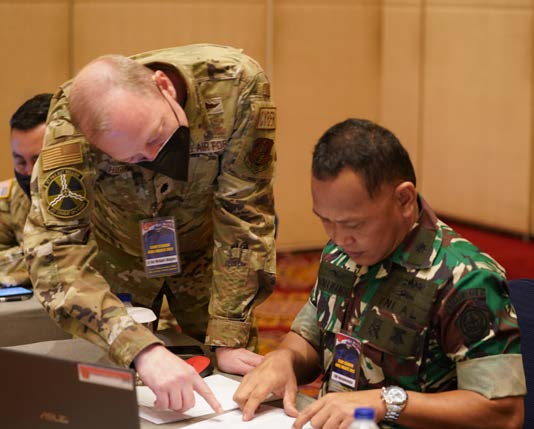
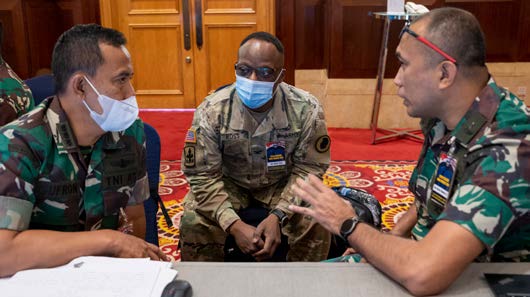
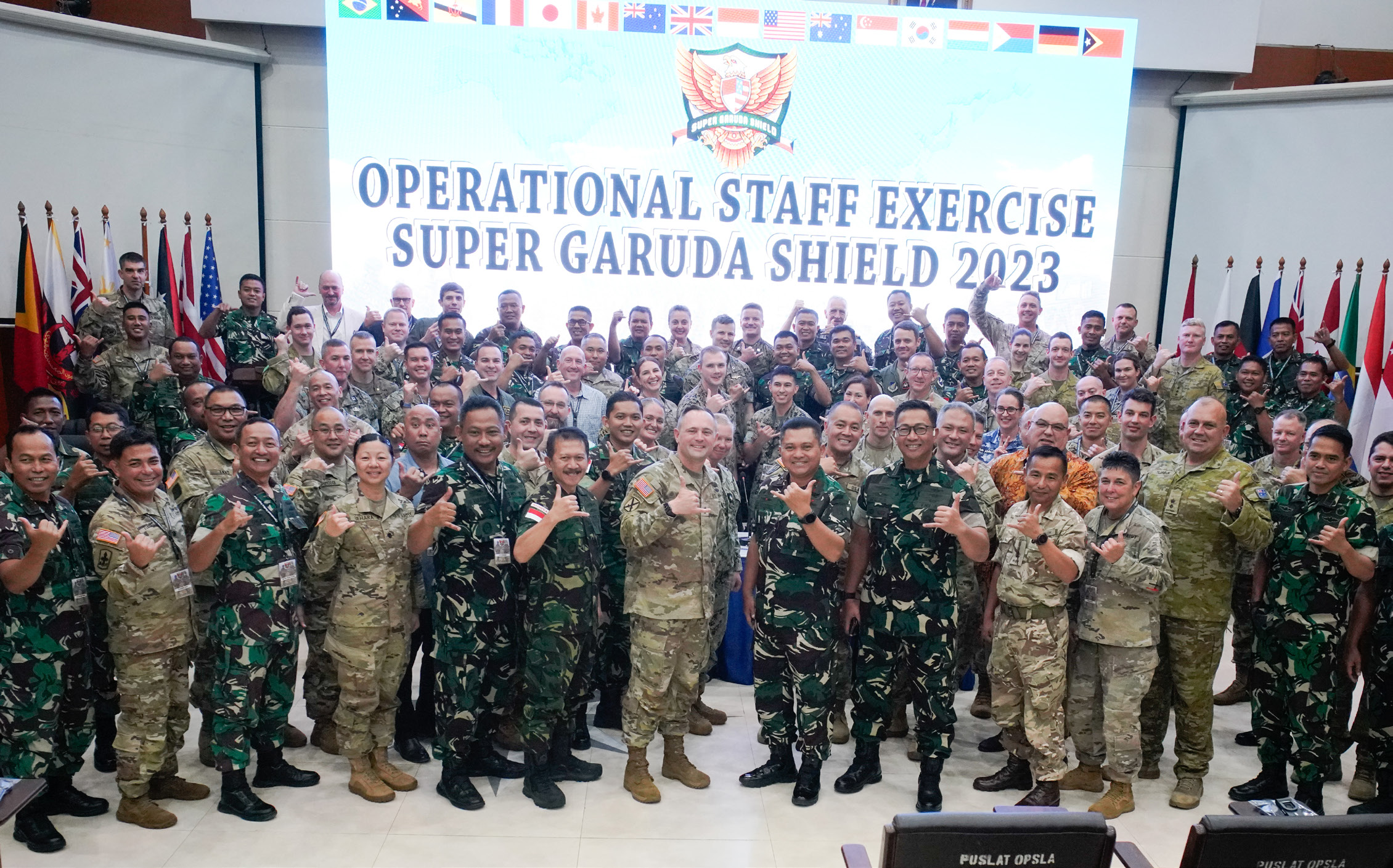
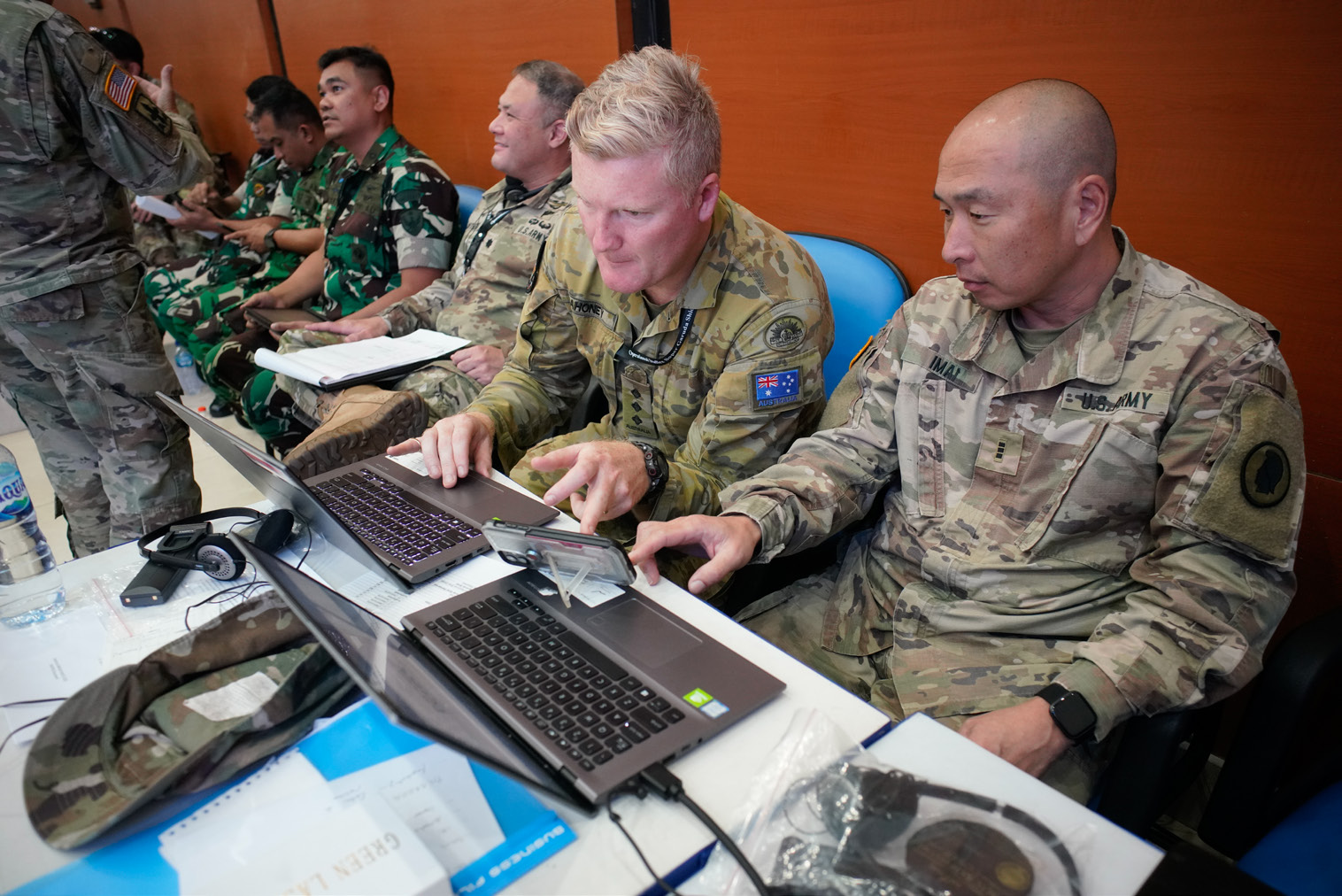
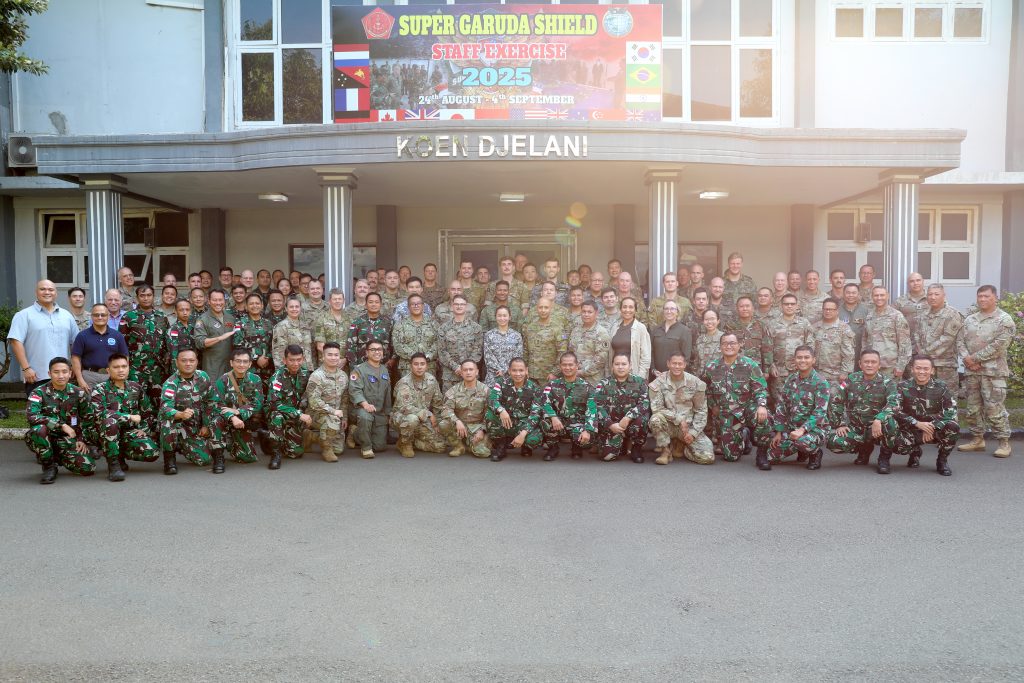
An operational planning staff exercise (STAFFEX) was recently held as a part of Super Garuda Shield 2023 (SGS2023). The two-week U.S. Army Pacific Sponsored exercise focused on military planning in a combined joint environment at the operational level. The first three days of the STAFFEX were spent in a series of academic presentations from the Institute for Security Governance, Tentara Nasional Indonesia (TNI), Australian Defence Force, United Kingdom Defence Force, and the Hawaii National Guard. Topics discussed during the academic portion of the exercise started with each partner presenting their capabilities, planning philosophy, and guiding principles then moved to discussions on joint operations, intelligence, strategy, and defense continuum. There were additional academic sessions centering on the Multi-National Military Decision Making Process (MDMP-M) and Multi-National Force Standard Operational Procedures (MNF-SOP).
“On the joint side of things, we have had a lot of reinforcement of similar doctrine, the similarities and differences that are mostly in naming conventions,” said Capt. Peter Foster United Kingdom Defence Forces. “A big learning point for me is how the U.S. and TNI forces work together and how defense engagement works. This is a brilliant environment for partners and allies to come together and build relationships.”
The academics concluded with exercise commanders Maj. Gen. Jered P. Helwig, Commanding General, 8th Theater Sustainment Command, and ADM Edi, Commander Guspurla Koormada 2, Tentara Nasional Indonesia (TNI) providing their “Commanders Guidance,” which addressed the exercise scenario along with goals and objectives. This guidance directed the formation of Combined Joint Task Force Super Garuda Shield (CJTF-SGS) for the exercise.
“We are here to build options, not actions, in the CJTF-SGS,” said Maj. Gen. Jered P. Helwig. “As we move forward into mission analysis and planning to inform our recommendations, it is important to process through the facts and assumptions we have in the scenario. The planning this team does in the next few days is essential.”
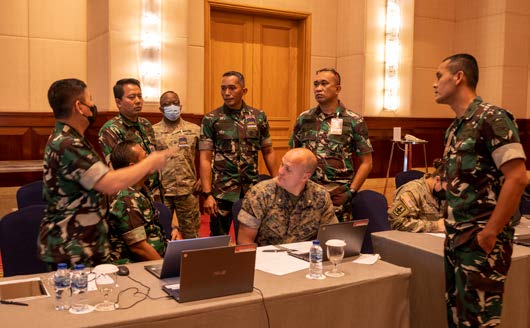
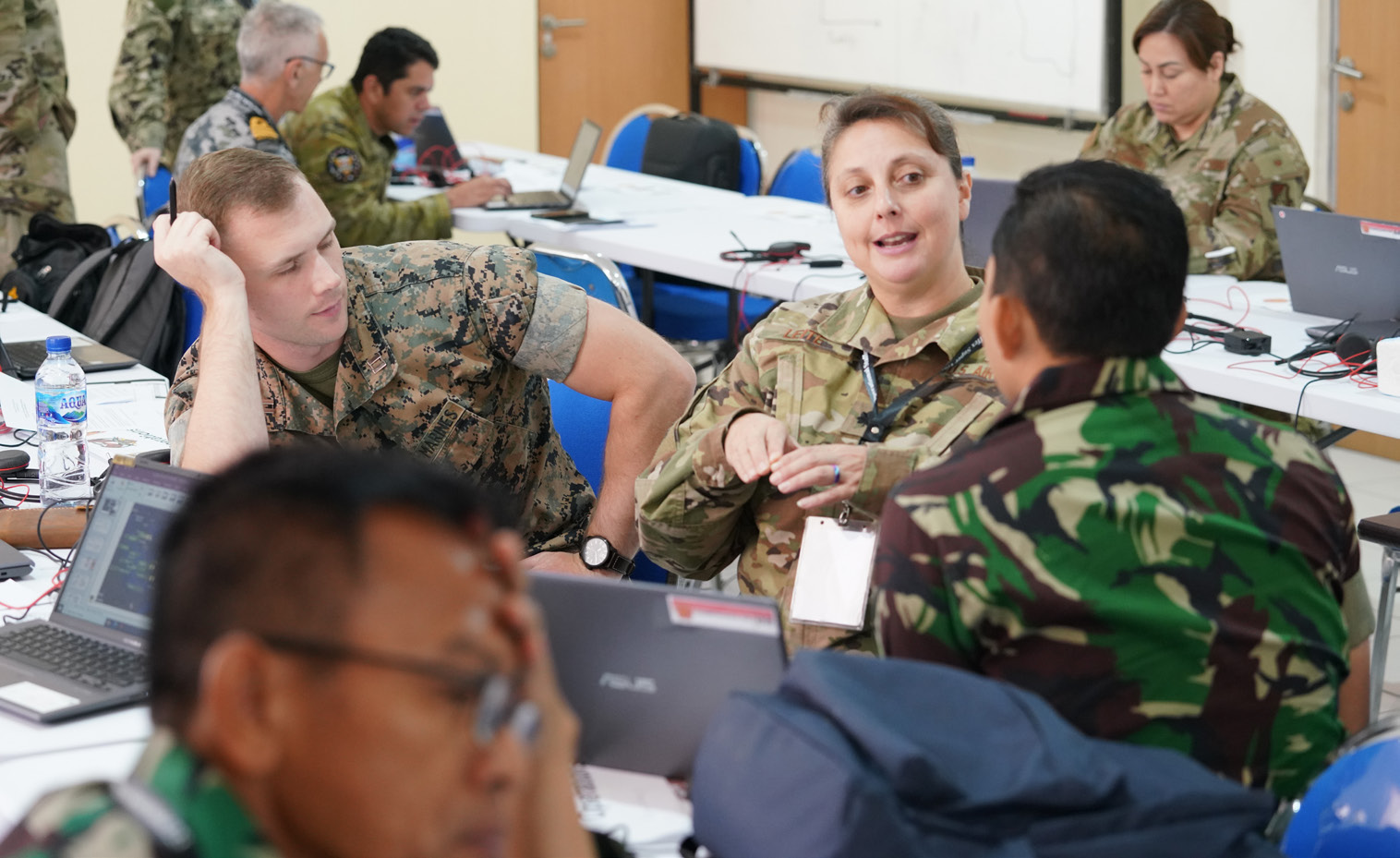
The task force of over 150 military personnel from four countries was composed of shops from C-1 (Personnel), C-2 (Intelligence), C-3 (Operations), C-4 (Logistics), C-6 (Cyber) and included a special staff of Gender Advisors provided by the Australian Defence Force. The operations (C-3) cell included planning teams for Air, Land, Sea, and Special Forces.
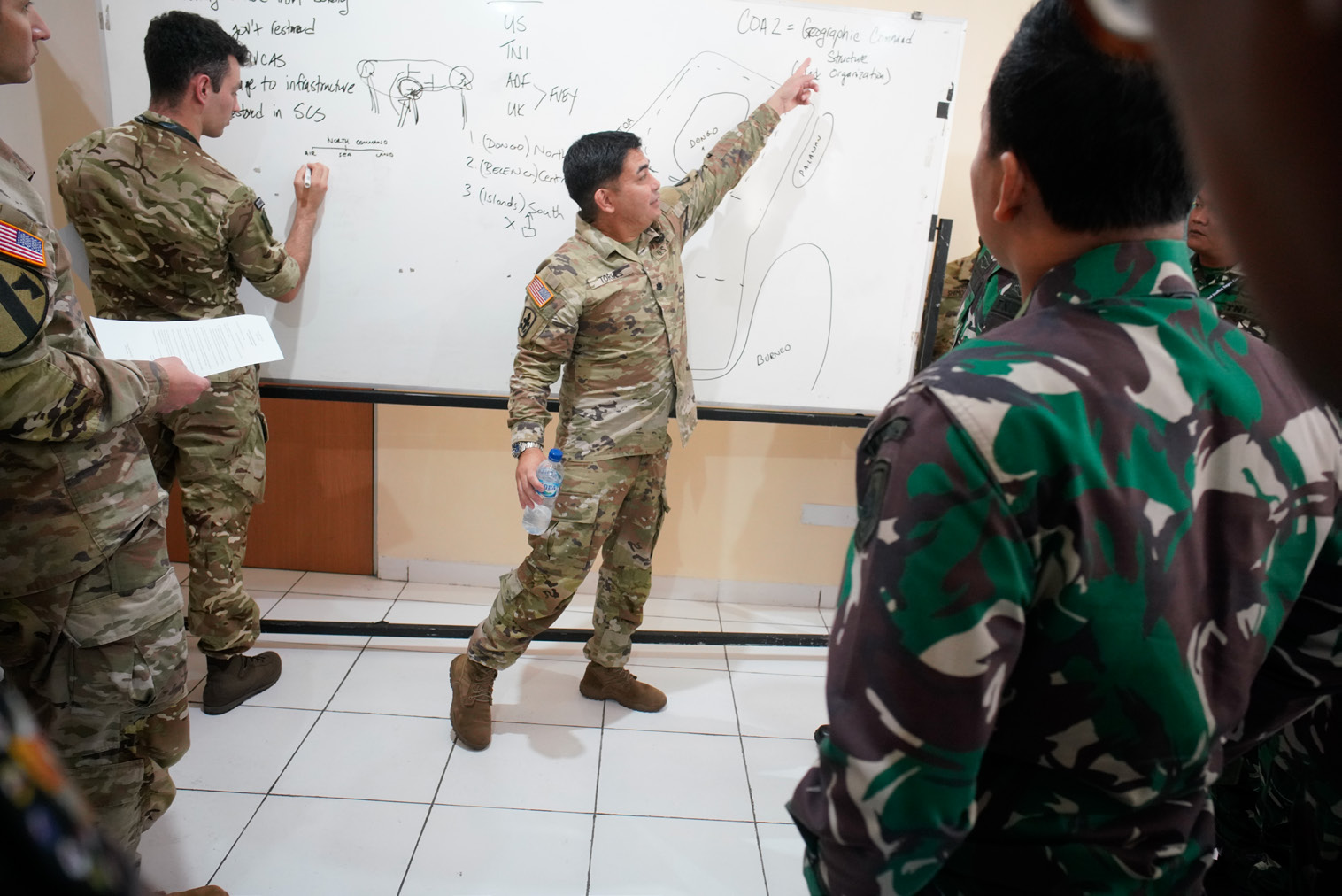
“The main difference between Operational Planning and Tactical Planning is scope,” said Lt. Col. Brandon Torres, Hawaii Army National Guard. “The level of detail and thought being put in by the planners at the operational level is ‘out of the weeds’ bridging the gap between a nation’s defined strategy and intent and the tactical units in theater actions.”
While the intent of the SGS2023 operational STAFFEX was to improve understanding of the Joint planning process, the relationships that are built while performing the joint staff functions is one of the key things that mark a successful STAFFEX.
“In any form of planning, understanding your partner’s perspective is critical,” said CMDR Andrew Clowes, Royal Australian Navy. “It is easy to have your own perspective but understanding your friends and partners point-of-view is important to a plan’s success. This exercise draws that out.”
This is the second year that the TNI and U.S. INDOPACOM have addressed the KOGABWILHAN concept in an operational level of planning. The KOGABWILHAN is analogous to the U.S. Department of Defense combatant commands. The exercise builds on the successes and lessons learned from previous years’ exercises Garuda Shield and GEMA BHAKTI, which has since evolved into what is now the second iteration of Super Garuda Shield.
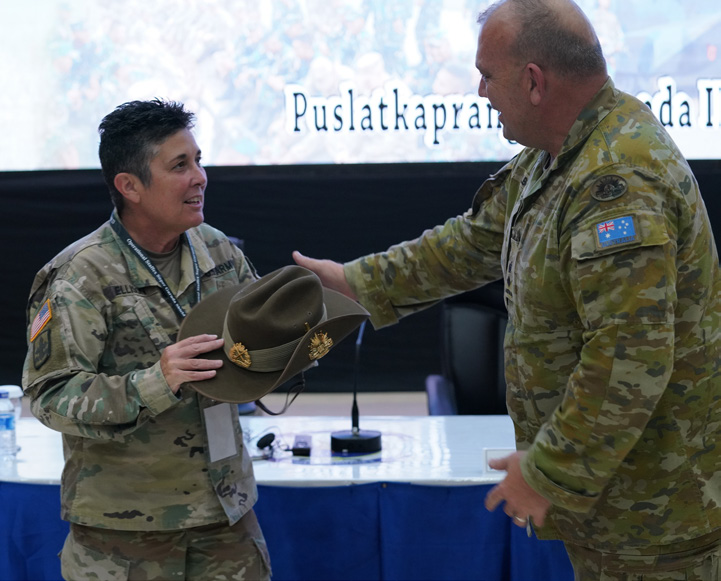
“These exercises opened our minds to how other countries and organizations function,” said Col. Pam Ellison. Hawaii Army National Guard, Exercise Chief of Staff. “I have been to ten planning exercises, from GEMA BHAKTI to Garuda Shield, and now Super Garuda Shield and every time I go to an event, I learn from my counterpart. I learn things their military organization does that is different than ours, the differences in our cultures, and how we are different but similar. However, it is finding the opportunity to have the human-to-human contact that is amazing in these experiences.”
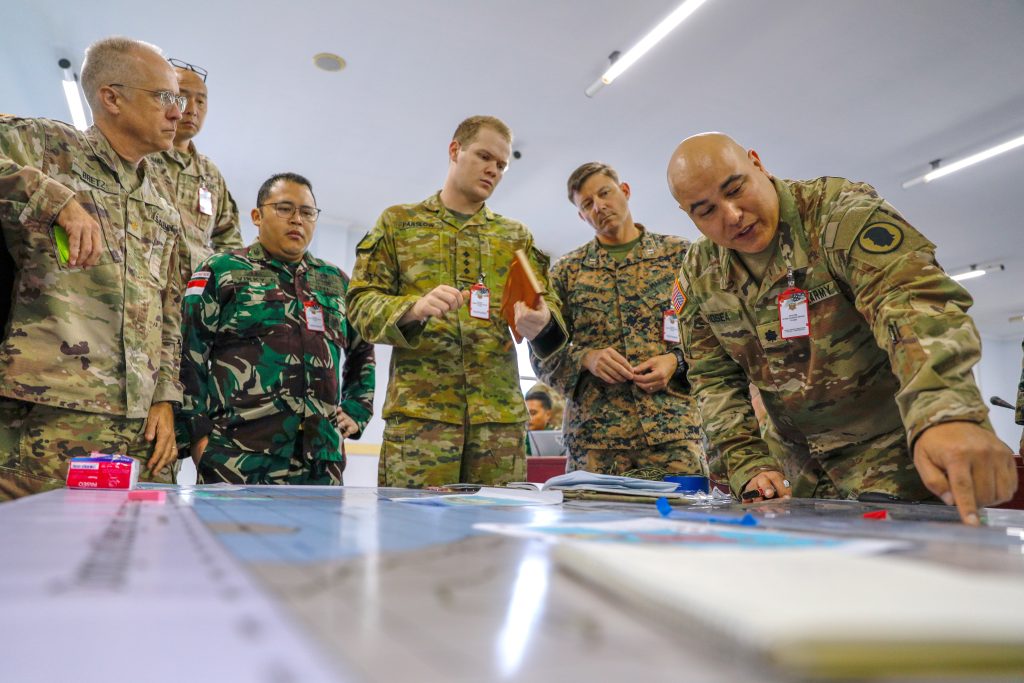
The exercise moved through the phases of mission analysis, course of action (COA) development, COA analysis and wargaming, COA comparison, and COA approval. Each phase finished with a brief by each section from C-1 to C-6 and the Special Staff. The briefs were presented by a TNI and an International Partner. The mission analysis and preparation is a full team engagement for each of the sections requiring attention to detail, creative thinking, and critical discipline.
“Even in the real world this is not a process that yields perfection so, do not obsess on perfection,” warned Mr. Kristian Smith, a member of the Institute for Security Governance. “As this is an exercise, I think it’s useful to think of this as a sandbox in which you have the freedom to fail in the name of learning. Practice. Fail. Recognize the origins of those failures and you will incrementally improve. That is what these two weeks are all about.”
The 20-plus Hawaii National Guard Soldiers and Airmen in the training audience provided subject matter expertise throughout the SGS2023 Operational STAFFEX as they have been executing planning exercise GEMA BHAKTI over the previous 10 years. Over those 10 years, the Guardsmen have exchanged extensive knowledge of military planning with the TNI, gained from years of Humanitarian Assistance and Disaster Relief (HADR) efforts, at both the tactical and operational level of planning, through the State Partnership Program (SPP). Through the SPP, the National Guard conducts military-to-military engagements in support of defense security goals but also leverages whole-of-society relationships and capabilities to facilitate broader interagency and corollary engagements, thereby spanning military, governmental, economic, and social realms. The HING brings a broad spectrum of experience forged from the past few years and have built “J-Staffs” to respond to recent real-world domestic operations like volcanic eruptions, floods, COVID-19, and currently, the Lahaina Wildfire Response in Hawaii.
The State Partnership Program is a security cooperation initiative that enables the Hawai‘i National Guard to strengthen international security, enhance partner capabilities, and foster U.S. access and influence with the Republic of Indonesia and the Republic of the Philippines. In our latest efforts, the HING SPP successfully conducted 23 engagements with Indonesia and 27 engagements with the Philippines. These engagements were dedicated to supporting the planning, resourcing, and execution of SPP activities. The SPP aligns with USINDOPACOM’s security cooperation objectives, contributing to a more secure and stable region.
Top Indonesia-Hawai‘i engagements in FY24 included:
SUPER GARUDA SHIELD Cyber Exercise – a collaborative event designed to enhance cyber defense capabilities, improve interoperability, and strengthen the strategic partnership between the United States and Indonesia.
Unmanned Aircraft System Subject Matter Expert Exchange (SMEE) – shared best practices for addressing the challenges surrounding remotely piloted aircraft operations. The visit aimed to familiarize Indonesian Defense Air Force and U.S. Air Force Remotely Piloted Aircraft representatives, thereby facilitating future engagements with Indonesia.
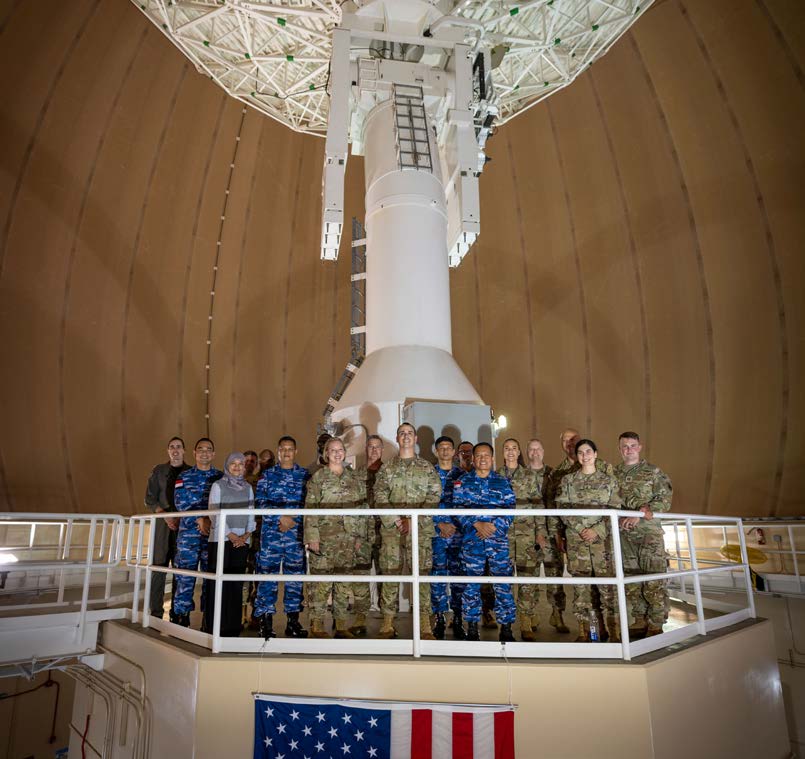
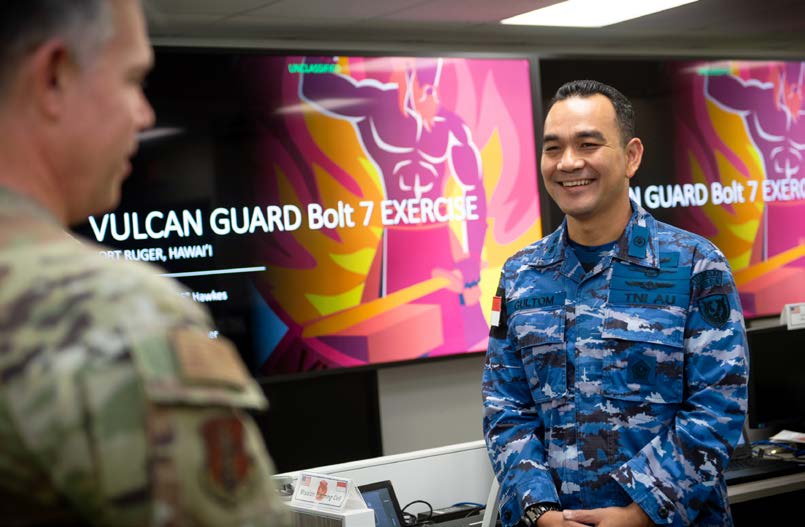
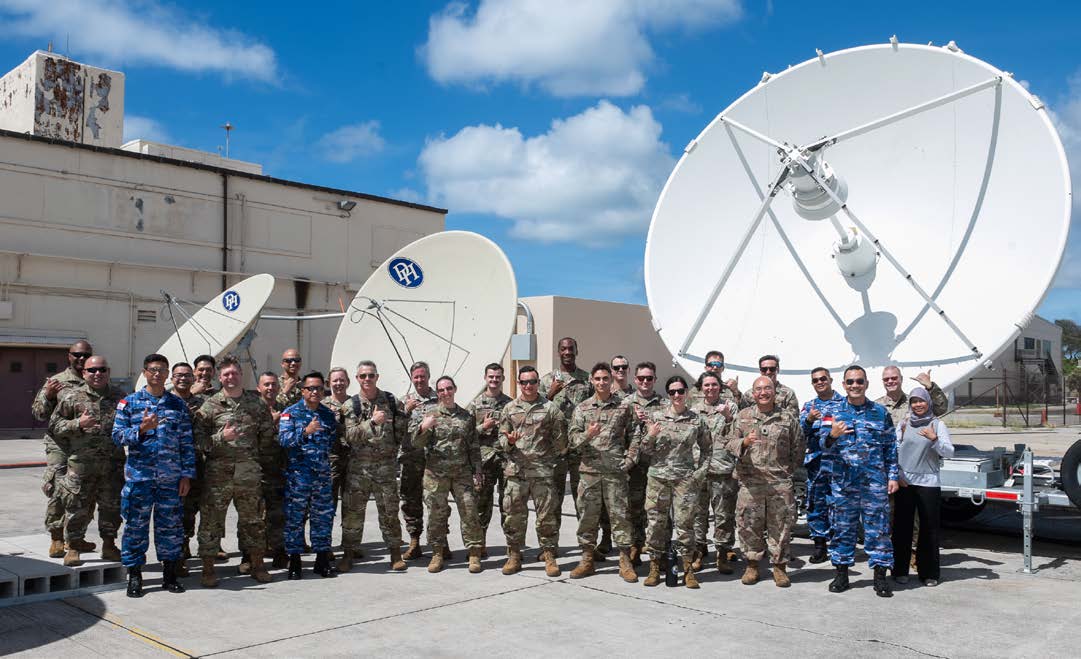
Vulcan Guard Bolt 7 (Space) Engagement – showcased the growing partnership between the U.S. and Indonesia, fostering a deeper understanding of space operations and defense capabilities. As part of our ongoing efforts, this exercise strengthens our joint ability to counter threats and enhance resilience in the space domain.
Hawai‘iʻs SPP brings medical expertise, continuity to Bilateral Discussions with Indonesia Partners
154th Wing, Hawai‘i Air National Guard | Story by Tech. Sgt. John Linzmeier | Tuesday, May 7, 2024
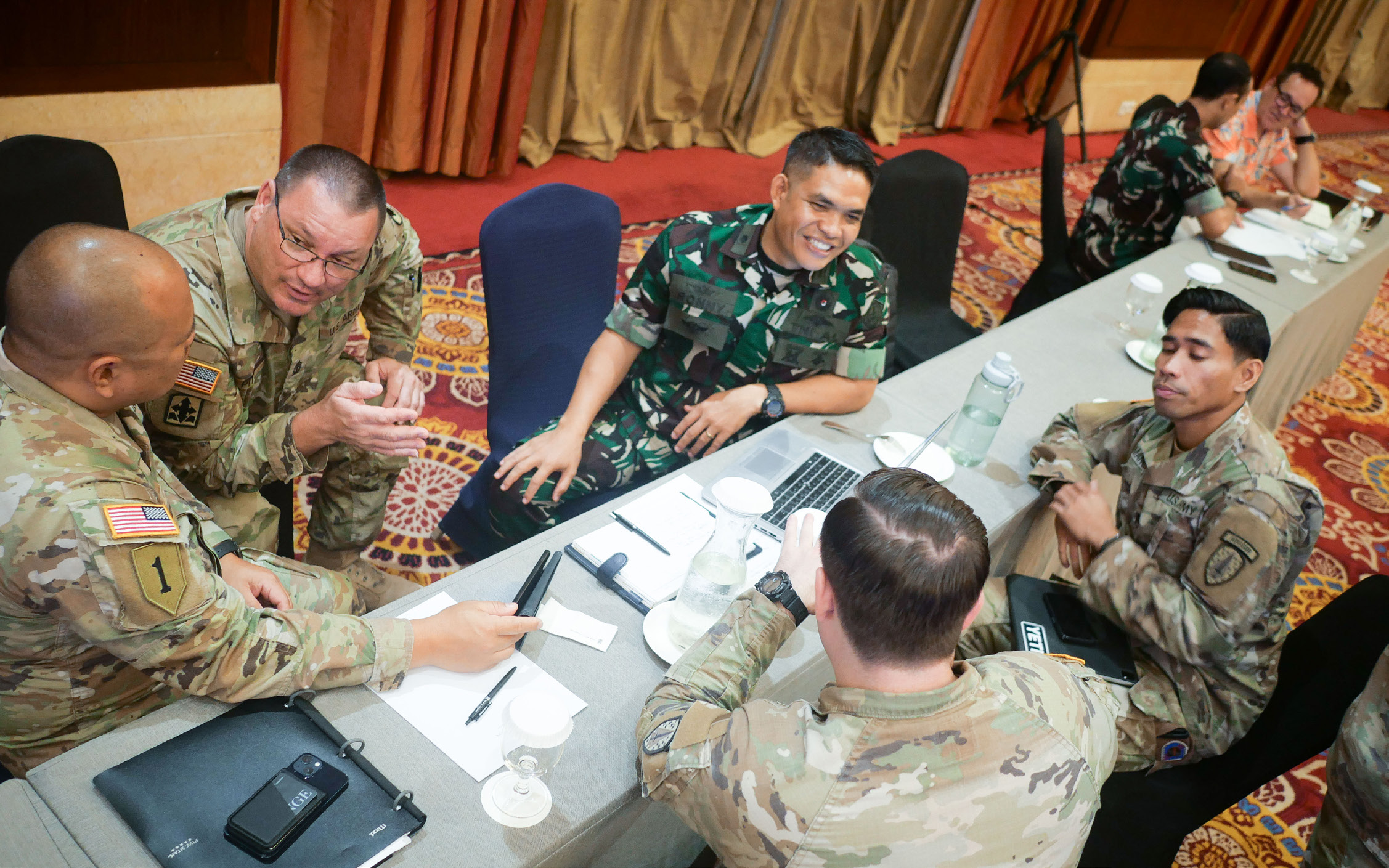
Hawai‘i Army National Guard State Partnership Program medical representatives Maj. Ryan Ruiz and 1st Sgt. Aaron Pitts, hold a medical working group with Tentara Nasional Indonesia Lt. Cdr. Ronny Basirun Simatupang, Indonesia Armed Forces Surgeon General Headquarters staff officer and emergency nurse, and other joint partners May 6, at Jakarta Indonesia. The two nations gathered to continue Bilateral Defense Discussions to develop mutual training initiatives for an ongoing series of multinational training events. This Mid-Term Review aimed to build upon foundational initiatives from the previous gathering in December 2023, by assessing the progress of defense goals across a multitude of warfighting and emergency-response competencies. (U.S. Air Force photo by Tech. Sgt. John Linzmeier)(Picture from the 2024 Spring Pūpūkahi)
Medical professionals from the Hawai‘i National Guard’s State Partnership Program (SPP) supported a security cooperation exchange in Jakarta May 6-7, as part of ongoing Bilateral Defense Discussions between the U.S. Indo-Pacific Command (USINDOPACOM) and the Tentara Nasional Indonesia (TNI).
This exchange served as a Mid-Term Review for the previous event held between the two nations, with the last gathering taking place in Hawai‘i last December.
The assembly of leaders and career-field experts from both nations served as a valuable platform for partnered militaries to evaluate their progress in enhancing each other’s defense capabilities. Additionally, this continuation fostered an interactive forum where participants could refine bilateral training plans and pinpoint essential operational competencies for future integration efforts.
Throughout the two-day event, medical professionals from the Hawai‘i Army National Guard and their TNI equivalents dedicated their time together to build up mutual training initiatives. These initiatives will be prioritized during numerous other bilateral training events that take place annually, further strengthening the bond between the two nations.
As Hawai‘iʻs dedicated partner in the SPP Indonesia has a longstanding relationship with Hawai‘i Guardsmen and shares a similar need for robust emergency response services to provide aid in the face of common natural disasters.
Maj. Ryan Ruiz, a full-time nurse and SPP representative for the exchange said there is much to learn from TNI’s capabilities in responding to disasters such as volcano eruptions, cyclones, tsunamis and earthquakes. This sense of preparedness was underscored on the morning of the conference when a minor quake was felt throughout Jakarta.
In order to support TNI’s desired growth trajectory, the event’s medical discussions were centered around enhancing Tactical Combat Casualty Care (TCC) and Combat Life Saver proficiencies among Indonesian Forces.
“It’s clear that Indonesia has an apatite to grow their TCCC program and become self-sustaining,” said Ruiz. “We were fortunate to have brought the Hawai‘i Army National Guard’s senior medic with us on this trip and it helped us identify some of their specific needs to move forward. This assessment also helped reaffirm that Indonesia is likely well ahead of other partners in their program, giving us a clear path of completing a few more steps to have them reach their medical goals.“
Of the twelve medical exchanges the U.S. has planned to conduct with the TNI this year, three have already been completed, giving opportunity for the majority of the year’s training plan to directly benefit from the MTR discussions. Some of these training objectives are proposed to be integrated into Super Garuda Shield, the large-scale and annual training exercise between the two nations.
Hawai‘iʻs SPP facilitated numerous TCCC based bilateral training events with the TNI since the early 2000s. Maj. Ryan Ruiz emphasized that the National Guard’s longstanding relationship with the Indonesian military has been instrumental in accelerating several defense objectives. He added that the enduring relationship promotes familiarity and trust among colleagues over the years, and in some instances, it transcends the beyond the duty uniform.
This sense of familiarity was evident among some INDOPACOM participants, who attended as more than just civilian leaders. Several have also forged partnerships during their service as National Guard members. The MTR’s facilitator was no exception. Brandon Torres, who played a key role in planning and facilitating the discussions, is dually active in supporting SPP exchanges in his National Guard capacity, holding the U.S. Army rank of colonel. Ruiz also shares multiple backgrounds in building relationships with the TNI, having just recently completed a two-and-a-half-year tour in the INDOPACOM’s surgeon general’s office, where he also supported several SPP events.
While English was the primary language spoken during this event, many conversations were held in the Indonesian language, spoken from the beginner level to complete fluency. The latter includes the translation expertise of U.S. Army National Guard Sgt. Aditya Utoyo, a logistics specialists who was raised in Jakarta, sharing the same heritage as his TNI peers.
Cultural similarities were also seen during the bilateral discussions and continued to be observed even after the work day concluded. Both parties exchanged gifts, donned Hawaiian ‘Aloha attire’ and similar Indonesian ‘Batik shirts,’ showcasing their mutual respect and appreciation for each other’s cultures. The simple act of praying and giving thanks before sharing a meal highlighted the shared values that extended beyond their professional roles, further demonstrating a sense of camaraderie and mutual understanding.
“I want to say thank you to the U.S. and especially to the Hawai‘i National Guard (HING) because the HING has many programs that can support us especially for empowering our medical capacity,’ said TNI Lt. Cdr. Ronny Basirun Simatupang, Indonesia Armed Forces Surgeon General Headquarters staff officer and emergency nurse. “We discussed a training plan for our trainers in Tactical Casualty Combat Care. As you may know, in Indonesia, we have many personnel, but what we really need is more instructors. Hopefully, we can build an introduction to TCCC and make a qualified team of trainers and do a field exercise together. That would be very helpful outcome.”
At the conclusion of the event, bilateral teams of specialists meticulously compiled their shared notes and formulated a working plan to most effectively proceed in reaching specific benchmarks and goals together. In addition to valuable progress in the medical sphere, other dedicated working groups made significant strides in Logistics, Intelligence, Communications, Education and Special Programs, and Training and Exercises.
Hawai‘i ANG welcomes Indonesian Participation in Vulcan Guard space exercise
154th Wing, Hawai‘i Air National Guard | Story by Tech. Sgt. John Linzmeier | Tuesday, September 24, 2024
Participants of the Vulcan Guard Bolt-7 Space Subject Matter Expert Exchange receive a tour of the Kaʻena Point Space Force Station during the first Vulcan Guard Bolt-7 Space Subject Matter Expert Exchange on Sept. 16, 2024, at Kaʻena Point, Hawai‘i. During the tour, the 21st Space Operations Squadron, Detachment 3, provided a mission brief, followed by an inspection of the Ring Beam Concentrator antenna. This National Guard-led exercise enables partner nations to engage in specialized space training, enhancing their operational readiness in simulated space domain scenarios. (U.S. Air National Guard photo by Master Sgt. Mysti Bicoy)Tentara Nasional Indonesia Air Force Lt. Col. Dharma Gultom, Operations Staff Officer of Indonesian Air Force Headquarters, interacts with participants of the Vulcan Guard Bolt-7 Space Subject Matter Expert Exchange patch Sept. 16, 2024, during at the Hawai‘i National Guard Headquarters and Armory, Fort Ruger, Hawai‘i. Hawai‘i Air National Guard welcomed Indonesia’s first participation in the Vulcan Guard space exercise. The exchange marks a significant step in building multinational cooperation in space operations. (U.S. Air National Guard photo by Tech. Sgt. John Linzmeier)Participants of the Vulcan Guard Bolt-7 Space Subject Matter Expert Exchange receive a tour of the 109th Electromagnetic Warfare Squadron during the first Vulcan Guard Bolt-7 Space Subject Matter Expert Exchange on Sept. 16, 2024, at Joint Base Pearl Harbor-Hickam, Hawai‘i. The Hawai‘i Air National Guard hosted this multinational event to foster collaboration and enhance space capabilities. Participants explored cutting-edge space defense systems crucial to the protection of both military and civilian assets. (U.S. Air National Guard photo by Tech. Sgt. John Linzmeier)(Pictures from the 2024 Summer Pūpūkahi)
The Hawai‘i Air National Guard’s 154th Wing showcased international military collaboration by hosting the seventh Vulcan Guard space exercise, Vulcan Guard-Bolt 7, from September 16 to 21 at various military installations across Oahu.
This was the first time the space event was held in Hawai‘i and the first time the Tentara Nasional Indonesia (Indonesian National Armed Forces) participated, marking a significant milestone in the event’s evolution. In addition to the Indonesian participation, National Guard space professionals from around the nation joined the exercise, further emphasizing the collaborative spirit and expanding the scope of operational expertise within the U.S. National Guard.
Taking place at the Hawai‘i National Guard Headquarters and Armory at Fort Ruger in Honolulu, Joint Base Pearl Harbor-Hickam, and Kaʻena Point Space Force Station, the event underscores the importance of space operations in contemporary warfare and domestic response efforts.
As Hawai‘i’s State Partner through the National Guard’s State Partnership Program, Indonesia has collaborated with the Hawai‘i NG for 18 years, working together in disaster response and regional security. Vulcan Guard provided a new platform for both nations to strengthen their combined space capabilities and operational integration.
“We are very grateful and would like to send our highest appreciation to the U.S. Air Force for inviting the Indonesian Air Force to attend Vulcan Guard Bolt 7,” said TNI Air Force Lt. Col. Dharma Gultom, Operations Staff Officer of Indonesian Air Force Headquarters. “This exercise has provided us with valuable knowledge as we work toward building our own space operations unit. The opportunity to learn from the Hawai‘i Air National Guard and observe how the U.S. Air Force optimizes its space capabilities is something we truly value.”
The 109th Electromagnetic Warfare Squadron, one of the Hawai‘i ANG’s newest units, was key in facilitating the event. Tasked with defending critical military and civilian infrastructure, the 109th EWS protects critical satellite communication links to achieve a near-global capability to detect, characterize, geolocate and report sources of electromagnetic interference on U.S. military and commercial satellites
Vulcan Guard aimed to enhance participants’ understanding of U.S. space operations, mission planning, and strategies to counter space threats.
Throughout the week, participants engaged in academic sessions that provided theoretical knowledge, threat briefings on potential space hazards, scenario-based exercises and rapid response drills designed to test their ability to adapt quickly in real-world situations.
Airman 1st Class Antonio Torres, a space systems operator with the 109th Electromagnetic Warfare Squadron, provided administrative and logistical support for the exercise. He emphasized the practical importance of Vulcan Guard exercises in addressing real world scenarios.
“In our scenario, we’re preparing for things such as storms or power grid outages challenges our partners may face at home. These exercises help them determine new ways to turn to space capabilities, such as satellite communications, to aid in relief efforts.”
Space technologies play a vital role not just in military operations but also in maintaining essential civilian infrastructure. Torres further explained the far-reaching impact of these technologies.
“Satellite communications enable critical capabilities,” he said. “For instance, if our GPS falls out of sync, it could disrupt digital financial transactions, effectively bringing daily economic activities to a standstill for everyone involved.”
Throughout the week, participants were introduced to advanced radio frequency systems such as the Night Owl Lite and Beast+ and Kraken. These mobile systems demonstrated the flexibility and reliability of satellite communications in various environments, allowing participants to see firsthand how these tools can be deployed quickly to maintain critical communication links.
Vulcan Guard aligns with the broader National Defense Strategy, which emphasizes collective deterrence through enhanced interoperability and information sharing. By fostering key competencies in space operations and international collaboration, the exercise not only strengthens the National Guard’s State Partnership Program but also supports the goals of combatant commands for advancing global security cooperation.
Gultom highlighted the potential impact of space technologies in addressing Indonesia’s unique geographical challenges.
“As we understand, Indonesia is in the Ring of Fire [the Pacific Rim’s seismic and volcanic activity belt], and space capabilities could help us better respond to and manage natural disasters such as volcanic eruptions or tsunamis. Learning from the Hawai‘i Air National Guard on this is invaluable because they too share some of these environmental challenges.”
By bringing together diverse military entities under one strategic umbrella, the exercise enhanced operational capabilities and strengthened international partnerships, setting a precedent for future multi-national collaborations in space operations.
“What’s unique about these exchanges is that we’re seeing these systems and capabilities develop from the ground up,” said Torres. “Being part of this growth is exciting because we’re all helping to shape a field that’s still in its infancy. I love watching space capabilities evolve, with everyone involved putting in the time and effort to build something truly impactful. The work we’re doing in Vulcan Guard is laying the foundation for space capabilities and partnerships that will define future missions.”
Partnership with Second Year of Air-To-Air Refueling Engagement
154th Wing, Hawai‘i Air National Guard | Story by Master Sgt. Mysti Bicoy | Sunday, February 23, 2025
An Indonesian Air Force (IDAF) F-16 Fighting Falcon flies alongside a Hawai‘i Air National Guard KC-135 Stratotanker assigned to the 203rd Air Refueling Squadron during an air-to-air refueling training mission over Indonesia, on Feb. 19, 2025. This bilateral training, supported by the 154th Wing, enables IDAF pilots to recertify their F-16 air refueling qualifications while strengthening interoperability and regional security. The Hawai‘i National Guard State Partnership Program continues to enhance operational readiness and fosters U.S.-Indonesia defense cooperation in support of a free and open Indo-Pacific. (U.S. Air National Guard photo by Master Sgt. Mysti Bicoy(Picture from the 2025 pūpūkahi | volume 55 | No. 01)
DENPASAR, Indonesia – Hawai‘i Air National Guard personnel from the 154th Wing participated in air-to-air refueling engagement with the Indonesian Air Force (IDAF) as part of efforts to support F-16 recertification requirements identified during the 2024 Airmen-to-Airmen Talks. The training focused on strengthening interoperability, operational effectiveness, and regional security efforts between the two forces in Denpasar, Indonesia in Feb. 17-21.
This engagement was part of the Hawai‘i National Guard’s State Partnership Program (SPP), which has played a critical role in advancing air-to-air refueling capabilities between Hawai‘i ANG and the Indonesian Air Force.
In this training cycle, five new and 21 IDAF F-16 pilots successfully earned their air-refueling qualifications. The 203rd Air Refueling Squadron (ARS) directly supported over 40 F-16 sorties, demonstrating the increasing complexity and operational integration of these joint capabilities.
“For many of us, this mission isn’t just about fuel transfers — it’s about trust, adaptability, and building a foundation for future interoperability,” said 1st Lt. Alison Bowman, a pilot with the 203rd ARS. “Through pre- and post-mission briefings, we are exchanging air refueling tactics, techniques, and procedures to enhance operational efficiency.”
For the 203rd ARS, this mission extended beyond technical proficiency—it was an engagement in adaptability and cross-cultural collaboration in a region with unique airspace and logistical challenges.
“Air refueling engagements in this region gives us a great opportunity to fine-tune our skills while working closely with our partners in a dynamic environment,” said Tech. Sgt. Angellica Amian, 203rd ARS inflight refueler. “By staying in constant communication and giving each other real-time feedback, we were able to work together more smoothly. It’s all about building that trust and understanding so we can operate effectively as a team.”
As the engagement progressed, both air forces refined their air domain awareness capabilities, reinforcing their commitment to regional stability.
“This opportunity not only strengthens our operational readiness but also ensures we have the capabilities to secure our territorial integrity,” said Lt. Col Ripdho “Mohawk” Utomo, IDAF exercise planner. “We want to thank the Hawai‘i Air National Guard for their support to maintain our currency and certifications. I’m looking forward to continuing this cooperation.”
The Hawai‘i National Guard State Partnership Program – Indonesia Military Bilateral Partnership, established in 2006 through the National Guard Bureau, continues to serve as a key initiative supporting USINDOPACOM’s goal of enhancing defense relations and strengthening Indonesia’s military capabilities.
As the training concluded, the Hawai‘i Air National Guard reaffirmed its commitment to fostering international partnerships through high-level military operations, activities, and investments. Working alongside allies such as Indonesia, Hawai‘i Air National Guard continues to support global stability and operational excellence in air mobility and aerial refueling capabilities.
Looking ahead, future training opportunities will build upon the progress achieved during this exercise, further advancing U.S.-Indonesia defense cooperation. With continued collaboration and shared training objectives, both air forces are committed to strengthening regional security, enhancing readiness, and improving interoperational capabilities for futu
Hawai‘i Guardsmen Support INDOPACOM in Deepening Defense Cooperation with Indonesia
154th Wing, Hawai‘i Air National Guard | Story by Tech. Sgt. John Linzmeier | Friday, January 31, 2025
Tentara Nasional Indonesia leaders of the 2025 Bilateral Defense Discussions, Col. Arief Budiman, Maj. Gen. Gabriel Lema, S.SOS, and their equivalent counterparts from U.S. Indo-Pacific Command, U.S. Marine Corps Maj. Gen. Jay Bargeron and Brandon Torres, present the minutes collected throughout the event on Jan. 24, 2025, in Jakarta, Indonesia. The finalized documents reflect key agreements on interoperability, training exchanges, and long-term strategic cooperation between the two nations. (U.S. Air National Guard photo by Tech. Sgt. John Linzmeier)Tentara Nasional Indonesia leaders of the 2025 Bilateral Defense Discussions, Col. Arief Budiman, Maj. Gen. Gabriel Lema, S.SOS, and their equivalent counterparts from U.S. Indo-Pacific Command, U.S. Marine Corps Maj. Gen. Jay Bargeron and Brandon Torres, present the minutes collected throughout the event on Jan. 24, 2025, in Jakarta, Indonesia. The finalized documents reflect key agreements on interoperability, training exchanges, and long-term strategic cooperation between the two nations. (U.S. Air National Guard photo by Tech. Sgt. John Linzmeier)Tentara Nasional Indonesia leaders of the 2025 Bilateral Defense Discussions, Col. Arief Budiman, Maj. Gen. Gabriel Lema, S.SOS, and their equivalent counterparts from U.S. Indo-Pacific Command, U.S. Marine Corps Maj. Gen. Jay Bargeron and Brandon Torres, present the minutes collected throughout the event on Jan. 24, 2025, in Jakarta, Indonesia. The finalized documents reflect key agreements on interoperability, training exchanges, and long-term strategic cooperation between the two nations. (U.S. Air National Guard photo by Tech. Sgt. John Linzmeier)(Pictures from the 2025 pūpūkahi | volume 55 | No. 01)
Soldiers and Airmen from the Hawai‘i National Guard’s (HING) State Partnership Program supported the annual U.S. Indonesia Bilateral Defense Discussions (BDD) in Jakarta, Indonesia, on Jan. 23-24, 2025.
Senior leaders from U.S. Indo-Pacific Command (USINDOPACOM) and the Tentara Nasional Indonesia (TNI) met to establish bilateral operations activities and investments (OAIs) for calendar year 2025 in an effort to deepen ties through interoperability, capacity building, and institutional linkages.
“I extend my appreciation for the hard work and dedication demonstrated by our working group members throughout this meeting,” said the Assistant for Operations to the Panglima TNI (ASOPS), Maj. Gen. Gabriel Lema, highlighting the enduring partnership between the U.S. and Indonesia.
The Hawai‘i National Guard’s participation, formalized through the State Partnership Program in 2006, and supported by the HING SPP Bilateral Affairs Officer, serves as a cornerstone for fostering collaboration and mutual growth, especially in addressing shared challenges such as natural disasters and emerging security threats.
Functional working groups discussed specific programs and training initiatives: medical, logistics, intelligence, communications, education, training and exercises, with Guardsmen providing medical professionals, translation services, information operations, and administrative support. Experts from these fields engaged in discussions with their counterparts, fostering knowledge exchange and collaboration between the two nations.
“The United States values its enduring and dynamic relationship with Indonesia, which plays a pivotal role in maintaining security and stability in the Indo-Pacific region,” said USINDOPACOM Director for Strategic Planning and Policy (J5) Maj. Gen. Jay Bargeron, “These discussions not only enhance our mutual understanding and defense capabilities but also reinforce our commitment to a secure, rules-based Pacific.”
This year’s BDD emphasized integrating information operations with communication themes, enhancing readiness and increasing capacity-building, and the creation of a cyber task force. This cyber task force concept will be developed and exercised for future implementation in Exercise Super Garuda Shield, an annual joint, multinational training event co-led by the U.S. and Indonesia.
In addition to cyber operations, the discussions reviewed progress from 2024 and planned programs for 2025, including expanded collaboration in the development of Tactical Combat Casualty Care and Combat Training Center. These initiatives aim to enhance Indonesia’s self-sustaining medical training programs and establish robust training frameworks to prepare forces for a wide range of operations.
The 2025 BDD demonstrated the enduring partnership between the U.S. and Indonesia, with both nations focusing on innovation, institutional growth and strategic alignment, paired with mutual respect, and deep people-to-people ties.
By Sgt. Sean Walker117th Mobile Public Affairs Detachment
Hawai‘i Adjutant General Maj. Gen. Stephen Logan, center, Hawai‘i Air National Guard Maj. Gen. Joseph Harris II, left, and Indonesian National Armed Forces Air First Marshal Ronny Moningka, Director of Research and Development (Dirjianbang), critiqued a course of action brief during Super Garuda Shield 25 in Jakarta, Indonesia on Sept. 2, 2025. (U.S. Army National Guard photo by Sgt. Sean Walker)Joint and multilateral personnel pose for a group photo at a Staff Exercise during Super Garuda Shield 25 in Jakarta, Indonesia, Sept. 1, 2025. Super Garuda Shield is an annual exercise between the Indonesian National Armed Forces and U.S. Military designed to strengthen bilateral interoperability, capabilities, and cooperation. (U.S. Army National Guard photo by Sgt. Sean Walker)Joint and multilateral military personnel converse at a Joint Staff Exercise during Super Garuda Shield 25 in Jakarta, Indonesia on Aug. 29, 2025. (U.S. Army National Guard photo by Sgt. Sean Walker)(Pictures from the 2025 pūpūkahi | Volume 55 | No. 5)
The Hawai‘i National Guard (HING) played a key role in Super Garuda Shield 25, the largest bilateral exercise between Indonesia and the United States and one of the Indo-Pacific’s most significant multinational training events. Held Aug. 25 to Sept. 4, 2025, the exercise brought together about 6,500 service members from 13 nations. Designed to strengthen defense cooperation, Super Garuda Shield 25 featured a Joint Staff Exercise (STAFFEX), Combined Arms Live Fire Exercise (CALFEX), Engineering Civic Action Program project (ENCAP), medical exercise (MEDEX), small-unit and urban operations training (MOUT), subject-matter expert exchanges, and a cultural day. Training took place across multiple locations in Indonesia, including the Indonesian Navy’s training facility in Jakarta, which hosted the STAFFEX.
HING’s contributions to Super Garuda Shield 25 were multi-faceted. On the U.S. side, it served as the main training audience for STAFFEX and as the primary planners and executors of CYBEREX. HING’s Mayor Cell also provided logistical and medical support for STAFFEX and CYBEREX participants, ensuring smooth coordination throughout the exercise.
Col. Brandon Torres, the HING’s joint staff intelligence officer (J2), served as Chief of Staff for the U.S. delegation during the STAFFEX. He described the event as critical for advancing multinational planning and decision-making. “The significance of the STAFFEX is that this is where we do the planning at the operational level,” Torres said. “While other parts of the exercise are tactical, the STAFFEX focuses on refining how we address a fictitious operational scenario, bringing together military planners from multiple nations to tackle complex problems.”
Torres emphasized that Indonesia’s forces were equally critical in developing and conducting the training, making the exercise a genuinely collaborative effort. He praised the Tentara Nasional Indonesia (TNI) for their professionalism and expertise. “They’re world-class planners, and I’m glad to be a part of helping develop and grow our relationship as they become even better,” he said.
Torres reflected on how the exercise has evolved from Garuda Shield in 2007. “Garuda Shield originally was an army-to-army exercise. Over the years, Garuda Shield merged with Gema Bhakti to form Super Garuda Shield,” Torres said. “I’ve participated in every iteration since that merger, and it’s been remarkable to see how the exercise has grown into a truly joint, multinational effort.”
HING has participated in Garuda Shield since its early days, forging a long-standing relationship with the TNI. “I’ve seen our partnership evolve over time—from the early Garuda Shield exercises to now, as we conduct joint exercises and capacity-building activities,” Torres said. “The Hawaii National Guard and the TNI share a special relationship through the U.S.-Indonesia State Partnership Program, which allows us to partner and modernize each side through shared operations and activities.”
Torres, who grew up on the Big Island of Hawaii, added that cultural similarities further strengthened the partnership. “We share values such as family, friendship, and treating loved ones with dignity and respect,” he said. “These are principles that I hold very close to my heart.”
Col. Bagus Jatmiko, head of war gaming at the Indonesian Naval Command and Staff College and an exercise control group facilitator during STAFFEX, echoed Torres’ view that direct engagement and shared values are critical to building stronger partnerships. “Through face-to-face interaction between our forces, we build the understanding needed to truly operate together,” he said, adding that exercises like Super Garuda Shield are vital for fostering mutual understanding. “The key to success in joint operations lies in finding common ground, particularly in culture and language. These exercises bridge differences, strengthen personal bonds and create the shared understanding essential for effective cooperation.”
Torres recalled his first cultural experience in Indonesia during Garuda Shield 2010 in Bandung, describing it as pivotal in shaping his lasting interest in the country. “I was struck by the similarities between Indonesia and Hawaii, particularly the sense of community and how people treat one another,” he said. “From that point, my interest in Indonesia grew, and when I learned that Hawaii was paired with Indonesia through the State Partnership Program, I became even more invested in strengthening our relationship.” That interest later led him to formally study the Indonesian language and serve as the U.S. Indo-Pacific Command (USINDOPACOM) desk officer for Indonesia, where he specialized in advancing bilateral military cooperation and strategic engagement.
As the exercise concluded, Torres reflected on its impact. “Every time I come to Indonesia, it’s professionally rewarding,” he said. “I look forward to continuing our collaboration and helping both of our forces grow as we face new challenges together.”
EIN Presswire provides this news content "as is" without warranty of any kind. We do not accept any responsibility or liability
for the accuracy, content, images, videos, licenses, completeness, legality, or reliability of the information contained in this
article. If you have any complaints or copyright issues related to this article, kindly contact the author above.